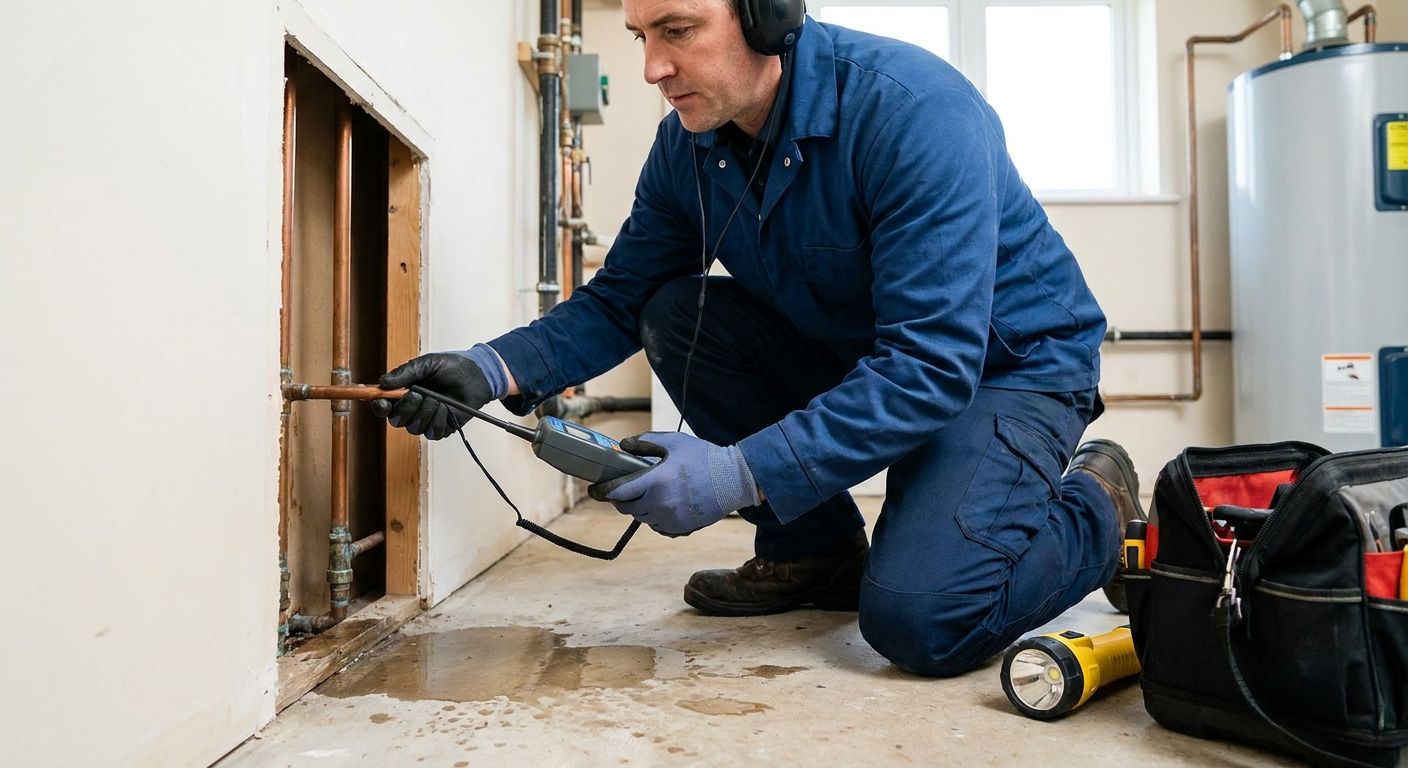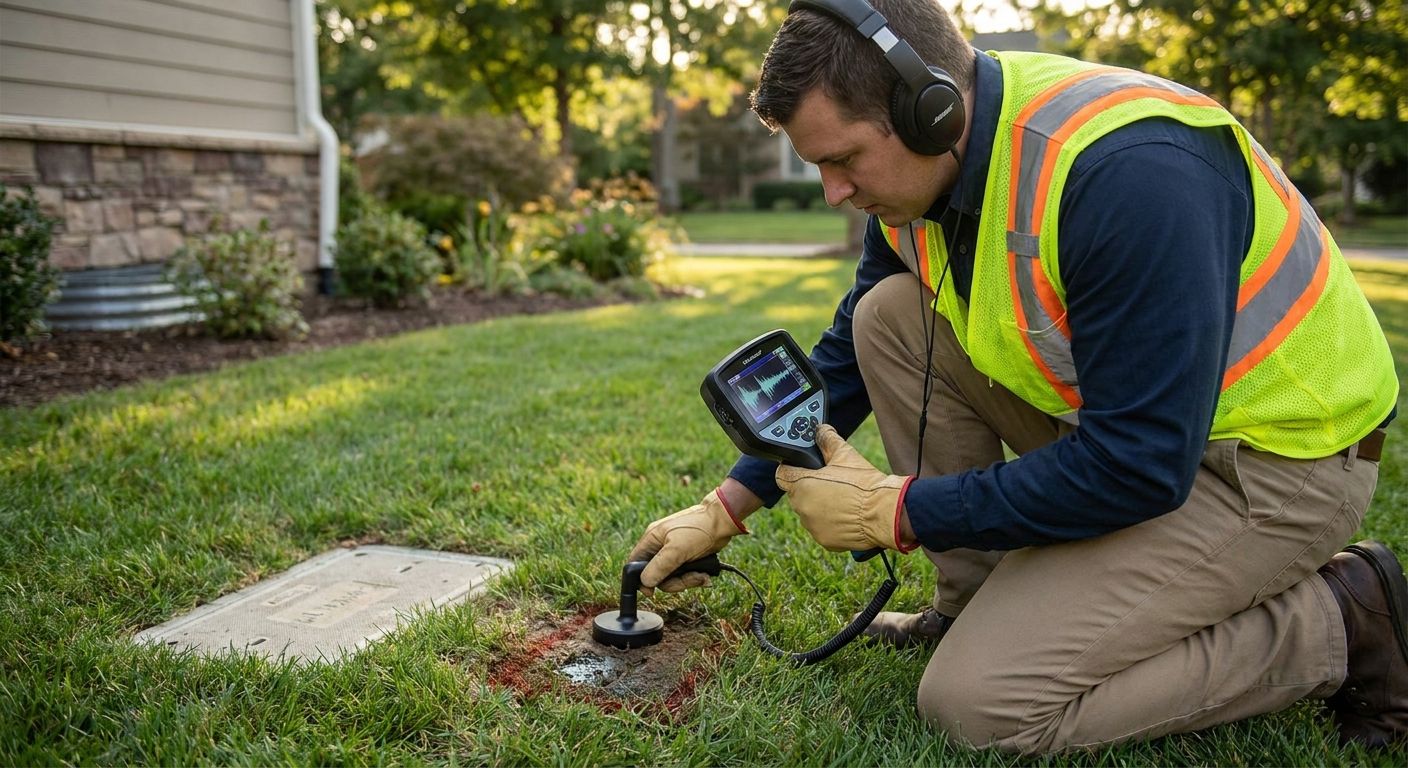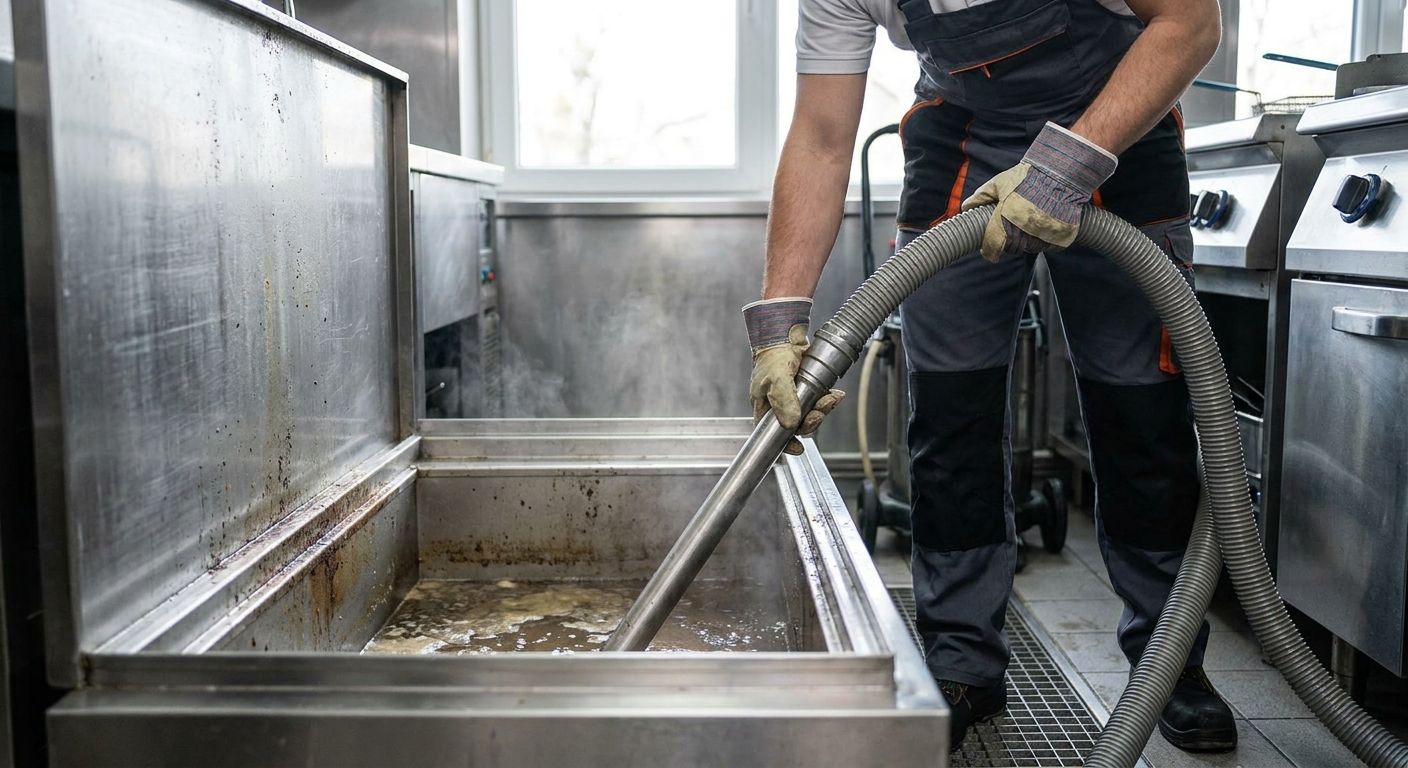
Grease trap cleaning for restaurants and commercial kitchens is the scheduled removal of fats, oils, and grease (FOG) from the trap before it backs up your kitchen line, floods a floor drain, or triggers a violation during a health inspection. A single-family home might get away with cleaning a drain once a year — a full-service kitchen running two meal periods a day cannot. Grease builds fast when you're frying, sauteing, and running a dish pit for eight or ten hours straight, and a trap that's fine on Monday can be 25% full by Friday.
- Grease trap cleaning for restaurants should follow the 25% rule, not a random calendar date.
- Statewide Sewer & Drain runs hydro jetting for restaurant grease trap lines when scraping alone stops working.
- Skipping service by even two weeks past capacity is the most common cause of mid-shift backups in 2026.
- DIY skimming works for daily maintenance; a licensed pump-out is still required for full removal.
- Video camera inspection after a major grease buildup shows whether the line downstream needs jetting too.
Why grease trap cleaning matters for restaurants
A commercial kitchen produces FOG volume that residential plumbing was never designed to handle. Health departments across Middlesex, Monmouth, Ocean, and Union counties inspect grease management as part of routine kitchen reviews, and a trap that's overdue is one of the fastest ways to fail that inspection. Beyond the paperwork, a clogged trap pushes grease further down the line, where it hardens against pipe walls and narrows the opening until a normal Friday night rush turns into a backup at the worst possible time.
Restaurants also deal with a compliance layer homeowners don't: many New Jersey municipalities enforce local FOG ordinances requiring documented pump-out logs, and a missed service interval can show up as a code violation, not just a maintenance headache. That's the real difference for this segment — it's not just about keeping water moving, it's about keeping a paper trail that proves you did.
“If the trap backs up during dinner rush, the service interval was already too long.”
Set a grease trap cleaning schedule based on volume, not the calendar
Most kitchens default to a monthly or quarterly schedule because it's easy to remember, but volume — not the date — should drive the interval.
- Track daily fryer and wok volume for two weeks to estimate real FOG output
- Increase frequency during holiday seasons or catering pushes
- Decrease frequency only after three consecutive clean inspections show low buildup
- Match the schedule to your local FOG ordinance minimum, not below it
- Write the schedule into your kitchen's opening or closing checklist
Apply the 25% rule
The 25% rule is the standard most municipal FOG programs use: when the combined layer of grease and solids reaches 25% of the trap's total liquid depth, it's time for a pump-out.
- Measure trap depth with a dip stick or measuring tape monthly
- Mark the 25% line on the inside wall for a quick visual check
- Don't wait for a visible odor — by then you're often past 50%
- Log every measurement with the date for your compliance file
Scrape and skim before the trap fills
Daily or weekly skimming is the free, manual step every kitchen should be doing between full pump-outs.
- Skim floating grease off the surface with a strainer or skimmer tool
- Scrape solids off the trap walls and bottom into a sealed container
- Never pour scraped grease down a floor drain or mop sink
- Dispose of collected grease through a licensed rendering or waste hauler
- Rinse the strainer basket after every use to prevent cross-contamination
Log every service for compliance
Health inspectors and code officers want to see a paper trail, not a verbal assurance that the trap gets cleaned.
- Date and initial every skim, scrape, and pump-out
- Keep pump-out receipts from your hauler on-site for at least a year
- Note trap depth measurements alongside each log entry
- Store the log where a health inspector can find it during a walkthrough
Jet the line when scraping stops keeping up
Once grease has hardened past the trap and into the connecting line, scraping and skimming can't reach it — that's where hydro jetting for restaurant grease trap lines comes in. High-pressure water cuts through hardened FOG deposits along the pipe walls instead of just clearing the trap itself, which is the part most DIY maintenance misses entirely.
- Jetting clears grease buildup scraping physically can't reach
- It restores full pipe diameter instead of a partial channel
- It's typically scheduled after two or three pump-outs show diminishing returns
- Statewide Sewer & Drain runs jetting on restaurant lines across Middlesex, Monmouth, Ocean, and Union counties
Schedule a licensed pump-out on a fixed interval
Skimming buys time, but full removal of the grease and solid layer requires a licensed hauler pulling the trap down to baseline.
- Confirm your hauler is licensed for grease waste disposal in your county
- Request a written manifest for every pump-out, not just a verbal confirmation
- Schedule pump-outs before a known volume spike, not after a complaint
- Compare at least two haulers' service intervals before locking in a contract
Inspect the line with camera after major buildup
After a trap has been significantly overdue, a video camera inspection tells you whether grease has migrated into the lateral line before you find out the hard way.
- Camera inspection shows hardened grease deposits scraping can't detect
- It confirms whether jetting cleared the full line or just the trap
- It's worth doing annually for kitchens with a history of backups
- It gives you documented proof of line condition for lease or insurance disputes
Get grease trap service scheduled
Hydro jetting and pump-out support for restaurants across four NJ counties.
Comparison: grease management options for commercial kitchens
| Option | Best for | Key limitation |
|---|---|---|
| Daily skimming/scraping | Kitchens maintaining a schedule between pump-outs | Doesn't remove grease already in the line |
| Licensed pump-out | Full removal of trap contents on a fixed interval | Doesn't clear grease past the trap into the pipe |
| Hydro jetting | Lines with hardened FOG buildup scraping can't reach | Needs a licensed operator, not a DIY job |
| Video camera inspection | Confirming line condition after service | Diagnostic only — doesn't remove grease itself |
Verdict: for restaurants running full meal service, the combination that holds up is daily skimming plus a licensed pump-out on a fixed interval, with hydro jetting brought in once buildup shows in the connecting line — that's the setup Statewide Sewer & Drain recommends for kitchens across its Central Jersey service area in 2026.
Common mistakes restaurants make with grease trap cleaning
- Cleaning on a fixed calendar instead of by volume — a slow season and a catering-heavy month need different intervals, not the same one
- Pouring hot grease down a floor drain to save a step — it re-solidifies further down the line where scraping can't reach it
- Skipping the log because "we know we did it" — a missing paper trail is treated the same as a missed service during an inspection
- Waiting for a bad smell before scheduling service — odor usually shows up well after the trap has passed the 25% threshold
- Assuming a pump-out clears the whole line — a full trap pump-out doesn't remove grease that's already hardened downstream
FAQ
How often should a restaurant clean its grease trap?
Most commercial kitchens need a pump-out every one to three months, but the real trigger is the 25% rule: when grease and solids reach a quarter of the trap's depth, it's time for service. Daily skimming between pump-outs stretches that interval safely.
What's the difference between grease trap cleaning and hydro jetting?
Grease trap cleaning removes the FOG layer sitting inside the trap itself, while hydro jetting clears hardened grease deposits that have already coated the connecting pipe walls. A kitchen with recurring backups usually needs both, not one or the other.
Can I clean a restaurant grease trap myself?
Daily skimming and scraping are manual tasks any kitchen staff can handle, but full pump-out and disposal require a licensed hauler in most New Jersey counties. Local FOG ordinances typically require documented, licensed removal.
What happens if a restaurant skips grease trap cleaning?
Grease migrates past the trap into the lateral line, hardens against the pipe walls, and eventually causes a backup — often during service, not during a slow period. It can also trigger a health inspection violation if service logs show a gap.
How do I know if my grease trap line needs hydro jetting?
If pump-outs are happening on schedule but backups still occur, grease has likely hardened downstream of the trap where scraping can't reach it. Hydro jetting for restaurant grease trap lines clears that buildup and restores full pipe diameter.
Do I need a video camera inspection after a grease trap backup?
Yes, if the backup was significant enough to require jetting or a major pump-out. Camera inspection confirms grease was fully cleared from the line and not just from the trap itself.
Is grease trap cleaning required by law for New Jersey restaurants?
Many municipalities across Middlesex, Monmouth, Ocean, and Union counties enforce local FOG ordinances requiring documented, licensed grease trap service on a set interval. Requirements vary by town, so check with your local health department.
What size grease trap does a restaurant need?
Sizing depends on kitchen volume, fixture count, and local code requirements, and it's typically determined during permitting rather than after the fact. A plumber familiar with commercial installs can confirm whether your current trap matches your kitchen's output.
One last thing
The kitchens that never have a mid-shift backup aren't the ones with the biggest trap — they're the ones with a written log someone actually checks every week. A 25% measurement takes under five minutes; a backup during a Saturday dinner rush costs a lot more than that.