A high water bill in a commercial building almost always traces back to a leak the naked eye can't find — underground lines, slab plumbing, or a failing backflow assembly are the usual suspects, and finding them fast is the only way to stop the bleeding. Office buildings, strip malls, HOA common areas, and restaurants all lose water differently than a house does, because the pipe runs are longer, the fixtures run on timers and sensors, and nobody's home to notice a drip at 2am.
- A bill jump with no change in occupancy or use points to commercial leak detection, not a rate hike.
- Underground supply lines and backflow preventers cause most unexplained commercial water loss in 2026.
- Acoustic and tracer-gas leak detection locate the leak without tearing up parking lots or floors.
- Statewide Sewer & Drain runs commercial leak detection across Middlesex, Monmouth, Ocean, and Union counties.
Why commercial leak detection matters for buildings with high water bills
A commercial water account doesn't work like a residential one. Utilities bill on tiered usage, so a leak that would barely register on a house's meter can push a commercial account into a higher tier and double the bill. Backflow prevention assemblies, required on most commercial properties, are also a common failure point — a stuck check valve or a leaking relief port can run water continuously without ever showing up as a puddle.
Property managers and building owners usually catch the problem the same way: the bill lands, it's higher than last month with no explanation, and by then the leak has already run for weeks. The fix isn't guessing. It's a structured process that starts with the bill itself and ends with a located, documented leak.
Finding the leak behind a high water bill
Pull 12 months of water bills before you call anyone
Before any technician shows up, line up the usage history. A single high bill could be a seasonal irrigation cycle. A pattern that climbs month over month with flat occupancy is a leak.
- Compare usage, not just dollar amounts — rate increases skew the comparison
- Flag the exact month usage broke from the historical average
- Note any occupancy, tenant, or equipment changes in that window
- Check whether the increase lines up with a season (irrigation, cooling towers)
- Get the meter read dates so you're comparing full billing cycles
Rule out the obvious fixtures first
Toilets, faucets, and cooling equipment cause a real share of commercial water loss and they're free to check. A single running toilet, per EPA WaterSense estimates, can waste up to 200 gallons a day on its own.
- Walk every restroom and check for running toilets after flush
- Check faucet aerators and shutoffs in break rooms and kitchens
- Inspect cooling tower makeup water valves for continuous flow
- Look at irrigation controllers for stuck zones or broken heads
- Check ice machines and water-cooled equipment for supply leaks
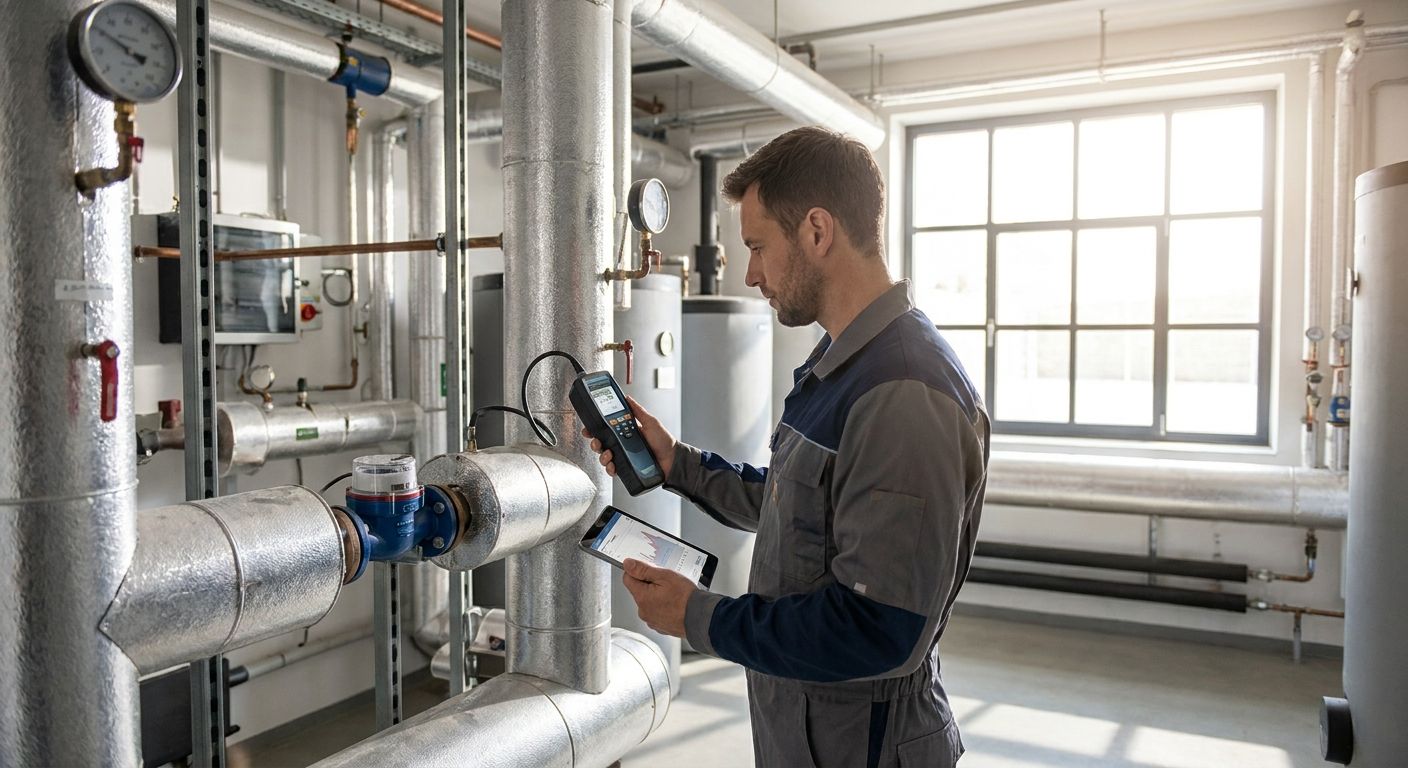
Read the water meter with everything off
This is the cheapest diagnostic in the building and it takes ten minutes. Shut down every water-using fixture and appliance, then watch the meter.
- Locate the low-flow indicator (often a small triangle or dial) on the meter face
- Shut off all fixtures, irrigation, and equipment for a clean read
- Watch for movement on the low-flow indicator over 10-15 minutes
- Record the meter number at the start and end of the test
- A moving meter with everything off confirms a leak downstream of the meter
A leak running at just 1 gallon per minute wastes roughly 43,200 gallons a month — enough to explain a bill that suddenly doubled.
Check backflow preventers and irrigation lines
Commercial backflow assemblies see far more wear than residential ones because they're tested annually and run under constant pressure. A failing relief valve or check valve leaks continuously and rarely gets noticed until the bill arrives.
- Look for water pooling or dripping at the backflow assembly enclosure
- Check the relief valve port for continuous discharge
- Confirm the last annual backflow test date and results
- Inspect irrigation mainlines for wet spots along the run
- Check any pressure-reducing valves feeding the irrigation system
Bring in acoustic and tracer-gas leak detection
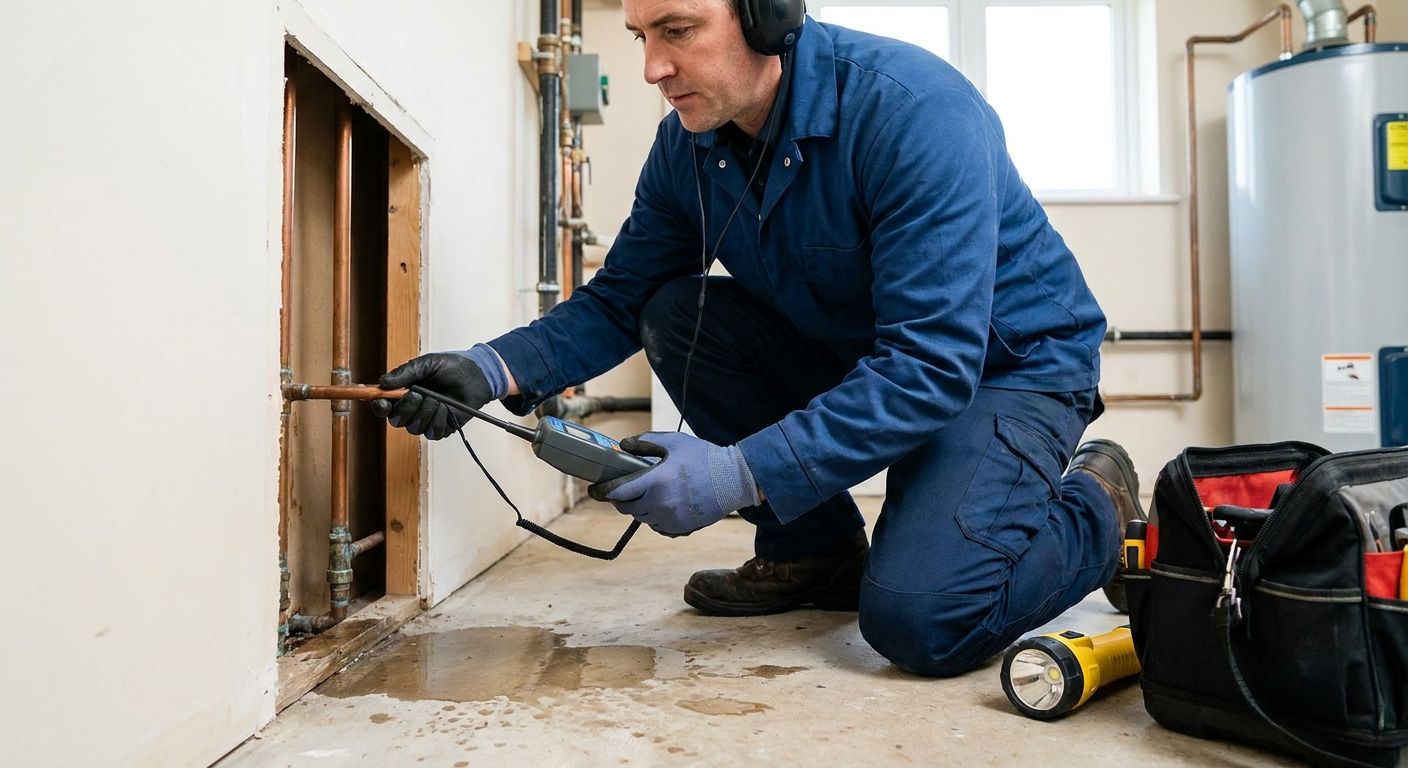
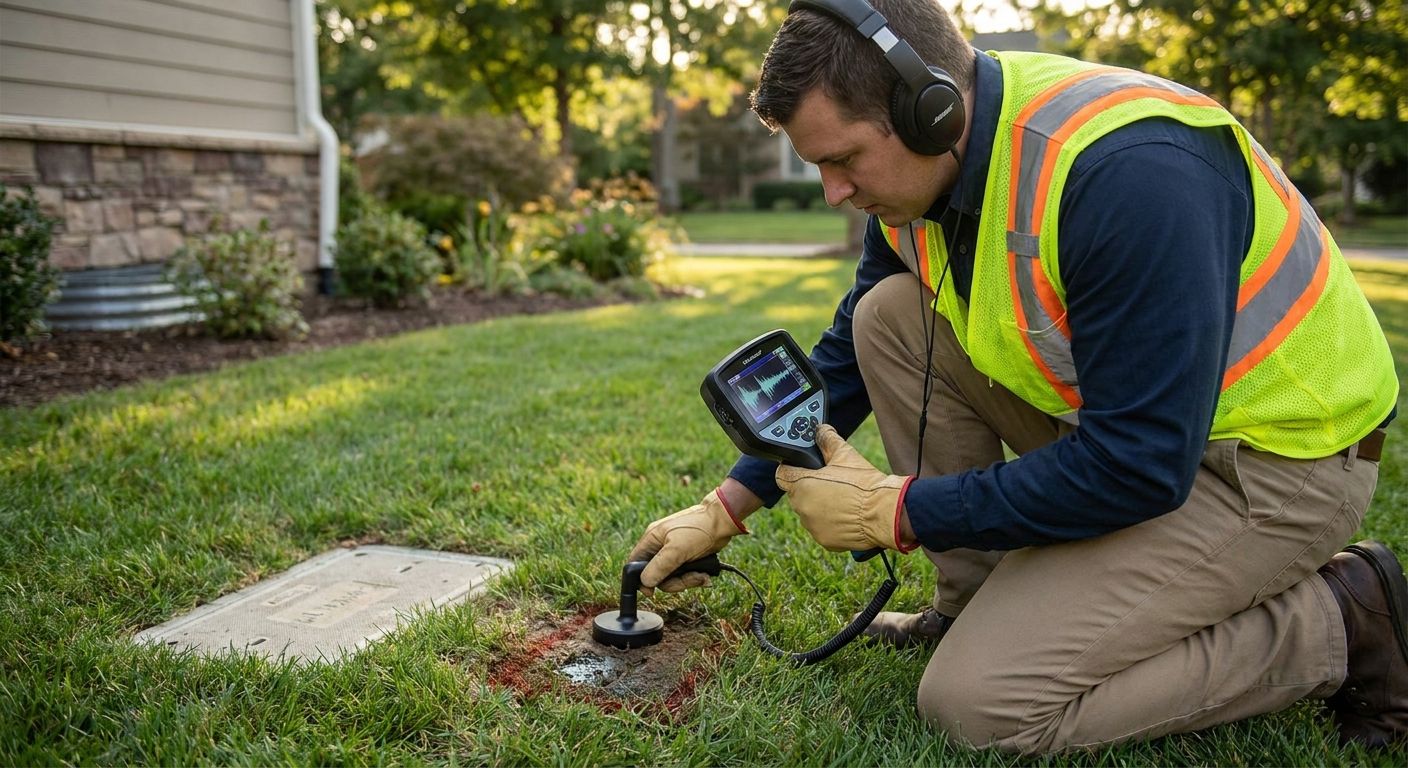
Once the obvious fixtures and the meter test are ruled out, the leak is underground or behind a slab — and that's where a professional leak detection crew earns its keep. Acoustic listening equipment picks up the sound of pressurized water escaping through pipe, and tracer gas pushes a harmless gas through the line to surface where it's leaking.
- Acoustic correlation locates leaks under parking lots, sidewalks, and slabs without digging test pits
- Tracer gas detection works on lines where sound transmission is poor (plastic pipe, deep burial)
- Ground microphones pinpoint the leak within a tight radius before any excavation
- Statewide Sewer & Drain runs both methods depending on pipe material and depth
- A located leak means one targeted repair instead of trenching the whole line
For a full breakdown of how each detection method works on buried supply lines, see underground water line leak detection methods.
Run a video camera inspection on underground lines
Once a leak location is narrowed down, a camera inspection confirms pipe condition before anyone digs. This matters most in older commercial buildings where cast iron, clay, or aging copper is more likely to have failed at a joint.
- Camera inspection shows cracked joints, corrosion, and root intrusion directly
- Footage confirms exactly where to dig, cutting excavation to a single spot
- Video also documents pre-existing pipe condition for future repairs
- Works on both sewer laterals and water supply lines with the right camera head
- Gives building owners a record of pipe condition, not just a guess
Document everything for insurance and ownership
A high water bill caused by a hidden leak sometimes qualifies for a utility adjustment or an insurance claim, especially if the leak caused property damage. Documentation makes or breaks that claim.
- Keep every water bill showing the anomaly, month by month
- Save the leak detection report with location, method, and findings
- Request written video camera inspection footage as a dated record — see video camera inspection for insurance claim documentation
- Get repair invoices itemized by cause, not just labor and parts
- Submit a utility leak adjustment request where the local water authority allows it
Set a baseline and monitor going forward
Once the leak is fixed, the job isn't done — it's set up to happen again without a monitoring habit. Buildings that get hit with a surprise bill once tend to get hit again within a year or two if nothing changes.
- Record a clean baseline usage reading right after the repair
- Set a monthly bill review on the calendar, not just an annual glance
- Flag any usage swing of more than a small percentage above baseline for follow-up
- Schedule an annual backflow test and irrigation inspection before summer season
- Keep camera inspection footage on file to compare pipe condition year over year
“A water bill that climbs without a matching jump in occupancy or output is the plumbing system talking, not the meter malfunctioning.”
Comparing leak detection options for commercial buildings
| Option | Best for | Key limitation |
|---|---|---|
| DIY meter test | First-pass confirmation a leak exists | Confirms a leak, doesn't locate it |
| Fixture and irrigation walk-through | Catching easy, visible leaks fast | Misses anything underground or behind walls |
| Acoustic leak detection | Metal pipe under pavement or slab | Sound transmission drops on deep or plastic pipe |
| Tracer gas detection | Plastic pipe, deep burial, quiet sites | Requires shutting the line down briefly to inject gas |
| Video camera inspection | Confirming pipe condition before repair | Needs an access point (cleanout or dig) to insert the camera |
Verdict: for a commercial building with an unexplained high water bill in 2026, run the meter test yourself first, then bring in acoustic or tracer-gas leak detection to pinpoint the location before anyone digs.
Get the leak located, not guessed at
Acoustic and camera leak detection across Middlesex, Monmouth, Ocean, and Union counties.
Common mistakes commercial buildings make with high water bills
- Assuming the utility made an error. Most water authorities don't misbill at the scale that explains a doubled or tripled account — the meter is usually reading real water loss.
- Digging before locating. Excavating a parking lot or landscaped area on a guess wastes money that a leak detection survey would have saved.
- Ignoring the backflow assembly. Building owners check fixtures and irrigation but skip the backflow preventer, which is one of the most common continuous-leak points on commercial property.
- Waiting for the next bill to confirm the trend. Every month a leak runs unlocated is another full bill cycle of water loss — the meter test takes ten minutes and confirms the problem same-day.
- Skipping documentation. Building owners who don't keep dated leak detection and camera inspection records lose their strongest case for a utility adjustment or insurance claim.
FAQ
What causes a sudden high water bill in a commercial building?
A sudden high water bill in a commercial building is usually caused by an underground supply line leak, a failing backflow preventer, or continuous-flow equipment like cooling towers and irrigation running longer than intended. A meter test with everything off confirms whether water is actively leaking downstream of the meter.
How do you find a leak without digging up the whole property?
Acoustic leak detection and tracer gas detection locate leaks under pavement, slabs, and landscaping without excavation. Both methods narrow the leak to a specific spot so digging happens in one location instead of trenching the entire line.
Is commercial leak detection different from residential leak detection?
Yes. Commercial buildings have longer supply runs, backflow prevention assemblies, and equipment like cooling towers and irrigation systems that residential leak detection doesn't have to account for, and commercial water billing tiers can amplify a small leak into a large bill increase.
Can a running toilet really explain a spike in a commercial water bill?
A single running toilet can waste up to 200 gallons a day according to EPA WaterSense estimates, and a building with multiple restrooms and several stuck-open toilets can add up to a real bill increase without ever flooding anything.
How much water does a small leak actually waste?
A leak running at just 1 gallon per minute wastes about 43,200 gallons a month, which is enough on its own to push a commercial water bill into a higher usage tier.
Does a backflow preventer need to be checked for leaks?
Yes. Backflow preventers run under constant pressure and a failing check valve or relief port can leak continuously without pooling visibly, making them one of the most overlooked sources of high commercial water bills.
Can leak detection findings be used for an insurance claim?
Yes, when the leak caused property damage or qualifies for a utility bill adjustment, a dated leak detection report and video camera inspection footage serve as documentation for the claim.
How often should a commercial building check for hidden leaks?
A monthly water bill review catches most leaks within one billing cycle, and an annual backflow and irrigation inspection before summer catches the seasonal failures that don't show up the rest of the year.
One last thing
The meter test is the one step building owners skip most, and it's the one that costs nothing and takes ten minutes. Before booking any leak detection crew in 2026, shut every fixture off and watch that low-flow indicator — if it's moving, the leak is real and the next call is about where it is, not whether it exists.