New Jersey homeowners dealing with a burst pipe need leak detection that isolates the break in minutes, not hours, before water tears through drywall, subfloors, and slab foundations. Homes in Middlesex, Monmouth, Ocean, and Union County carry older cast iron and copper lines that fail differently than new PEX systems, and shore-town water tables complicate anything buried underground.
- Burst pipe leak detection starts with shutting off the main water valve, not calling a plumber first.
- A stalled water meter dial after a full shutoff means the leak sits inside the house, not the street line.
- Acoustic and video camera leak detection pinpoint the break without opening walls or excavating a yard.
- Homes built before 1975 with cast iron or galvanized supply lines fail faster once corrosion starts.
- Get-It-Flowing runs 24-hour emergency leak detection across Middlesex, Monmouth, Ocean, and Union County in 2026.
Why burst pipe leak detection matters for New Jersey homeowners
A burst pipe in a slab-foundation home doesn't announce itself the way a burst pipe in a basement does. Water finds the path of least resistance under concrete, which means damage often shows up in a room far from the actual break. Slab foundation leak detection exists as its own service category for exactly this reason.
Freeze-thaw cycles hit exposed and poorly insulated pipe runs hardest in January and February, and homes near the Raritan Bay and the Jersey Shore deal with corrosion from salt air on top of age. The combination of old pipe material and seasonal freeze stress is why burst pipe emergencies cluster in winter across these four counties.
Homeowners who wait to call anyone lose the most time-sensitive window: the first hour after discovering water where it shouldn't be. That's the window where shutting off the main and running a basic leak check saves drywall, flooring, and insulation.
How to detect a burst pipe before it floods your home
Work through these steps in order. The first three cost nothing and take under 20 minutes combined.
Shut off the water at the main valve
Do this before anything else, including before you start looking for the leak.
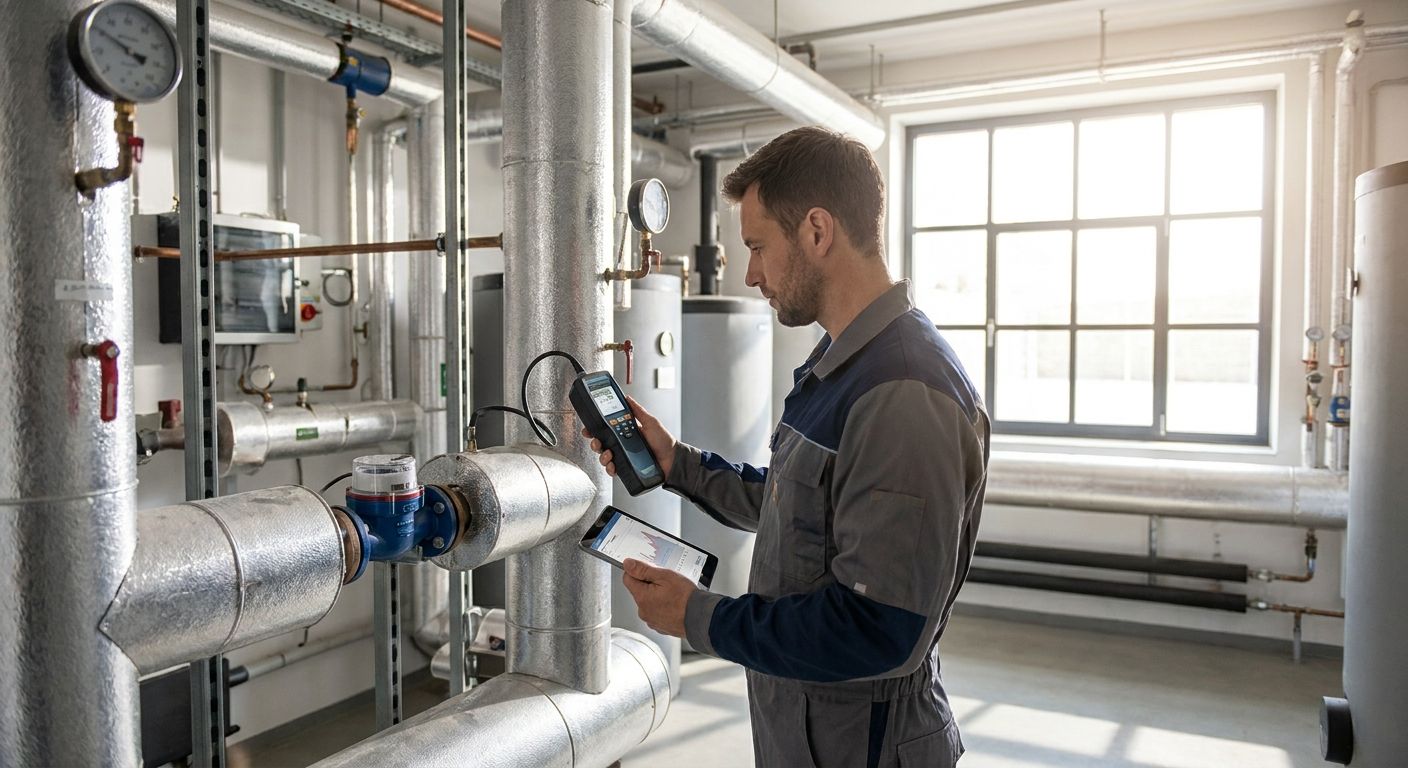
- Locate the main shutoff, usually near the water meter or where the line enters the house
- Turn the valve fully clockwise until it stops
- Shut off the water heater if the leak is on the hot side
- Note the time you shut it off, since you'll use that for the meter test next
Run the water meter test
This single test tells you whether you have an active leak inside the house, separate from the burst pipe you've already found.
- Confirm every fixture in the house is off, including ice makers and irrigation valves
- Read the water meter dial and write down the number
- Wait 15 minutes without using any water
- Check the dial again — any movement means water is still flowing somewhere in the system
Check for visible and hidden signs of water damage
A burst pipe rarely stays contained to one spot.
- Look for water stains spreading across ceiling drywall or bulging paint
- Press on baseboards and flooring near exterior walls for softness
- Smell for musty odor in closets and crawlspace access points
- Check for warm spots on slab flooring, which can indicate a hot water line break underground
Bring in acoustic or electronic leak detection
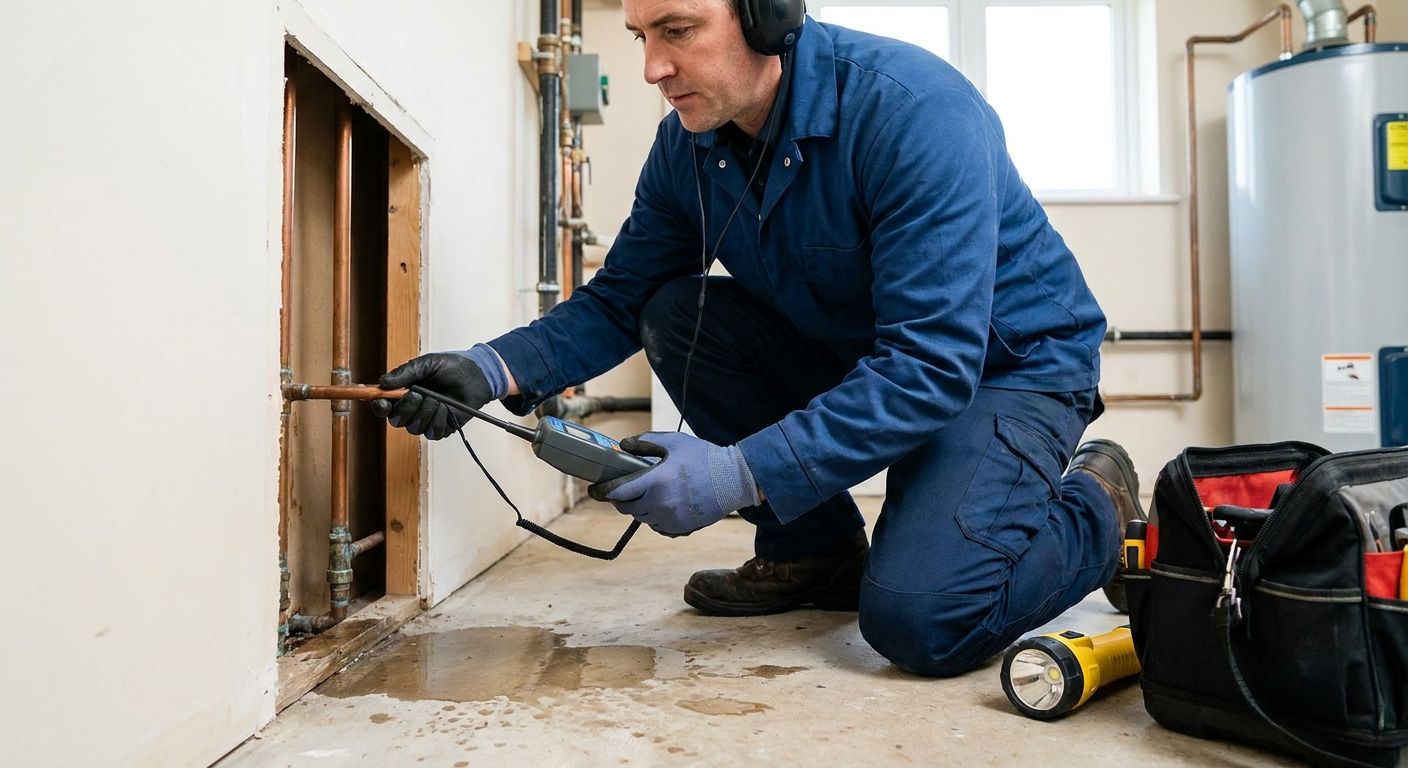
Once the obvious signs run out, guessing where to cut drywall or break concrete gets expensive fast. This is where underground water line leak detection equipment does the job a homeowner can't.
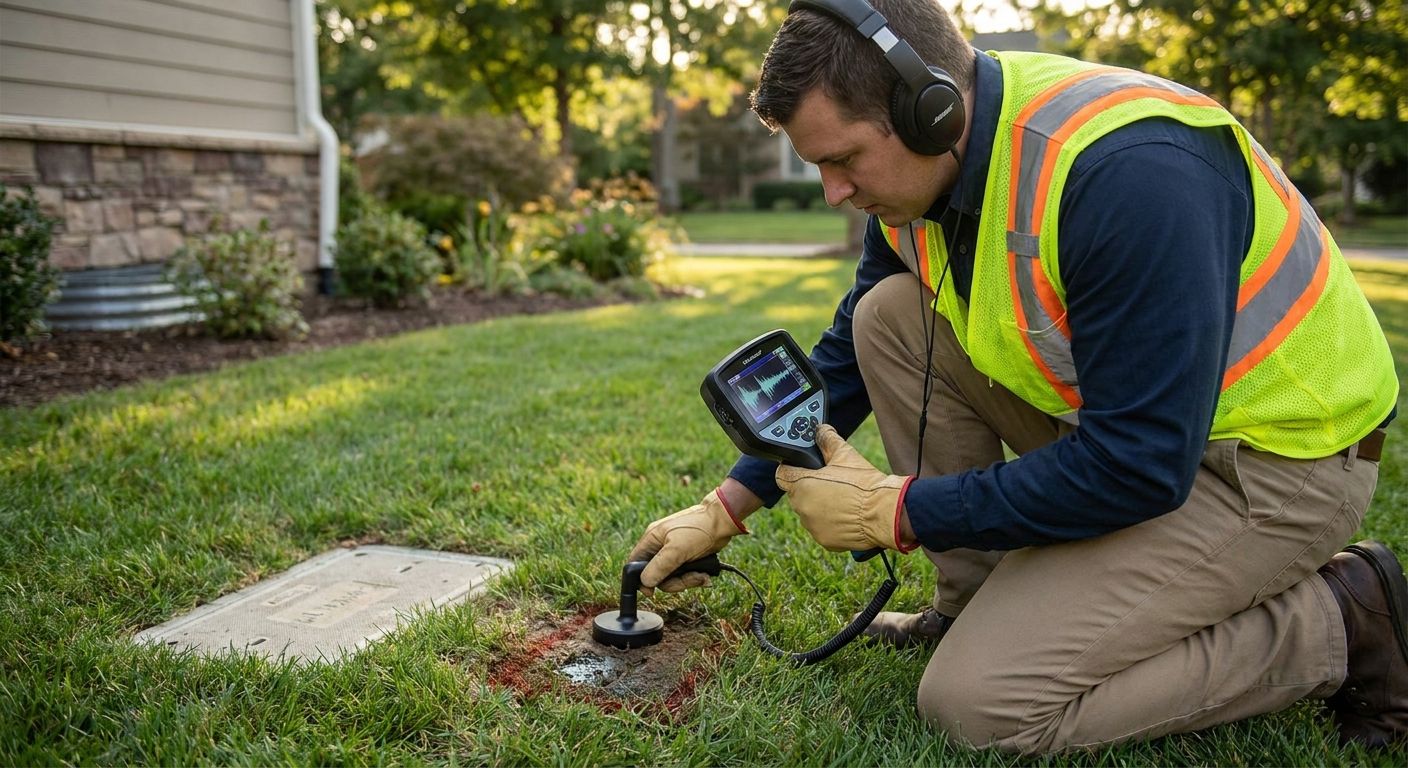
- Acoustic listening devices pick up the sound of pressurized water escaping through soil or concrete
- Electronic correlators triangulate the leak location between two access points on the line
- Thermal imaging flags temperature differences on slab floors from hot water leaks
- Tracer gas methods work when acoustic detection gets blocked by heavy insulation or deep burial
Confirm the break with a video camera inspection
A camera run down the line after acoustic detection narrows the target confirms exactly where the pipe failed and whether corrosion or a tree root contributed. It also documents the damage for insurance, which matters if you're filing a claim — see video camera inspection for insurance claim documentation for what adjusters typically ask for.
Get the repair scheduled before secondary damage sets in
Water sitting under a slab or inside a wall cavity for more than 24-48 hours starts growing mold and softening structural framing.
- Book the repair the same day detection confirms the location
- Ask whether the fix is a spot repair, a re-route, or a full section replacement
- Confirm whether the crew handles both the leak repair and any resulting sewer backup — how to respond to a sewer backup emergency covers the overlap when a burst supply line floods a drain system
- Get a written scope before work starts, even for emergency calls
“If the water meter dial is still moving 15 minutes after every fixture is off, the leak is inside your house, not the street line.”
Leak detection options compared for New Jersey homes
| Method | Best for | Key limitation |
|---|---|---|
| Visual inspection (DIY) | Obvious surface leaks in basements or crawlspaces | Misses anything under a slab or behind finished walls |
| Water meter test | Confirming an active leak exists anywhere in the system | Doesn't locate the leak, only proves it's there |
| Acoustic/electronic detection | Underground and slab leaks in copper or PVC lines | Less accurate on very deep lines or extremely noisy environments |
| Video camera inspection | Confirming exact break location and pipe condition | Requires line access points; doesn't detect leaks in solid supply pipe on its own |
| Full re-pipe assessment | Homes with repeated leaks in aging cast iron or galvanized pipe | Bigger scope than a single burst pipe repair |
Acoustic detection paired with a camera confirmation wins for slab and underground leaks — it avoids the guesswork of breaking concrete in the wrong spot.
Get emergency leak detection now
24-hour service across Middlesex, Monmouth, Ocean, and Union County.
Common mistakes New Jersey homeowners make with burst pipes
- Skipping the main shutoff to search for the leak first — every minute the water runs adds square footage of damage
- Assuming a dry-looking spot means no leak — slab leaks travel sideways under concrete before surfacing
- Cutting into drywall based on a guess — without acoustic or camera confirmation, homeowners often open the wrong wall
- Filing an insurance claim without documentation — adjusters want a camera record of the pipe condition before repair, not after
- Repairing the visible break and ignoring what caused it — corrosion in one section of cast iron pipe usually means more failures are coming in 2026 and beyond
FAQ
How do you detect a burst pipe leak without cutting into walls?
Acoustic leak detection listens for the sound of pressurized water escaping through soil, concrete, or wall cavities and pinpoints the location within a few feet. A video camera inspection then confirms the exact break point before any wall or slab gets opened.
What's the first thing to do when a pipe bursts?
Shut off the water at the main valve immediately, before you start looking for the leak source. This stops active flooding while you run the water meter test to check for any secondary leak in the system.
How can you tell if a leak is inside the house or on the street side?
Shut off the main valve, then check the meter dial. If the dial stops moving, the leak sits on the street side of the meter; if it keeps moving, the leak is inside the house.
Is a burst pipe covered by homeowners insurance in New Jersey?
Coverage depends on the specific policy and the cause of the burst, so check the policy directly. A video camera inspection documenting the pipe condition at the time of the break strengthens most claims.
How long does emergency leak detection take?
A meter test and visual inspection take under an hour. Acoustic and camera confirmation on a slab or underground line typically adds another visit depending on access points to the plumbing.
Can a burst pipe cause a sewer backup?
A burst supply line can overwhelm a drain system if enough water floods a floor drain or crawlspace sump, triggering backup symptoms that look like a separate sewer problem. Both issues need separate diagnosis even when they show up together.
Do older New Jersey homes need different leak detection than newer homes?
Homes with cast iron or galvanized supply lines installed before 1975 corrode from the inside out, which acoustic detection reads differently than it reads a clean PVC or PEX line. Camera confirmation matters more on older pipe because corrosion can mimic multiple leak points.
What's the difference between a leak detection service and a plumber?
Leak detection uses acoustic, electronic, and camera equipment to locate a leak without excavation or demolition. A plumber then handles the actual repair once the location is confirmed — many companies, including Get-It-Flowing, run both under one visit.
One last thing
A water meter that keeps spinning after every fixture is off is the single most reliable signal a homeowner can check without any equipment, and it's the test most people skip. Run it before making any repair decision in 2026 — it's the difference between fixing the actual leak and fixing the one you assumed was there.