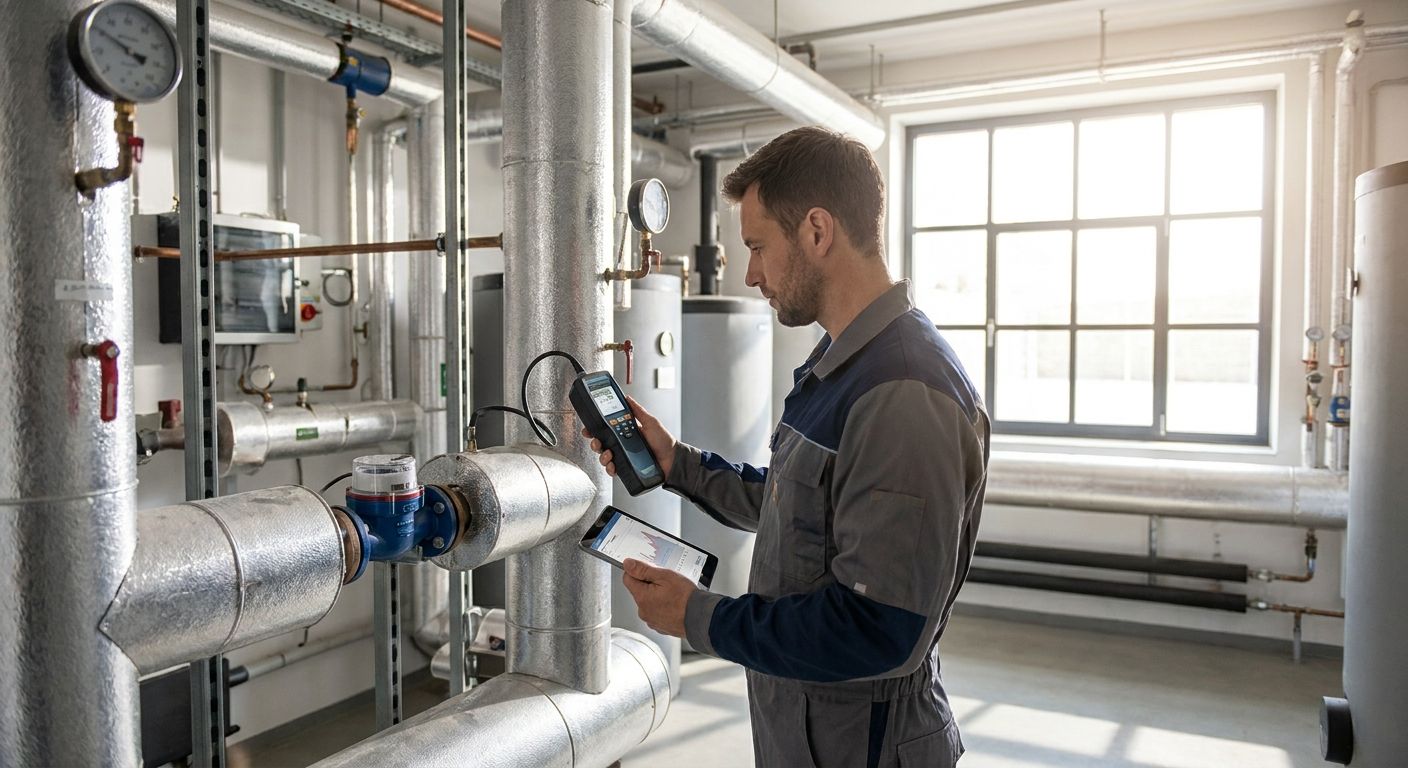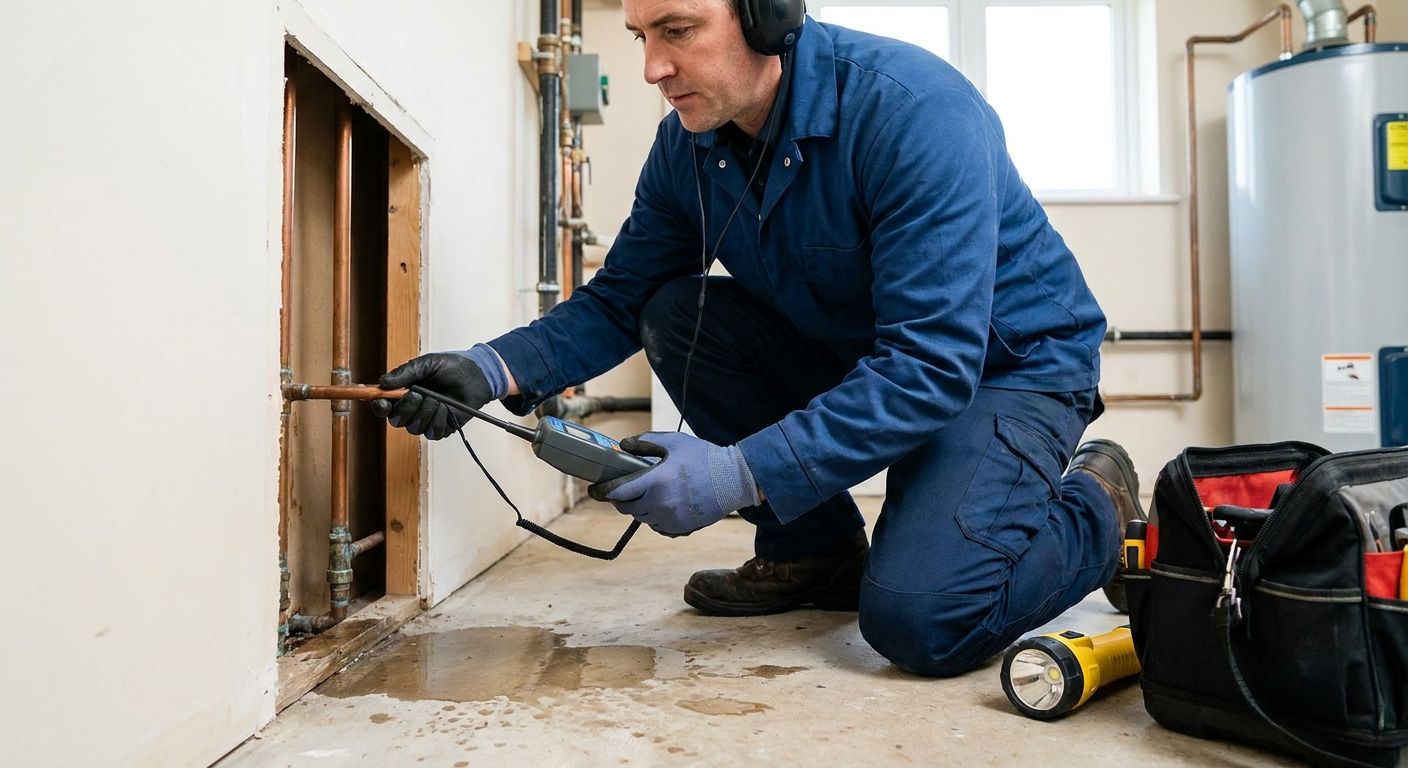
Best overall: acoustic (electronic) leak detection. Best for pre-dig mapping: line locating with tracer gas. Best budget option: dye testing. For most underground water line leaks in New Jersey, a technician who starts with acoustic listening equipment and confirms with line locating before any digging happens is the fastest route from "there's a leak somewhere" to a repaired pipe.
- Acoustic leak detection wins for underground water lines because it pinpoints the leak without excavation guesswork.
- Line locating with tracer gas is the right call before you dig — it maps the pipe path first.
- Video camera inspection confirms pipe condition on 3/4-inch to 2-inch lines when acoustic alone isn't conclusive.
- Dye testing is the budget option, but it only works when the leak point is already visible or accessible.
- Statewide Sewer & Drain runs underground leak detection across Middlesex, Monmouth, Ocean, and Union counties in 2026.
Why this matters
A slow underground leak doesn't announce itself. Water bills creep up, a patch of lawn stays wet in July, or a slab starts sounding hollow underfoot — and by the time any of that is obvious, the pipe has usually been leaking for weeks.
Digging blind to find it is the expensive way to solve the problem. A crew that trenches the wrong 20 feet of yard costs you landscaping repair on top of the plumbing bill. The right underground leak detection method tells a technician exactly where to dig before a single shovel goes in the ground.
Statewide Sewer & Drain runs leak detection alongside hydro jetting, video camera inspection, and line locate work across Middlesex, Monmouth, Ocean, and Union counties, which matters because the right method often depends on what's already known about the pipe — material, depth, and whether it's under a slab, driveway, or open lawn.
What makes the best underground leak detection method
- Locates the leak point, not just a general zone — a marked spot beats a 15-foot "probably somewhere here" estimate
- Works across pipe materials common on 3/4-inch to 2-inch residential water lines — copper, PVC, and older galvanized runs
- Handles typical NJ pipe depths without needing the whole yard excavated to test
- Doesn't require shutting off water to the property for hours to get a reading
- Holds up under normal street or house pressure instead of needing the line drained first
- Gives a technician confidence before excavation starts, so the dig is sized to the actual leak
Underground leak detection methods at a glance
| Method | Best for | Standout feature | Key limitation |
|---|---|---|---|
| Acoustic (electronic) leak detection | Pinpointing leaks without digging | Marks an exact point on the surface | Background noise from traffic or appliances can interfere |
| Line locating with tracer gas | Mapping the pipe path before excavation | Traces the line even through non-metallic pipe | Confirms path, not always the exact leak point on its own |
| Video camera inspection | Confirming pipe condition on larger or accessible lines | Shows cracks, joint separation, and root intrusion directly | Limited to pipe diameters the camera can travel through |
| Hydrostatic pressure testing | Confirming a leak exists before locating it | Cheap first step, isolates the leaking section | Doesn't tell you the exact spot, just that one exists |
| Dye testing | Simple, visible leak confirmation | No specialized equipment required | Useless once the leak is buried under a slab or deep soil |
1. Acoustic (electronic) leak detection: best for pinpointing without excavation
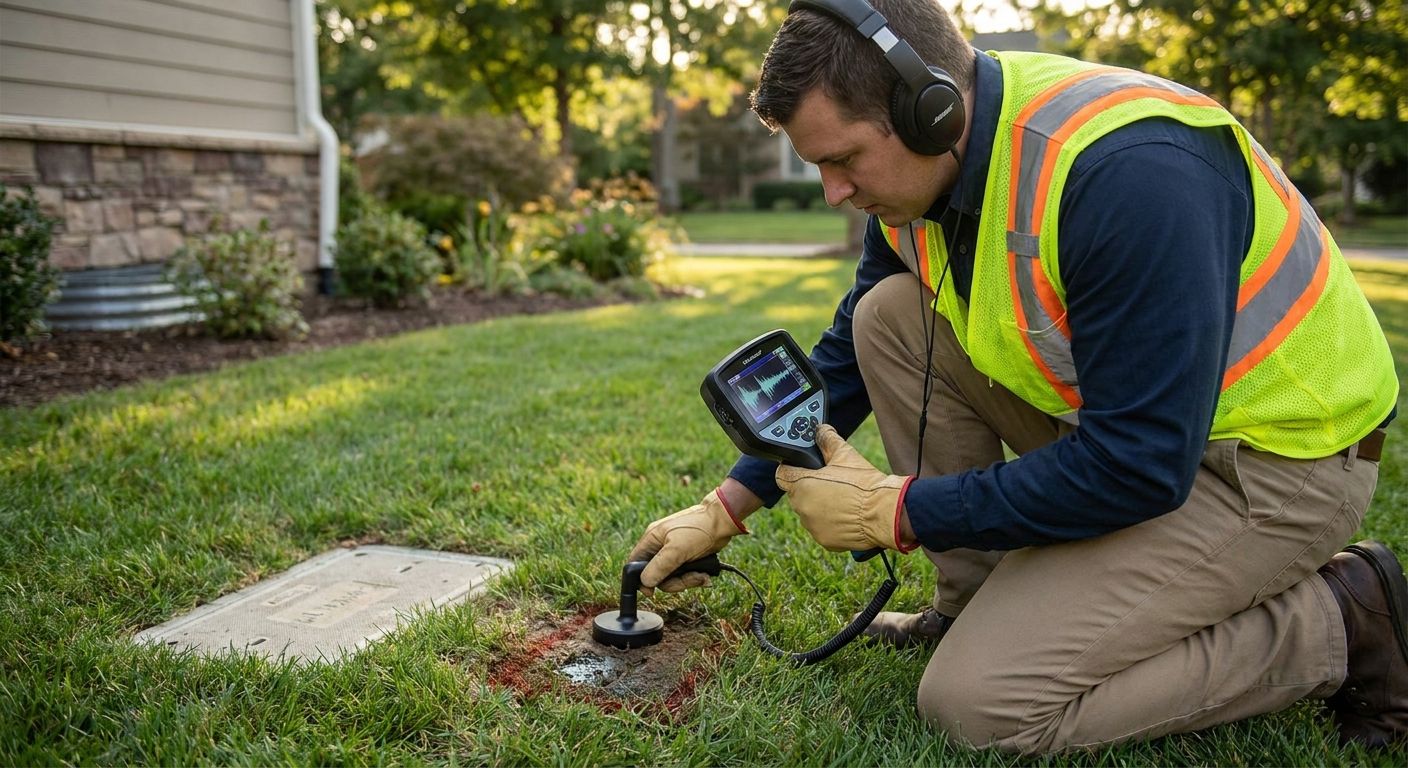
Acoustic leak detection uses ground microphones and amplification equipment to listen for the sound water makes escaping a pressurized pipe. A technician walks the suspected line with headphones and a sensor, and the equipment gets louder as it passes over the leak point. This is the method most underground water line jobs start with in 2026 because it works through soil, concrete, and asphalt without opening anything up.
Acoustic leak detection pros:
- Marks a precise point instead of a general zone
- Works on buried lines under lawns, driveways, and slabs
- No excavation needed just to test
- Effective on copper and PVC residential lines
Acoustic leak detection cons:
- Traffic noise, HVAC units, or nearby appliances can throw off a reading
- Very slow, low-pressure leaks are harder to hear than active ones
- Requires a trained ear and calibrated equipment — not a DIY tool
Best for: homeowners and property managers who need an exact dig point on a suspected underground leak. Verdict: Recommended.
2. Line locating with tracer gas: best for mapping the pipe path before you dig
Line locating traces the physical route of the pipe using electronic locating equipment, sometimes paired with tracer gas pushed through the line to detect where it escapes. This method answers a different question than acoustic detection — it tells you where the pipe runs, which matters when old records are wrong or nonexistent, a common problem on properties with cast iron or galvanized lines installed decades before 2026.
Line locating pros:
- Maps the pipe route even through non-metallic material
- Useful when there's no reliable record of where the line runs
- Combines well with acoustic detection for a two-step confirmation
Line locating cons:
- Confirms the path, not always the exact leak point by itself
- Tracer gas methods need the line accessible at one end
- Adds a step and a technician visit before excavation planning
Best for: older properties where the water line's route isn't documented, or before any excavation planning starts. Verdict: Recommended.
3. Video camera inspection: best for confirming pipe condition directly
Video camera inspection sends a camera head through the line to show cracks, joint separation, corrosion, or root intrusion on the pipe wall itself. It's the most direct way to see pipe condition, and it doubles as documentation if a leak turns into an insurance claim.
Video camera inspection pros:
- Shows the actual physical damage, not just an inferred leak location
- Creates visual documentation useful for insurance or repair scoping
- Works well alongside acoustic detection when a section is already isolated
Video camera inspection cons:
- Camera access is limited by pipe diameter — tight residential water lines can restrict travel
- Doesn't work well on lines with heavy mineral buildup blocking the view
- Best used to confirm a suspected section rather than search a whole yard
Best for: confirming pipe condition once acoustic detection or line locating has narrowed the search area. Verdict: Recommended for confirmation, not first-step searching.
4. Hydrostatic pressure testing: best for confirming a leak exists
Hydrostatic testing pressurizes an isolated section of pipe with water and watches for a pressure drop over time. It's a diagnostic step, not a locating method — it tells you a leak exists in a given section before anyone spends time or money finding the exact point.
Hydrostatic pressure testing pros:
- Cheap, straightforward first step
- Isolates which section of the system has the problem
- Rules out fixture-level leaks before assuming an underground line is at fault
Hydrostatic pressure testing cons:
- Doesn't identify the exact leak location
- Requires shutting down water to the tested section during the test
- Not useful once you already know a leak exists and just need the spot
Best for: the first call when you suspect a leak but don't yet know if it's underground or somewhere else in the system. Verdict: Situational — use it as a diagnostic step, not a final answer.
5. Dye testing: best budget option for accessible leaks
Dye testing puts a visible or fluorescent dye into the water supply and watches for it to surface at the suspected leak point. It costs almost nothing in equipment and works fine when the leak point is already partially visible — a wet patch, a damp foundation wall, a puddle near a meter pit.
Dye testing pros:
- Minimal equipment cost
- Fast to set up when a leak's general area is already known
- Easy to interpret — the dye either shows up or it doesn't
Dye testing cons:
- Useless once the leak is buried under a slab or several feet of soil
- Doesn't work if the water table or heavy soil moisture masks the dye
- Gives no information about pipe condition or depth
Best for: shallow, partially visible leaks where digging isn't the question — confirmation is. Verdict: Skip for buried lines; use it only when the leak is already showing at the surface.
How we ranked these
The order above follows the criteria: methods that locate a leak without excavation rank above methods that only confirm one exists, and methods that work across common NJ pipe materials and depths rank above ones limited to specific conditions. Acoustic detection tops the list because it hits every criterion for a typical underground water line call. Dye testing sits last because it fails the moment the leak isn't already visible — which describes most underground leak calls.
“A dig point marked by acoustic detection beats a guess every time — the difference is a two-foot hole versus a trench across the yard.”
Which underground leak detection method should you choose?
Start with acoustic (electronic) leak detection if you already know roughly where the line runs — it's the fastest path to an exact dig point in 2026. If the route itself is unknown or undocumented, line locating with tracer gas comes first. Reach for video camera inspection when you need to see pipe condition directly, and treat hydrostatic testing and dye testing as supporting steps rather than a standalone answer for a buried line.
For most homeowners across Middlesex, Monmouth, Ocean, and Union counties, choosing a reliable drainage company that runs acoustic detection and line locating as standard practice — not just dye testing — is the difference between a two-foot repair hole and a trenched-up yard.
Get your leak located, not guessed at
Serving Middlesex, Monmouth, Ocean, and Union counties, NJ.
FAQ
What's the best method for detecting a leak in an underground water line?
Acoustic (electronic) leak detection is the best starting method for most underground water lines in 2026 because it pinpoints the leak location through soil, concrete, or asphalt without excavation. Line locating adds pipe-path mapping when the route isn't documented.
Is line locating the same as leak detection?
No. Line locating maps where the pipe physically runs, while leak detection finds where water is escaping along that line. The two are often used together on older properties where pipe records are missing.
How much does underground leak detection cost?
Cost depends on pipe depth, material, and how much of the line needs to be checked. Ask for current pricing directly since it varies by job scope.
Can you find a water leak without digging up the yard?
Yes — acoustic leak detection and line locating both work without excavation. Digging only starts once the leak point is confirmed, which limits the hole to the actual repair area.
Does dye testing work for underground leaks?
Dye testing only works when the leak is already partially visible at the surface. Once a leak is buried under a slab, driveway, or several feet of soil, dye testing won't show anything useful.
How do you know if an underground pipe is leaking versus a fixture inside the house?
Hydrostatic pressure testing isolates sections of the plumbing system to confirm where a leak is before anyone locates the exact point. It's a useful first step when the source isn't obvious.
What pipe materials can acoustic leak detection find leaks in?
Acoustic detection works on copper, PVC, and older galvanized lines commonly found on residential water services in New Jersey. Pipe material affects sound transmission but rarely rules out the method entirely.
Should I get a video camera inspection for a suspected water line leak?
Video camera inspection is best used to confirm pipe condition once acoustic detection or line locating has already narrowed the search area, not as the first search step. It's especially useful when documentation for an insurance claim is needed.
One last thing
The method that gets skipped most often is line locating — homeowners assume the plumber already knows where the pipe runs, and on a property with 40- or 50-year-old records, that's rarely a safe assumption. Mapping the line first is what keeps a leak repair from turning into an accidental hit on a gas or electrical line during excavation.