A slow-draining tub, gurgling toilets, and sewage smell in the basement mean your main sewer line is clogging — and if you catch it early, you can clear it yourself before it backs up into every fixture in the house.
- Test every drain in the house first — if more than one backs up at once, the clog is in the main line, not a branch pipe.
- A 25-foot drum auger clears most root and grease clogs in main lines 4 inches or smaller.
- Running water while snaking pushes debris through instead of packing it tighter — always run the tap.
- If two auger attempts fail or the cleanout is buried, call Statewide Sewer & Drain LLC before the backup reaches the basement.
Why this matters
A main sewer line clog does not stay contained. Once it blocks, wastewater has nowhere to go but back up through the lowest drain in the house — usually a basement floor drain or a downstairs toilet. In Matawan and across Middlesex, Monmouth, Ocean, and Union counties, the most common culprits in 2026 are root intrusion into older clay and cast-iron pipe, grease buildup in kitchen lines that feed into the main, and flushed wipes that don't break down. Catching the clog at the gurgle-and-slow-drain stage saves you a flooded basement and a much bigger repair bill.
What you'll need
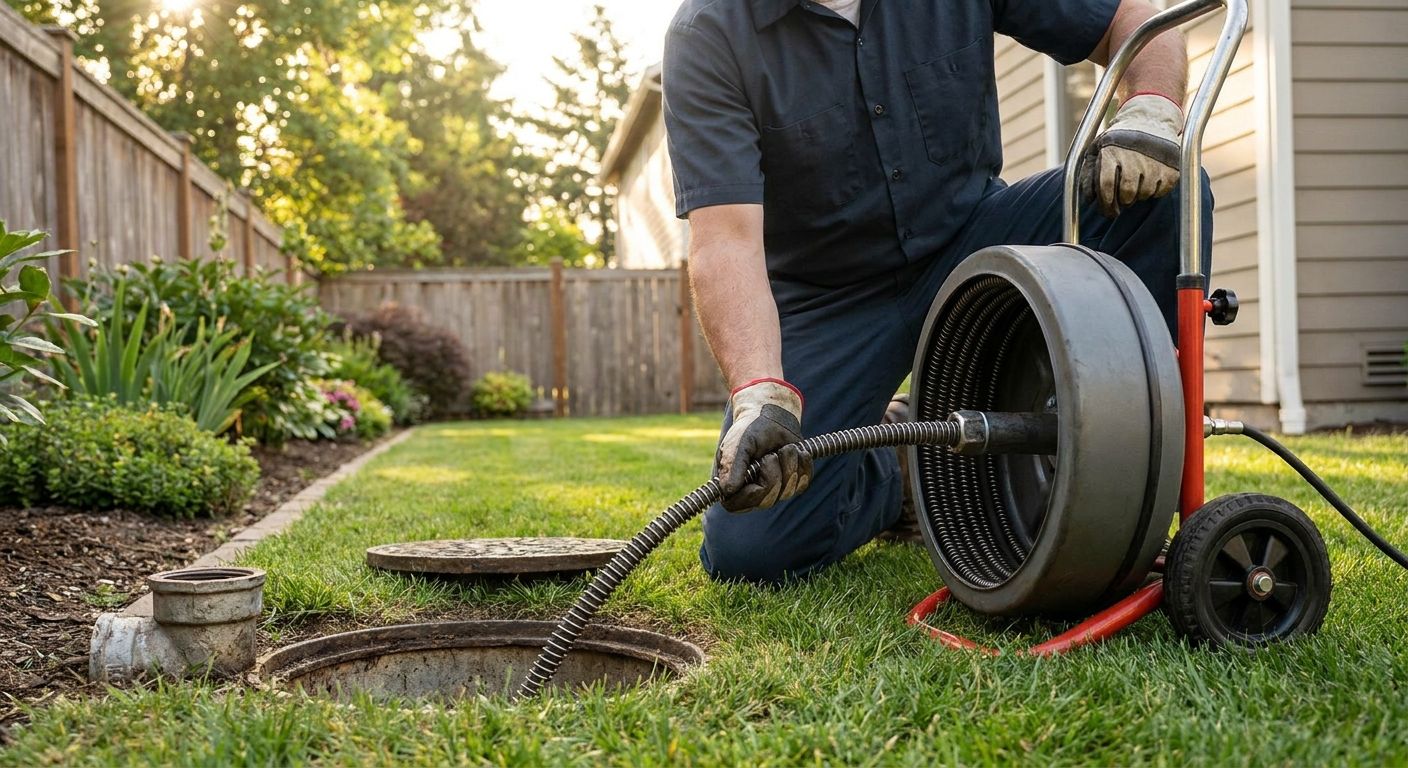
- A drum auger (also called a plumber's snake), 25 feet minimum, for main-line work
- Work gloves and safety glasses
- A bucket and old towels for the cleanout opening
- A pipe wrench to open the cleanout cap
- A flashlight to locate the cleanout if it's not obvious
- 30-45 minutes for a straightforward clog; longer if you're locating a buried cleanout
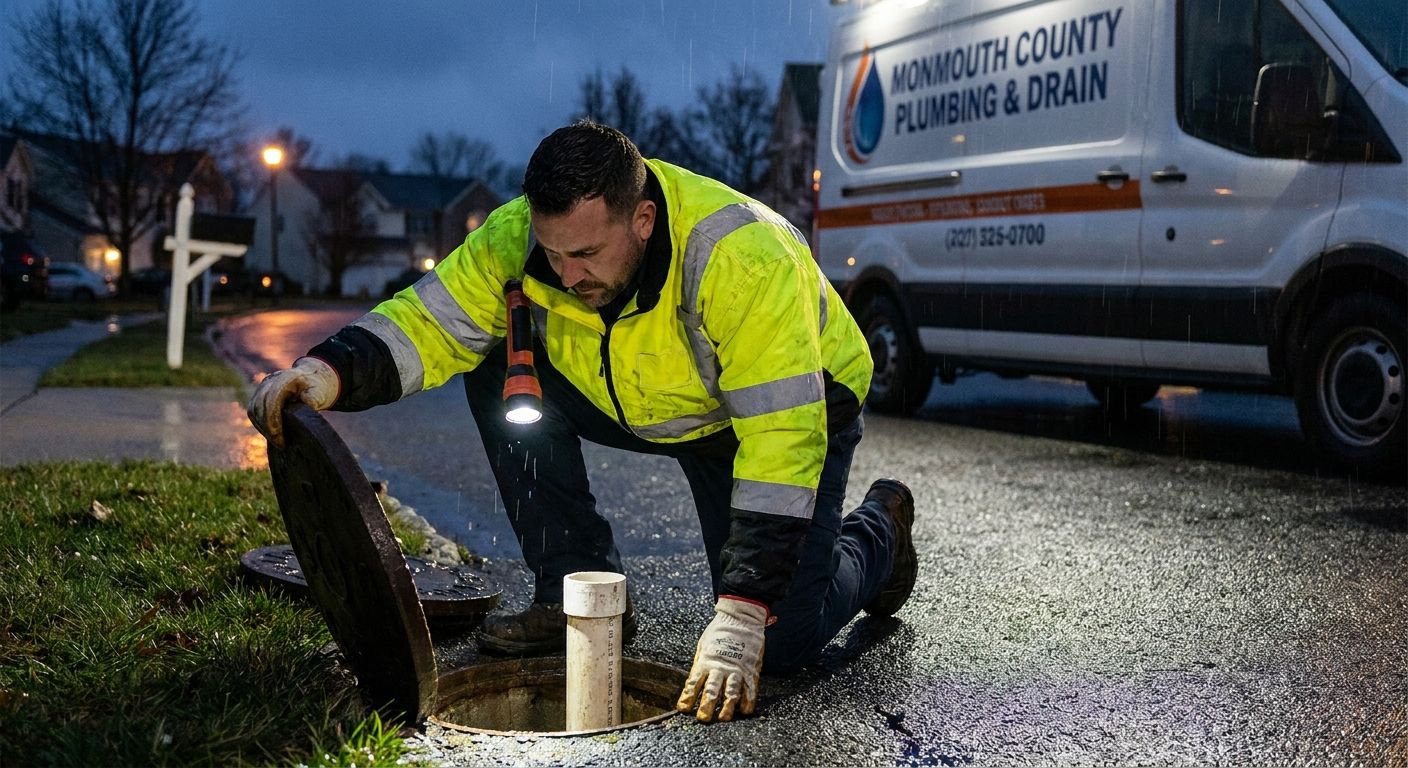
Most homes built after the 1970s have a main line cleanout — a capped pipe fitting, usually a Y-shaped or T-shaped white PVC stub, sticking up near the foundation outside or in the basement floor. If your house doesn't have one, or you can't find it, that's the point where a professional camera inspection saves you hours of guesswork.
The steps
1. Confirm it's the main line, not a branch drain
Run water in the kitchen sink, then flush a toilet, then run the tub. If only one fixture backs up, the clog is local to that branch. If multiple fixtures gurgle or back up together, or if water rises in the lowest drain in the house when you run water anywhere else, the clog sits in the main line. This distinction matters because snaking a branch line does nothing for a main-line blockage, and vice versa.
2. Locate and open the cleanout
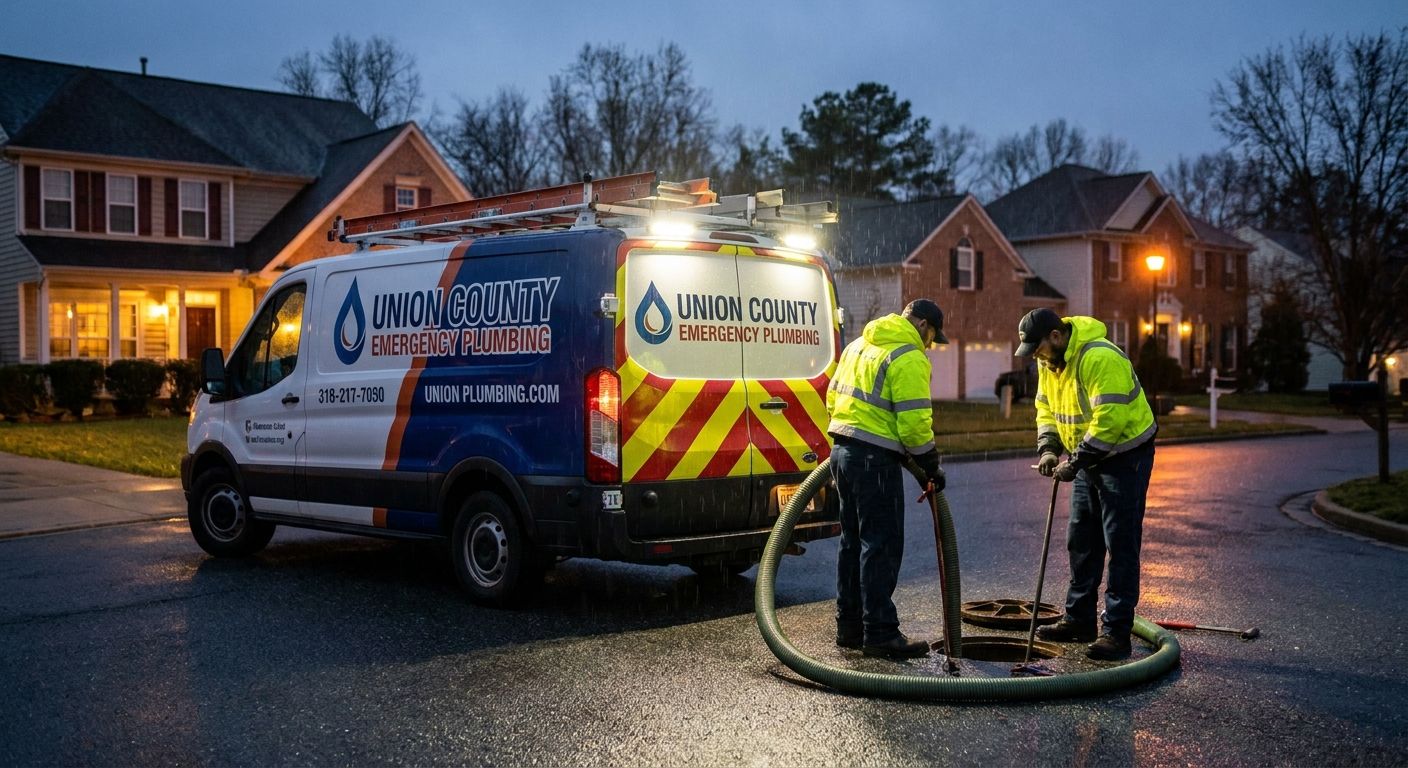
Find the cleanout — typically a capped fitting near where the sewer line exits the foundation, or a floor-level cap in the basement. Place a bucket underneath before you touch the cap; there's almost always standing wastewater behind it under pressure. Use a pipe wrench to turn the cap counterclockwise, and back away as it releases — expect some backflow.
3. Feed the auger in slowly
Insert the auger cable into the cleanout opening and feed it in a few feet at a time, cranking the handle clockwise as you go. Going too fast lets the cable coil up short of the actual clog instead of reaching it. Most residential main lines run 4 inches in diameter, and a standard 25-foot drum auger reaches most clogs within the first 15 to 20 feet from the house.
4. Work through resistance, don't force it
When the cable hits resistance, that's either the clog or a bend in the pipe (a main line typically has at least one 45-degree turn toward the street). Crank steadily and push gently — you'll feel the cable either break through or catch on roots. If it's roots, you'll feel a distinct chattering vibration through the cable as the cutting head chews through them.
5. Pull back and clear the head repeatedly
Every few feet of progress, reel the cable back out and clear whatever's caught on the cutting head — grease, wipes, root fragments. Skipping this step just repacks debris deeper into the line instead of removing it. Repeat the feed-and-pull cycle until the cable moves freely with no resistance for the last several feet.
6. Flush with running water
Once the cable moves through clean, leave a garden hose or the nearest tap running into the cleanout (or run water through the house plumbing) for a full 5 minutes. This confirms the line is actually open and flowing, not just poked through. Watch the water level at the cleanout — it should drain fast with no backup.
7. Recap and retest every fixture
Replace the cleanout cap hand-tight plus a quarter turn with the wrench — overtightening cracks the PVC threading. Flush every toilet and run every drain in the house one more time to confirm nothing gurgles or backs up.
Common mistake: stopping after the auger breaks through once. A single pass often just punches a hole through the clog rather than clearing it, and the blockage reforms within days.
“A single auger pass punches a hole through the clog — it doesn't clear it. Repeat the feed-and-pull cycle until the cable moves free for good.”
Troubleshooting
- The auger won't advance past a few feet. You've likely hit a bend, not the clog. Back the cable out 6 inches and re-angle the feed before pushing again.
- Water backs up faster than you can clear it. The clog may be closer to the street connection than your auger can reach — a 25-foot cable often isn't enough for lines running 40+ feet to the city main.
- The cable comes back covered in fine roots repeatedly. This points to root intrusion at a pipe joint, which an auger manages short-term but doesn't fix — hydro jetting clears the full pipe diameter and removes root mass an auger only chews through.
- You can't find a cleanout anywhere. Older Matawan-area homes, especially pre-1960s construction, often lack one. A video camera inspection locates the line path and any existing access point before you dig or cut into anything.
- The clog clears but returns within a week. Recurring clogs at the same spot usually mean a pipe defect — a belly, offset joint, or crack — not debris. That needs a camera inspection to diagnose.
- Sewage smell persists after the water drains. Residue coats the pipe walls even after flow returns; a light auger pass clears blockage but not buildup, which hydro jetting is built to strip.
Tools and resources
- A 25-foot drum auger handles most residential main-line clogs within reach of a single cleanout
- A pipe wrench sized for 4-inch PVC or cast-iron cleanout caps
- For clogs an auger can't clear, or lines longer than 25 feet, hydro jetting from Statewide Sewer & Drain clears the full pipe diameter with high-pressure water instead of a single cable channel
- Video camera inspection identifies root intrusion, bellies, and offset joints an auger can't diagnose
- 24-hour emergency service matters here — a main line clog that resists a DIY snake in the evening rarely waits politely until morning
Clog won't clear? Get a pro on it
Hydro jetting and camera inspection for Middlesex, Monmouth, Ocean, and Union County homes.
What to do next
If the auger clears the line and water flows normally on retest, you're done for now — but log the date, because a main line that clogged once from roots or grease will clog again on a similar timeline unless the underlying cause gets addressed. If two auger attempts fail, or the cleanout is buried, missing, or you're dealing with recurring backups on the same spot, that's a camera-inspection situation, not a repeat-snake situation. Statewide Sewer & Drain LLC runs video inspection and hydro jetting across Matawan and the surrounding counties for exactly this stage of the problem — before a slow drain turns into a flooded basement.
FAQ
How do I know if it's my main sewer line clogged and not just one drain?
If more than one fixture backs up at the same time, or water rises in your lowest drain when you run water elsewhere in the house, the clog is in the main line. A single slow drain usually means a local branch clog instead.
What's the best tool to unclog a main sewer line at home?
A 25-foot drum auger clears most residential main-line clogs from grease, wipes, or minor root intrusion. Lines longer than 25 feet or packed with heavy root mass usually need hydro jetting instead.
Can I use a drain snake instead of an auger on a main line?
A standard drain snake is too short and too thin for main-line work — it's built for branch drains under 2 inches. Main lines run 4 inches in diameter and need a drum auger with a cutting head to reach and clear clogs.
How much does it cost to unclog a main sewer line?
Costs vary based on clog location, pipe access, and whether hydro jetting or camera inspection is needed on top of the initial clearing. Get a quote for your specific situation before assuming a price.
Is hydro jetting better than snaking for a main sewer line?
Hydro jetting clears the full pipe diameter and strips built-up residue from the walls, while an auger only cuts a channel through the clog. For recurring clogs or heavy root intrusion, hydro jetting solves the problem an auger just manages.
Why does my main sewer line keep clogging in the same spot?
Repeat clogs at one location usually mean a pipe defect — a belly, cracked joint, or root intrusion at a specific seam — rather than random debris. A video camera inspection identifies the exact cause before you keep snaking the same spot.
How often should a main sewer line be cleaned to prevent backups?
Homes with mature trees near the sewer line or a history of clogs benefit from annual hydro jetting as preventive maintenance. Homes without root or grease history can usually go longer between service.
Can I unclog a main sewer line without finding the cleanout?
No — without a cleanout, you have no safe access point to feed an auger into the main line. Older homes without one need a video camera inspection to locate the line before any clearing method is attempted.
One last thing
The chattering vibration through an auger cable when it hits roots feels almost identical to hitting a pipe joint — the giveaway is that roots keep chewing steadily while a joint stops you cold. If you feel steady progress instead of a hard stop, you're dealing with root intrusion, and that's the clog most likely to come back within weeks unless the pipe itself gets addressed with hydro jetting rather than repeat snaking.