A sewer backup floods fixtures with wastewater in minutes and turns into a health hazard fast — knowing the first five moves cuts the damage and the bill. This guide walks through exactly what to do the moment water starts backing up, what tools you need on hand, and when to stop DIY and call a professional.
- Shut off water use immediately — an emergency sewer backup gets worse with every flush or load of laundry.
- Video camera inspection finds the clog location before you spend money guessing at repairs.
- Hydro jetting clears root intrusion and grease buildup that snaking alone won't touch.
- Statewide Sewer & Drain LLC runs 24-hour emergency response across Middlesex, Monmouth, Ocean, and Union counties.
- Standing sewage is a contamination risk in 2026 as it was in past years — treat it as a health issue, not just a mess.
Why this matters
Sewage backing into a basement or ground-floor bathroom isn't a maintenance inconvenience — it's contaminated water carrying bacteria, and it spreads to drywall, subfloor, and HVAC systems the longer it sits. A slow drain is annoying. An emergency sewer backup is a property and health event that needs a response sequence, not guesswork.
Most backups trace to one of three causes: root intrusion in the main line, a collapsed or bellied pipe section, or a blockage from grease, wipes, or debris downstream of your house trap. You can't tell which one you've got by looking at a flooded floor drain — that's what video camera inspection sorts out once the immediate flooding is under control.
What you'll need
- Rubber boots and disposable gloves — you're dealing with wastewater, not just water
- A wet/dry shop vac rated for liquids
- Plastic sheeting or old towels to block backup from spreading room to room
- A flashlight to check the lowest drain points (floor drains, basement laundry standpipe)
- The main water shutoff valve location, known ahead of time
- Contact info for a licensed sewer and drain service that runs 24-hour emergency calls
The steps
1. Stop all water use in the house
Every flush, shower, or dishwasher cycle adds volume to a system that's already backed up. Shut off the main water supply if backup is heavy — this is the single fastest way to stop an emergency sewer backup from spreading. Get everyone in the house to hold off on water use until the line is cleared.
2. Identify the lowest point of entry
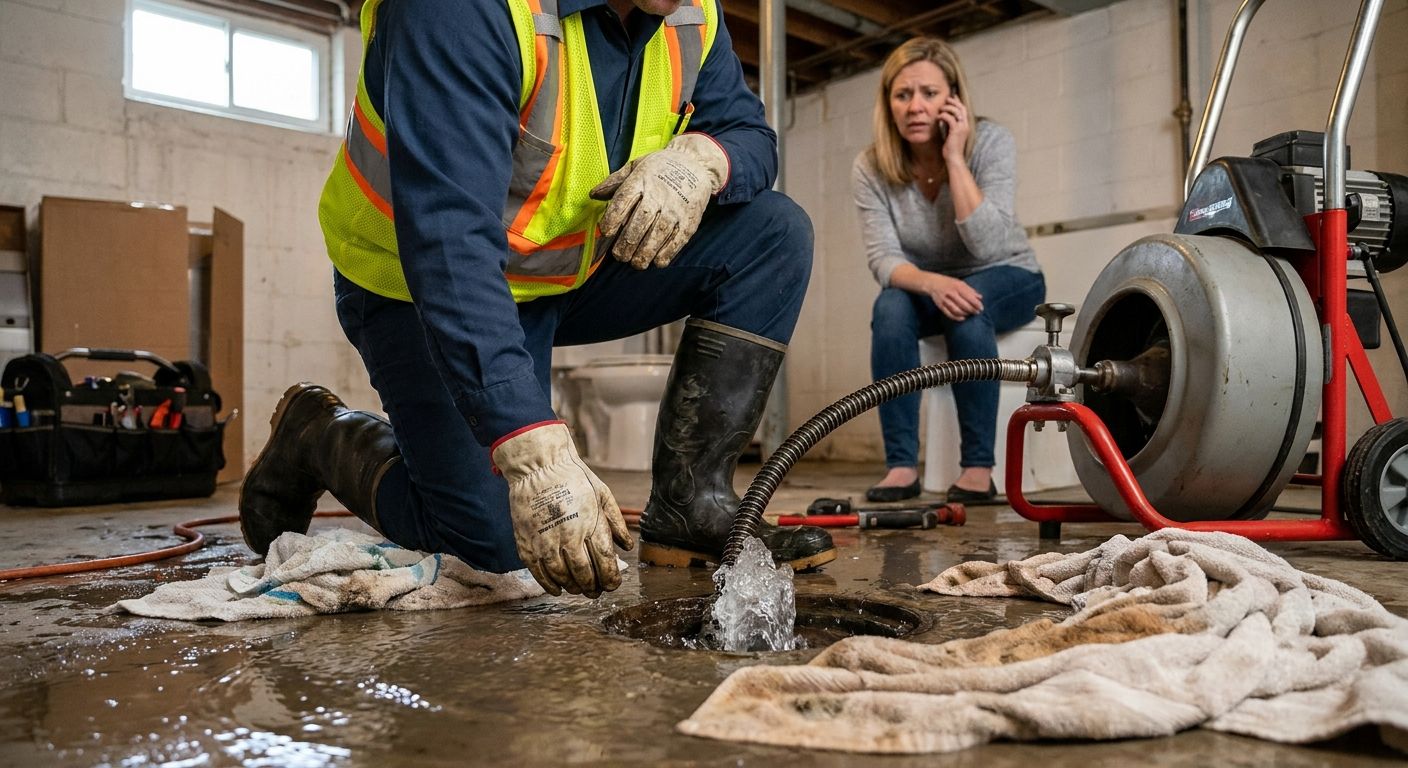
Sewage backs up at the lowest drain in the system first — usually a basement floor drain or laundry standpipe. Find it with a flashlight before you start cleanup. Knowing where it's surfacing tells a technician whether the blockage sits between the house and the street, which shapes the repair approach.
3. Protect electrical systems and shut off power if water is rising
Water and electrical panels don't mix. If backup is approaching outlets, a furnace, or a water heater, cut power to that area at the breaker before doing anything else. This step gets skipped under panic and it's the one that causes the worst secondary damage.
4. Contain the spread, don't try to clear the clog yourself
Lay plastic sheeting or towels around the affected area to keep sewage from migrating into unaffected rooms. Skip the drain cleaning chemicals — they don't move a main line blockage and they make the water hazardous to handle. This is a job for hydro jetting or mechanical clearing, not a bottle from the hardware store.
5. Call a 24-hour emergency drain service
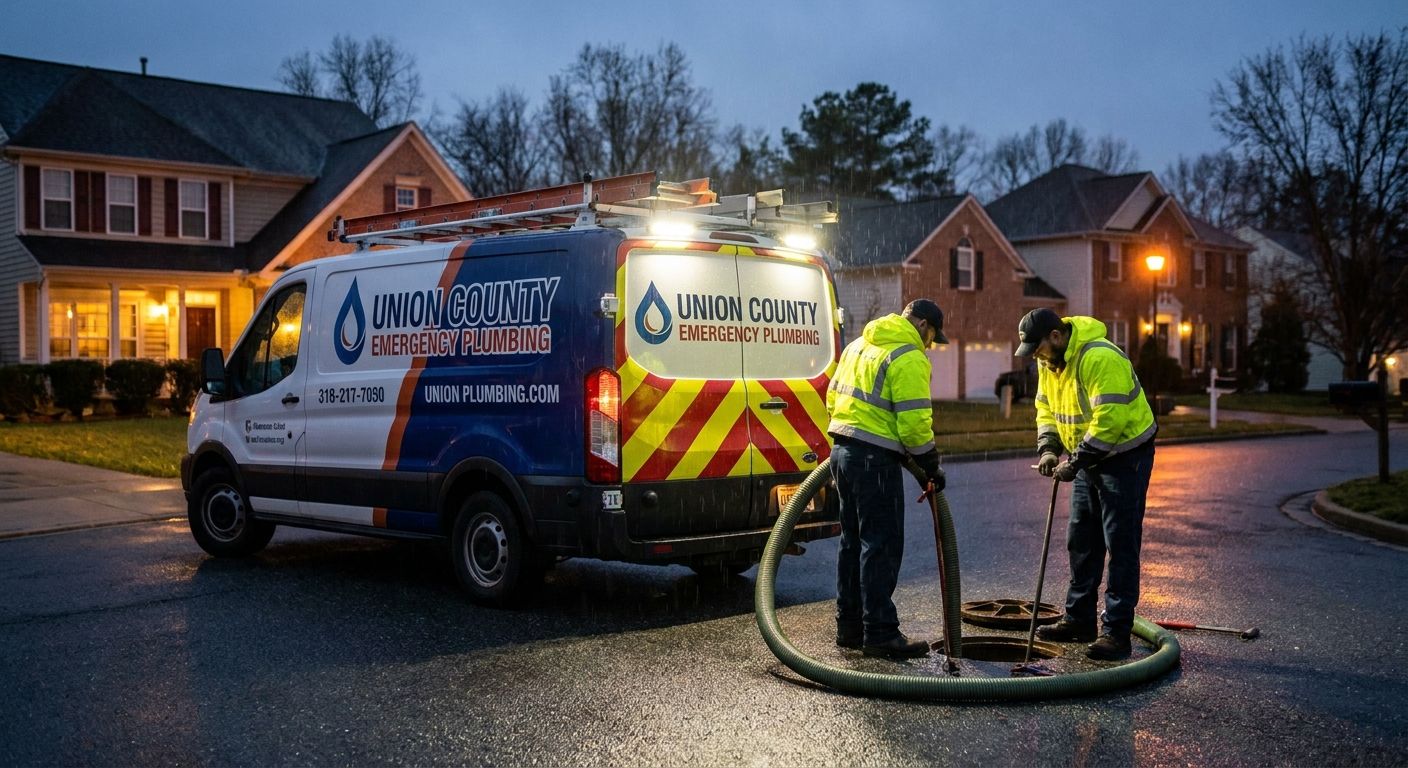
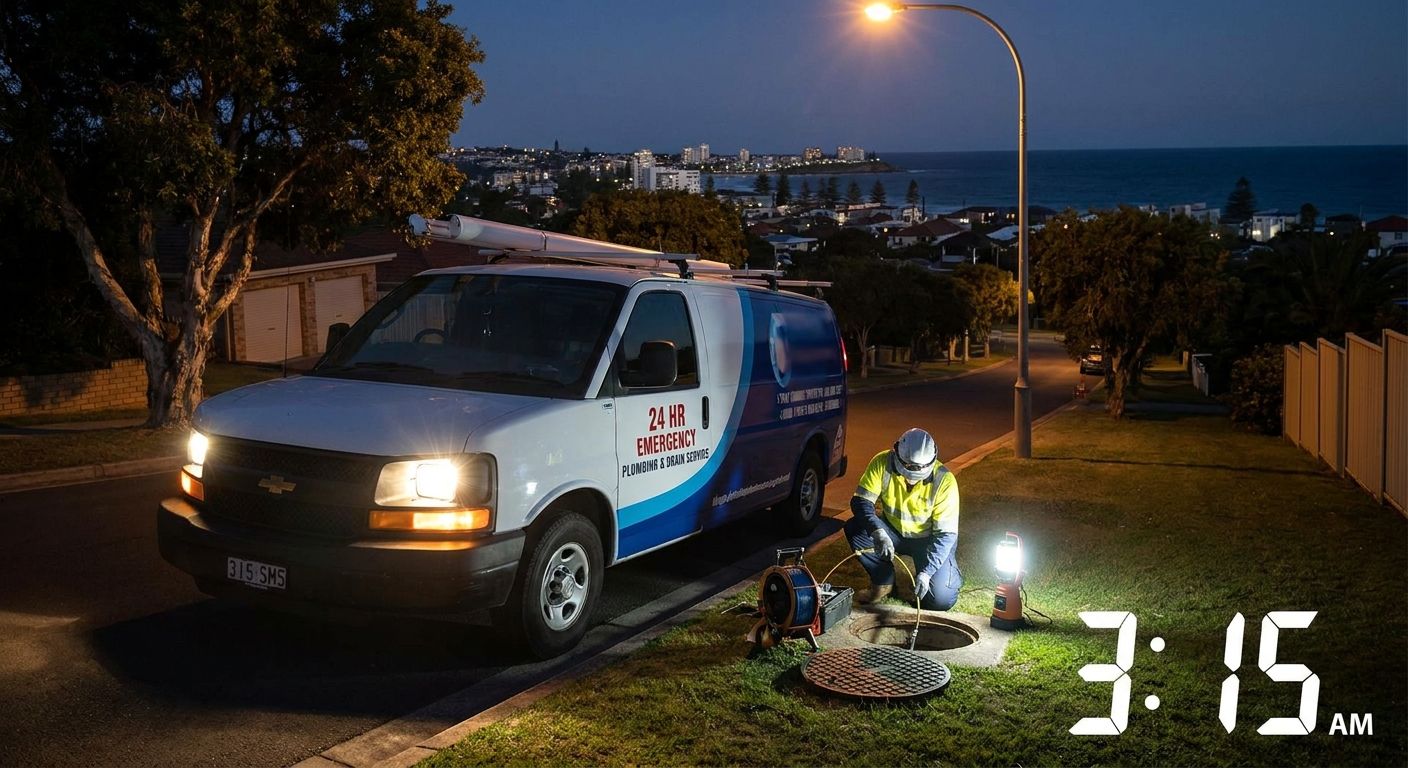
A main line backup needs equipment a homeowner doesn't have on hand — sewer cameras, jetters, and locate tools. Statewide Sewer & Drain LLC takes emergency calls around the clock across Middlesex, Monmouth, Ocean, and Union counties, and dispatch timing matters because standing sewage damage compounds by the hour.
6. Get a camera inspection before any repair work starts
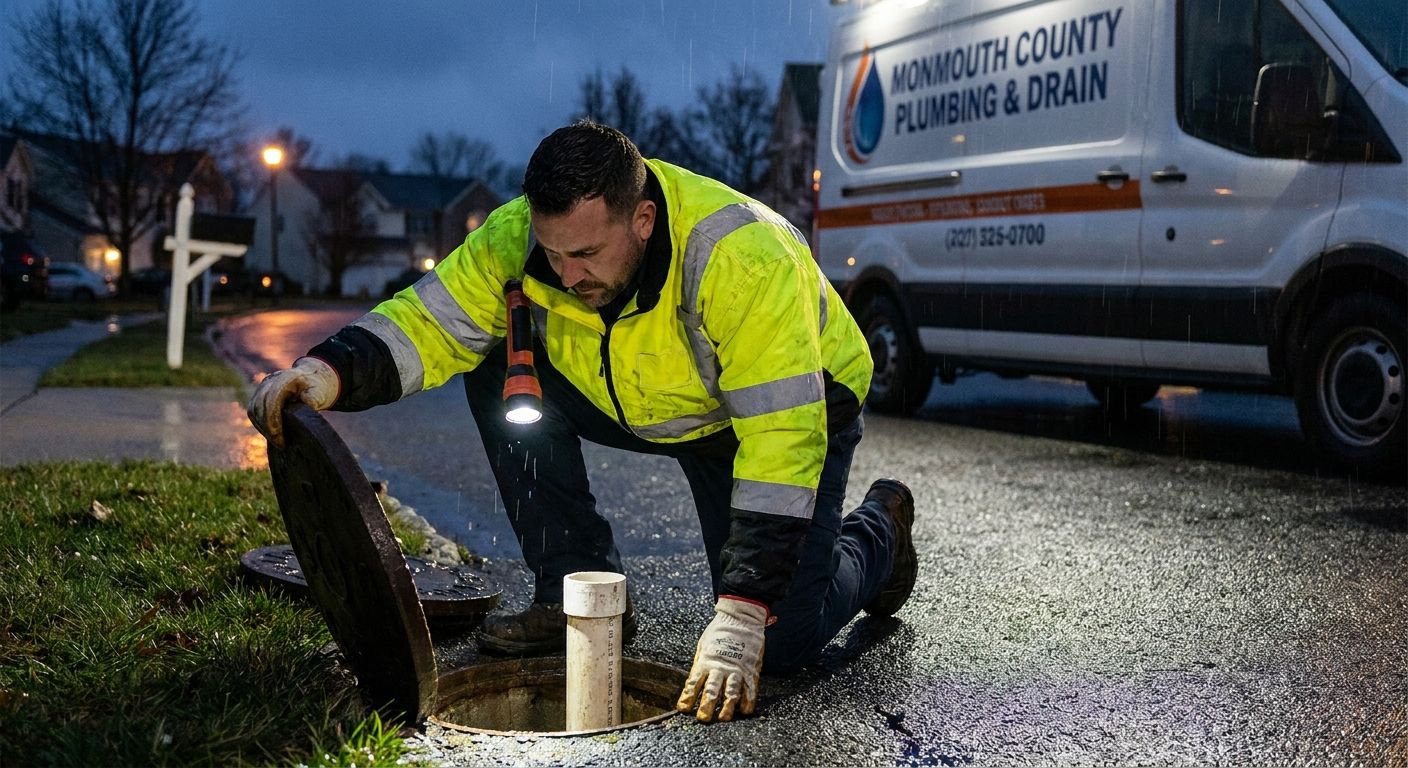
A video camera run through the line pinpoints the exact clog location and cause — root ball, collapsed clay pipe, grease mass — instead of guessing. This step turns an emergency call into an actual fix rather than a temporary clear that backs up again in 2026's next heavy rain.
7. Clear the line with the method that matches the cause
A cable snake handles a soft blockage. Root intrusion or grease buildup on pipe walls needs hydro jetting, which uses high-pressure water to scour the full pipe diameter clean rather than punching a hole through the clog. Ask which method the technician is using and why — it should match what the camera found.
8. Document everything for insurance before cleanup finishes
Photograph standing water levels, damaged materials, and the affected rooms before you start hauling out ruined items. Sewer backup coverage varies by policy, and adjusters want timestamped evidence, not a description after the fact.
“If the water is rising toward outlets or a furnace, cut the power before you touch anything else.”
Troubleshooting
Water backs up again within a day of clearing it. The clog was cleared but not the cause — root intrusion regrows fast and a snake alone won't remove root mass from pipe walls. Hydro jetting or a camera-guided root cut is the next move.
Multiple drains back up at once, not just one fixture. This points to a main line blockage rather than an isolated fixture clog, since one clogged toilet trap doesn't back up the kitchen sink too. Treat it as an emergency sewer backup and shut off water use house-wide.
Backup happens every time it rains heavily. That pattern usually means a storm drainage or grading issue feeding into the sewer lateral, or a collapsed section letting groundwater in. It needs a locate and camera run, not repeat snaking.
Sewage smell persists after the visible water is gone. Residual bacteria in porous materials like drywall and carpet padding holds odor long after cleanup looks finished. Affected porous materials usually need to be removed, not just dried.
You can't find the main cleanout to access the line. Older homes in Middlesex and Monmouth county sometimes buried the cleanout under landscaping or a slab addition. A line locate service finds it without random digging.
Tools and resources
- Wet/dry shop vac rated for contaminated water
- Main shutoff valve, located and labeled ahead of any emergency
- Statewide Sewer & Drain LLC for camera inspection, hydro jetting, and 24-hour dispatch
- A prevention guide for clearing a main line before it backs up to catch the next one earlier
- Insurance policy details on hand — know what's covered before you need it
Get emergency sewer service now
24-hour dispatch across Middlesex, Monmouth, Ocean, and Union counties.
What to do next
Once the emergency is handled, the real fix is preventing the next one. Root intrusion, grease buildup, and aging clay pipe don't fix themselves between backups — they get worse. The guide to unclogging a main sewer line before it backs up covers the maintenance schedule that keeps this from becoming a repeat 2 a.m. call.
FAQ
What's the first thing to do during an emergency sewer backup?
Stop all water use in the house immediately and shut off the main supply if backup is heavy. Every flush or load of laundry adds more volume to a line that's already blocked.
Is a sewer backup a health hazard?
Yes, wastewater backup carries bacteria and contaminants, not just standing water. Treat affected areas as a contamination zone and wear gloves and boots during any cleanup.
How much does emergency sewer backup service cost?
Cost depends on the cause and how far the technician has to go to clear it, since root removal and hydro jetting take more time than a simple snake job. Ask for a camera inspection first so the quote matches the actual problem.
Can I use drain cleaning chemicals on a sewer backup?
No, chemical cleaners don't move a main line blockage and they make standing water more hazardous to handle. Mechanical clearing or hydro jetting is the right tool for a backed-up main line.
How do I know if it's a main line backup or just one clogged drain?
If multiple fixtures back up at the same time, the problem is downstream of your house, in the main line. A single clogged sink or toilet usually stays isolated to that fixture.
What causes repeat sewer backups in the same house?
Root intrusion and grease buildup on pipe walls are the two most common repeat causes, since a snake clears the center of the clog but leaves the material lining the pipe. Hydro jetting removes both by scouring the full pipe diameter.
Does homeowners insurance cover sewer backup damage?
Coverage varies by policy, and many standard policies exclude sewer backup unless you added a specific rider. Photograph the damage before cleanup starts so you have documentation regardless of coverage.
Who do I call for a 24-hour sewer emergency in New Jersey?
Statewide Sewer & Drain LLC handles 24-hour emergency drainage repair across Middlesex, Monmouth, Ocean, and Union counties. Camera inspection and hydro jetting are typically part of the same visit.
One last thing
The backup you're mopping up right now almost always had a warning sign weeks earlier — a slow drain, a gurgle in the toilet after a shower, water pooling around a floor drain during heavy rain. Those are the moments to call for a camera inspection, not after the basement floods. An emergency sewer backup in 2026 costs a lot more to clean up than a scheduled inspection would have cost to prevent it.