New Jersey homeowners facing storm drain backups after heavy rain need a fix that scours the whole pipe, not one that just punches a hole through the clog — that's the case for hydro jetting storm drains, and this guide covers when a snake is enough, when to jet the line, and how to keep water moving before the next storm rolls through Middlesex, Monmouth, Ocean, or Union County.
- Hydro jetting storm drains clears silt, grease, and root hair a cable snake only pushes aside.
- A snake that breaks through but backs up again within days means the clog needs jetting, not re-cabling.
- Camera inspection right after jetting catches cracked joints and root intrusion before the next 2026 storm.
- Statewide Sewer & Drain runs hydro jetting and 24-hour emergency service across four NJ counties.
Why hydro jetting matters after heavy rain
Every heavy rain event in Middlesex, Monmouth, Ocean, and Union County pushes leaves, gravel, mulch, and street silt into catch basins faster than the pipe underneath can carry it away. A cable snake tears a narrow channel through that material and gets water moving again, but it leaves packed silt and grease coating the pipe walls — the exact buildup that clogs again in the next storm.
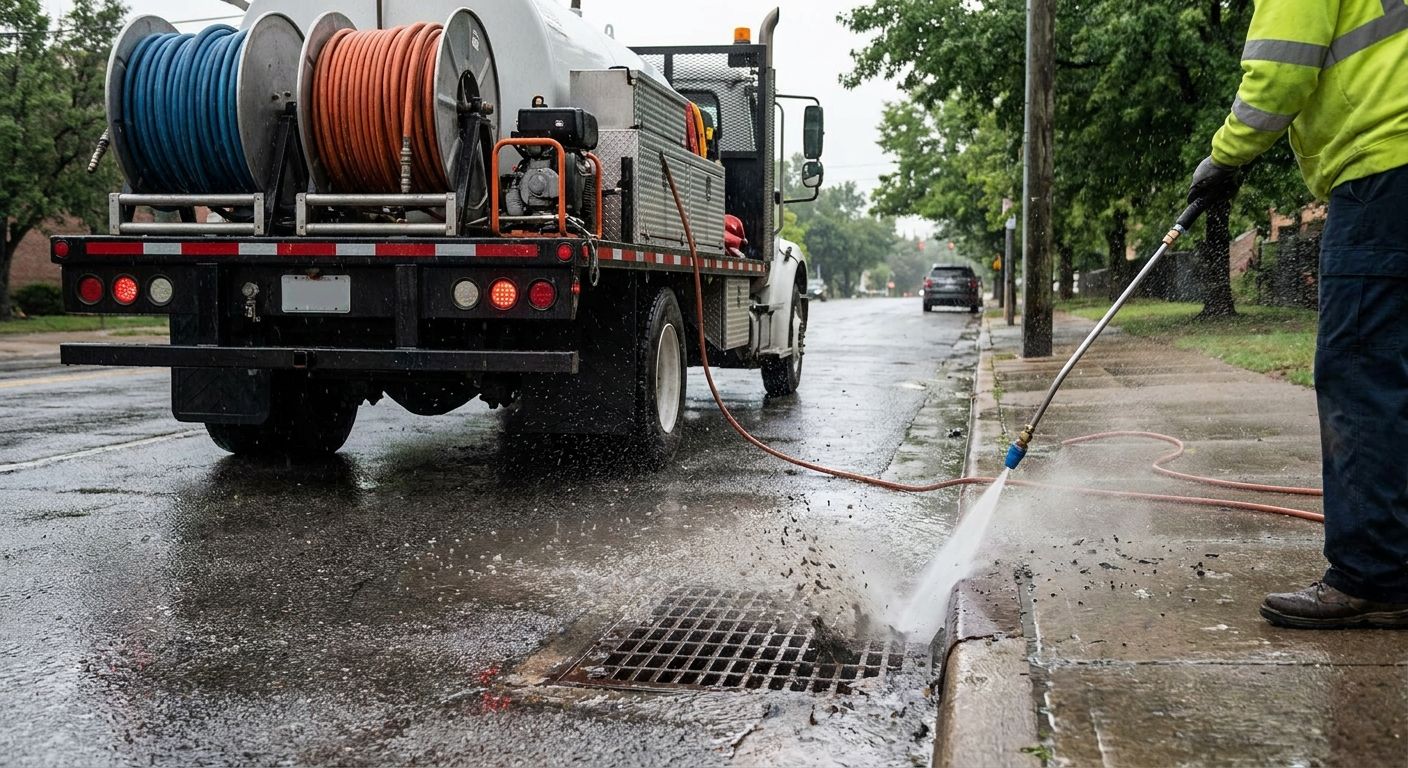
Hydro jetting storm drains solves that by running water at roughly 3,000 to 4,000 psi through a rotating nozzle that scours the full diameter of the pipe, not just a channel down the middle. That's the difference between a fix that lasts through one storm and a clean line going into the rest of 2026's storm season.
Statewide Sewer & Drain handles storm drain calls across all four counties, and the crew that jets the line can run a camera inspection right after to confirm it's actually clear, not just quieter for a week.
How to clear a clogged storm drain step by step
1. Check the catch basin and grate first
Most storm drain calls start with something visible sitting right at the surface.
- Look for standing water pooled more than a few inches deep around the grate
- Clear visible leaves, mulch, and trash off the grate by hand
- Check for a shifted or cracked grate letting debris fall straight into the line
- Note how fast the water drains once surface debris is cleared
- Photograph the basin depth in case the clog persists and a contractor needs the history
2. Run water to find where the blockage sits
Before anyone cables or jets anything, confirm roughly where the water is stopping.
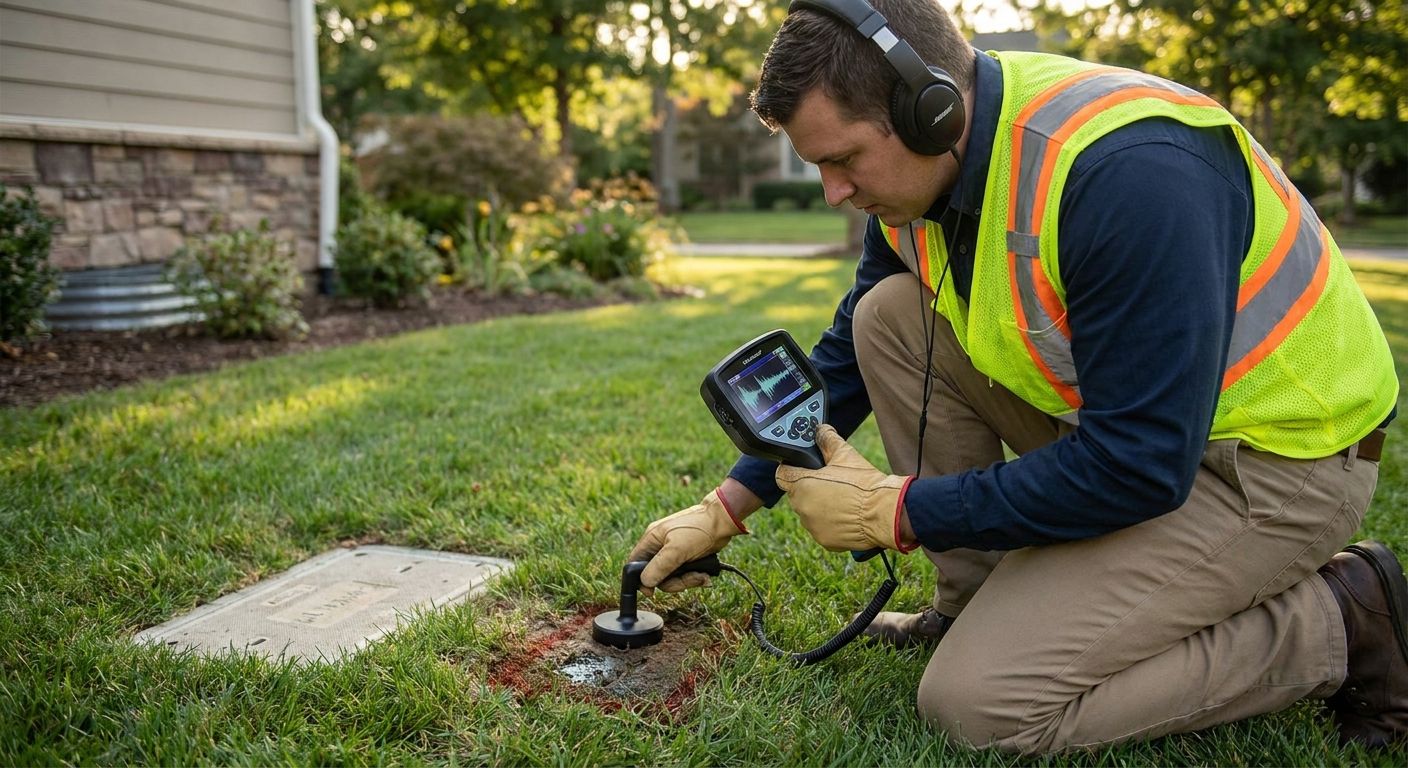
- Run a garden hose into the drain for 5 minutes and watch for backup at the grate
- Check nearby cleanouts or downstream drains for water surfacing unexpectedly
- Listen for gurgling in nearby floor drains — a sign the blockage sits deeper in the line
- Mark the approximate distance water travels before it stalls
3. Try a manual auger for a surface-level clog
A hand auger handles the easy cases and rules out the hard ones.
- Feed a hand auger or plumber's snake 10 to 15 feet into the line
- Turn slowly and pull back to check the head for roots, gravel, or cloth
- Re-run water after cabling to see if flow actually improves
- Stop if the cable meets a hard stop that won't break apart — that's usually compacted buildup, not a single object
4. Call in hydro jetting for packed debris and silt
This is where a cable stops being the right tool.
- Jetting scours silt, grease, and root hair along the entire pipe wall, not just a channel through the center
- A professional-grade jetter reaches storm lines running 50 feet or more from the curb to the main
- Jetting is the standard next step when a snake breaks through but the clog returns within days
- It's also the go-to method on tree root intrusion in older clay and cast iron storm lines
5. Get a camera inspection to confirm the line is clear
Jetting clears the pipe; a camera proves it.
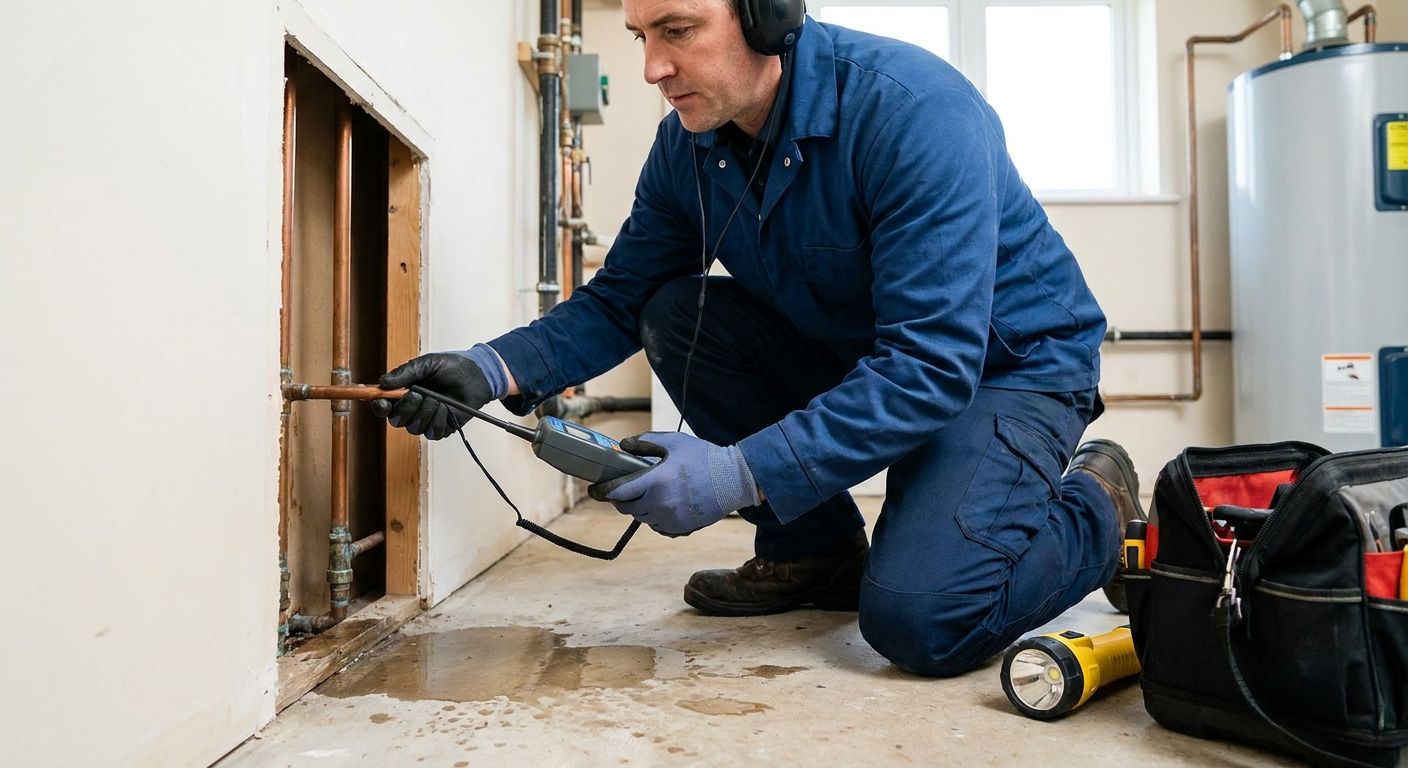
- Run a video camera inspection right after jetting to confirm full clearance
- Look for cracked joints, bellied sections, or root intrusion jetting alone can't fix
- Record the footage in case street flooding caused property damage worth documenting
- Use the inspection to flag where a private lateral ties into the municipal storm system
6. Escalate to emergency service if water backs into the property
A storm drain problem stops being a maintenance issue once water reaches the foundation.
- Shut off any sump pump discharge line tied into the same storm system to stop backflow
- Move standing water away from foundation walls with a portable pump if grading allows
- Call for 24-hour emergency service if water is entering a basement or garage
- Document water levels and clog location before the crew arrives to speed up the visit
If water is already backing into a finished space, don't wait for a callback — check how to respond to a sewer backup emergency for what to shut off first.
7. Set a jetting schedule ahead of the next storm season
The cheapest fix is the one that happens before the clog, not after.
- Schedule preventive jetting in early spring before New Jersey's heaviest rain months
- Prioritize catch basins near mature trees — root growth is the most common repeat offender
- Keep a simple log of clog dates and locations to spot recurring trouble spots
- Pair jetting with a camera inspection every 2 to 3 years on older clay pipe systems
If a snake breaks through the clog but water backs up again within a day or two, the pipe needs jetting, not another round with the cable.
“If the cable breaks through but the water backs up again within a day, the clog is beyond what a snake can fix.”
Comparing storm drain clearing methods
Not every clog needs the same tool, and picking the wrong one wastes a service call. Homeowners weighing affordable drain cleaning options for New Jersey homes should match the method to the actual problem first.
| Option | Best for | Key limitation |
|---|---|---|
| Manual auger/snake | Small surface clogs near the grate | Punches a channel through debris, doesn't scour the pipe wall |
| Hydro jetting | Packed silt, grease, and root hair along the full pipe | Needs professional equipment and a cleanout or access point |
| Video camera inspection | Confirming the line is clear and spotting structural damage | Diagnostic only — doesn't clear anything on its own |
| Trenchless pipe lining | Cracked or root-damaged pipe that still holds its shape | Not a fix for active blockages, addresses pipe condition after clearing |
| Pipe bursting/excavation | Collapsed or badly deformed sections jetting can't restore | Most invasive option, digs up the yard or street |
Verdict: hydro jetting storm drains is the right call whenever a snake clears the clog but it comes back within days — that pattern means silt and grease coating the pipe, not a single blockage.
Get storm drain service scheduled
24-hour response for backups in Ocean County.
Common mistakes New Jersey homeowners make with storm drains
- Waiting until the third storm to call. Repeated backups without jetting just let silt keep building against pipe walls until the line closes almost completely.
- Pouring chemical drain cleaner into a storm drain. Storm lines run straight to local waterways in most of these counties, and chemicals do nothing to break up compacted gravel or silt anyway.
- Skipping the camera inspection after jetting. A clear-sounding drain can still have a cracked joint or early root intrusion that only shows up on camera.
- Confusing a storm drain clog with a sewer lateral clog. They're separate systems with different response steps, and treating one like the other wastes time during an active backup.
- Not budgeting time for a jetting visit until it's an emergency. Scheduling ahead of the spring storm season costs a lot less hassle than a 2026 flood call at midnight.
FAQ
What's the best way to clear a clogged storm drain after heavy rain?
Hydro jetting storm drains is the most reliable method once a snake clears the clog but it returns within a few days. Jetting scours the full pipe diameter instead of punching a single channel through packed debris.
Is hydro jetting safe for older clay or cast iron storm lines?
Hydro jetting is generally safe for clay and cast iron lines in sound condition, but a camera inspection should confirm there's no existing crack or bellied section first. Jetting a severely deteriorated pipe can widen an existing weak point.
How much does hydro jetting cost for storm drains?
Cost depends on pipe length, clog severity, and how easy the line is to access, so get a specific quote rather than relying on a general figure. A camera inspection beforehand often helps scope the job accurately.
How do I know if I need hydro jetting instead of snaking?
If a cable snake breaks through the clog but water backs up again within a day or two, the problem is silt or grease coating the pipe, which snaking can't remove. That pattern is the clearest sign hydro jetting is the next step.
Can hydro jetting damage older pipes?
Jetting can worsen damage in a pipe that's already cracked or badly corroded, which is why a camera inspection before jetting matters on older cast iron or clay lines. On sound pipe, jetting is standard practice and doesn't damage the material.
How often should storm drains be jetted in New Jersey?
Homes near mature trees or with a history of repeat backups typically benefit from jetting every 1 to 2 years, timed before spring storm season. Camera inspection every 2 to 3 years helps confirm whether that schedule still fits.
What causes storm drains to back up after heavy rain?
Leaves, gravel, mulch, and street silt wash into catch basins faster than the pipe can carry them away, and tree roots working into pipe joints compound the problem over time. Heavy rain just exposes buildup that's been accumulating for months.
Do I need a permit for storm drain work in Middlesex or Monmouth County?
Jetting and camera inspection on a private lateral typically don't require a permit, but work connecting to or repairing the municipal storm main usually does. Check with the local public works department before any excavation-level repair.
One last thing
The failure point that gets missed most often isn't the drain itself — it's the joint where a private lateral ties into the municipal storm main. That connection sits out of sight from the curb, so a camera inspection that stops short of it can miss the exact spot causing repeat backups. Point the camera past the property line the first time and future clogs get a lot faster to diagnose.