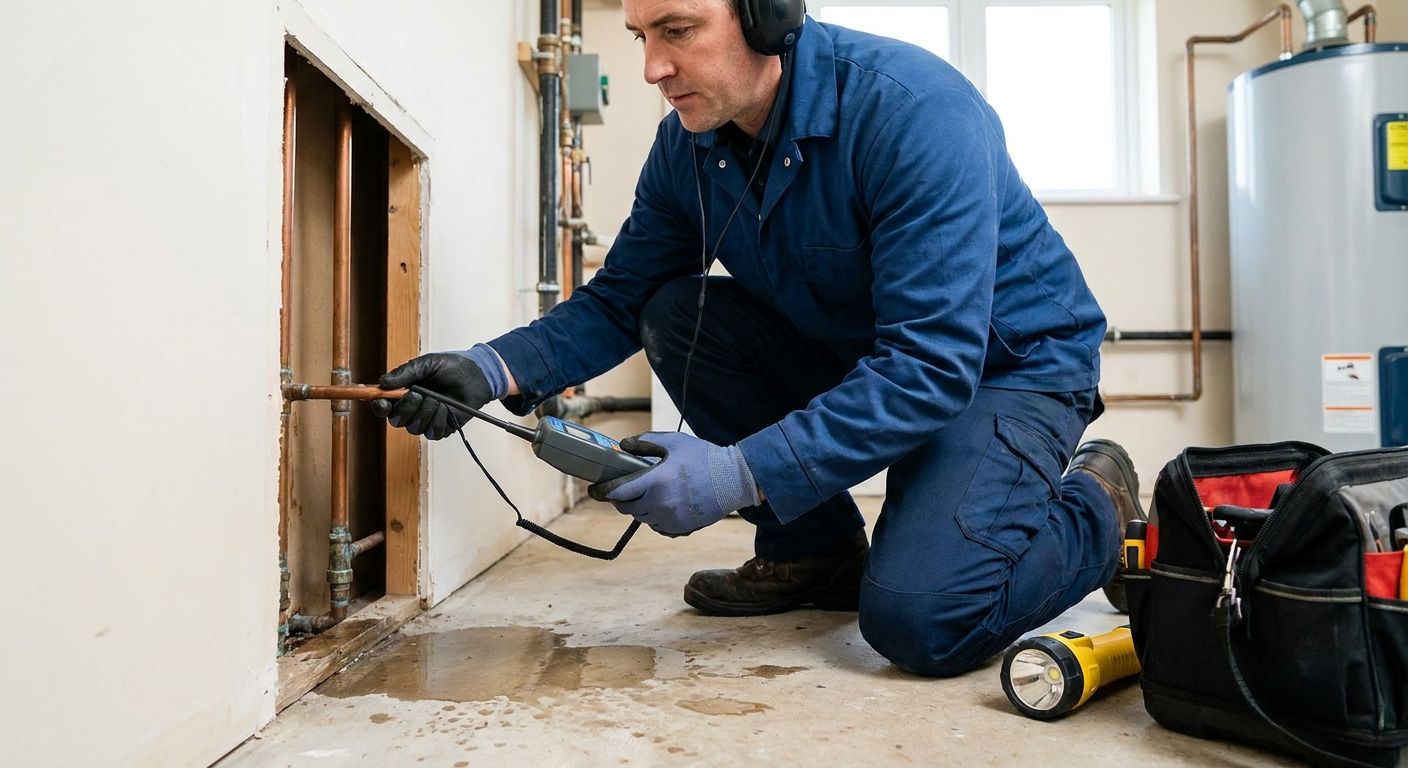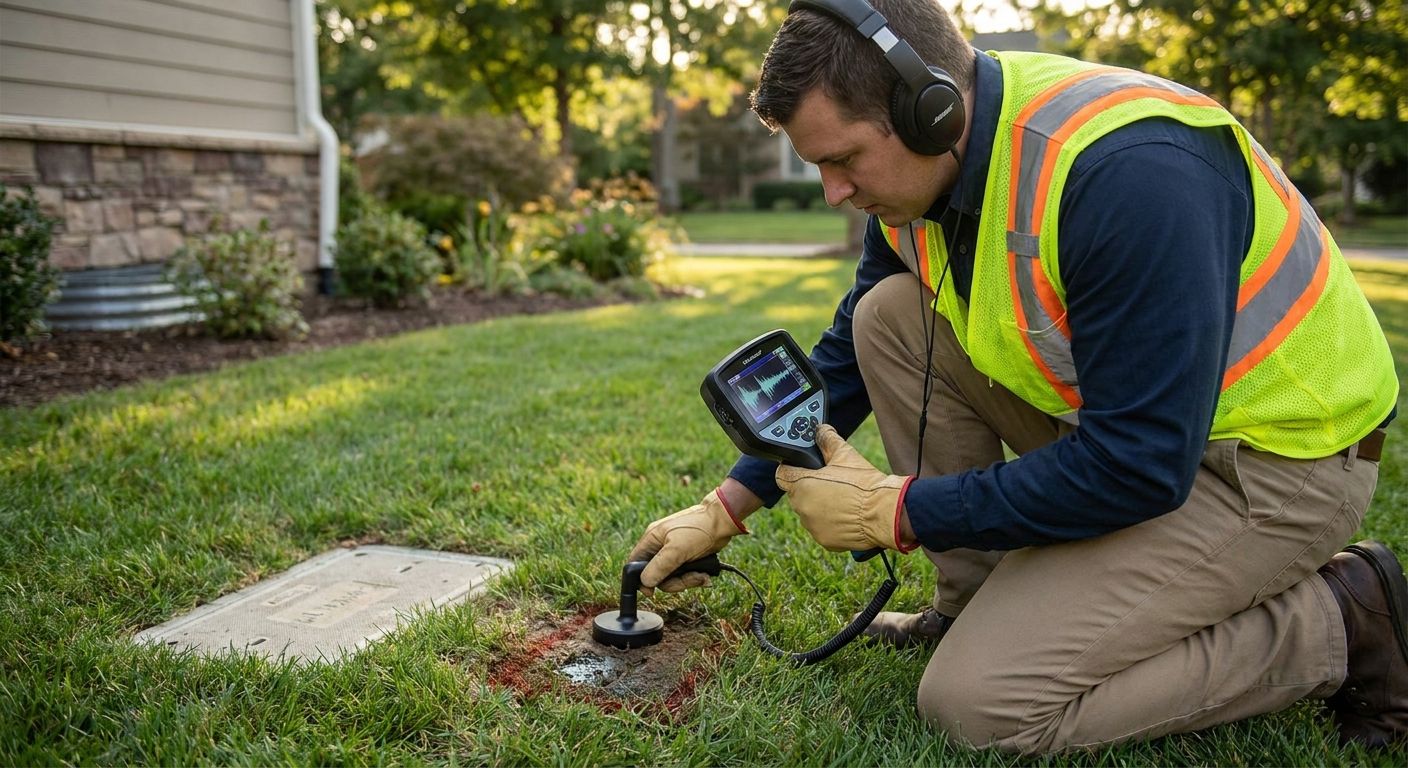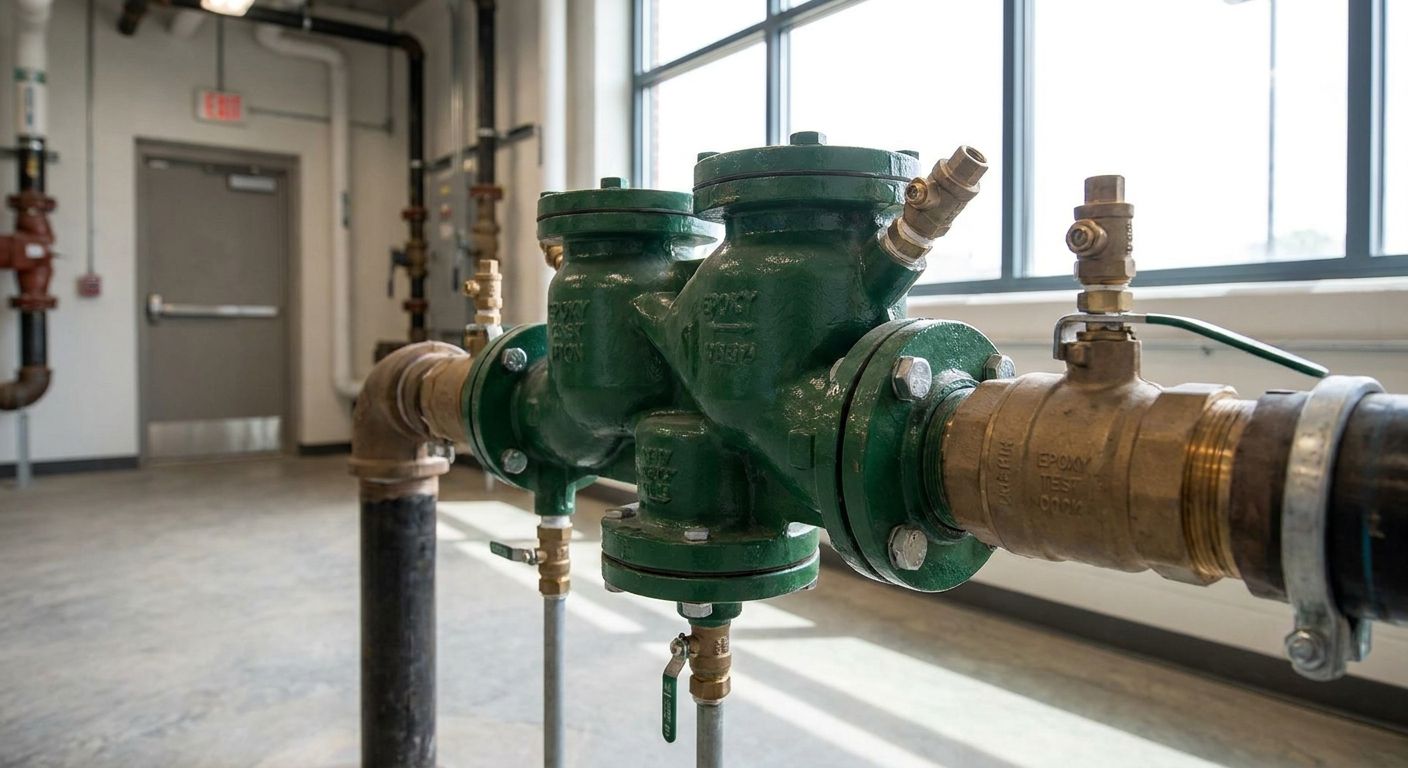
A backflow prevention device for commercial buildings stops contaminated water from being pulled or pushed back into the public water main, protecting employees, tenants, and everyone downstream on the same water system. Commercial properties carry higher backflow risk than houses because they run boilers, fire sprinkler lines, irrigation systems, and kitchen equipment on the same water feed, and each of those is a potential cross-connection.
- A backflow prevention device is required on nearly every commercial water system with a cross-connection hazard in New Jersey in 2026.
- Reduced Pressure Zone (RPZ) assemblies are the standard pick for high-hazard commercial sites like restaurants and boiler rooms.
- Annual testing by a certified tester is the norm for commercial backflow devices, not optional maintenance.
- Statewide Sewer & Drain pairs backflow protection with hydro jetting and camera inspection so the whole water and drain system gets checked at once.
Why backflow prevention matters for commercial buildings
A commercial building's water system touches more equipment, more people, and more code requirements than a single-family home. Boiler rooms, fire suppression lines, grease traps, and irrigation loops all create cross-connection points where a pressure drop can siphon dirty water backward into clean supply lines.
That's the exact failure mode a backflow prevention device is built to stop, and it's why most commercial leases and municipal water departments in Middlesex, Monmouth, Ocean, and Union counties require one installed and tested before a certificate of occupancy gets issued. Statewide Sewer & Drain sees this most often on properties that skipped testing after a renovation changed the plumbing layout, because a new cross-connection can appear without anyone noticing until an inspector flags it.
Commercial building managers also deal with a different failure cost than homeowners do. A residential backflow failure means a bad taste in tap water. A commercial failure can shut down a restaurant kitchen, void an insurance policy tied to fire sprinkler compliance, or trigger a boil-water notice that hits every tenant in a multi-unit building.
Update your cross-connection inventory
Start by mapping every point where your potable water line connects to a non-potable source or a piece of equipment that could push water backward.
- Boiler and chiller makeup water lines
- Irrigation and landscape sprinkler taps
- Fire suppression standpipes and sprinkler risers
- Commercial kitchen pre-rinse stations and grease traps
- Laboratory or medical equipment connections
- Car wash or janitorial mop sink hookups
Choose the right device type for your hazard level
Not every commercial building needs the same backflow prevention device, and picking the wrong tier either overspends on protection or leaves a real gap.
- Match device type to hazard classification (high-hazard kitchens and boiler rooms need more protection than a low-hazard office lobby)
- Confirm the device is on your local water authority's approved list before installation
- Size the assembly to your actual flow rate, not the building's total pipe diameter
- Check whether your municipality requires a specific brand or model certification
- Ask whether freeze protection or an enclosure is needed for outdoor installs
Schedule annual testing and certification
Most New Jersey municipalities require backflow preventers on commercial systems to be tested at least once a year by a certified backflow tester, and a missed test is one of the fastest ways to trigger a water utility notice.
- Put the testing date on a recurring calendar, not a sticky note
- Use a certified tester who files results directly with your local water authority
- Keep a copy of every test certificate on-site for insurance and lease audits
- Test again after any plumbing renovation, new equipment install, or pipe repair
- Flag any device older than 10 years for a full inspection, not just a functional test
Keep documentation ready for inspectors
A commercial building manager who can't produce the last test certificate on request is treated the same as a building with no device at all.
- File test certificates by device serial number, not by date alone
- Keep installation permits and manufacturer specs in the same folder
- Note every repair or part replacement with the date and technician name
- Share the file with your insurance broker annually, not just at renewal
Maintain and repair devices before failure
A backflow preventer that fails a test doesn't get a grace period in most commercial cases — it gets flagged, and the water authority expects a fix on a short timeline.
- Replace worn check valve seats and springs at the first sign of a failed test
- Flush sediment from the assembly after any nearby water main work
- Check relief valve discharge for constant dripping, a sign of internal wear
- Don't paint over or enclose the device in a way that blocks the required air gap
Train facility staff on quick response
Facility staff usually notice a backflow problem before anyone else does — discolored water, a hissing relief valve, or a pressure alarm.
- Post the tester's contact information near the device, not buried in a binder
- Train at least two staff members on what a normal vs. failing device looks and sounds like
- Set a rule: any relief valve discharge gets reported same day, not next maintenance cycle
Pair backflow protection with drain and sewer maintenance
A backflow device protects incoming water, but it doesn't do anything for the drain side of the building, and commercial properties fail on both ends more often than owners expect. Grease buildup in kitchen lines and root intrusion in aging sewer mains create the same kind of pressure and flow problems that stress a backflow assembly from the other direction.
Statewide Sewer & Drain runs hydro jetting for commercial office buildings alongside backflow inspections because a clogged drain line and a failing backflow device often show up on the same maintenance call. Checking both at once cuts down on repeat service trips and catches problems the water side alone won't reveal.
Backflow device comparison for commercial buildings
| Device Type | Best For | Key Limitation |
|---|---|---|
| Reduced Pressure Zone (RPZ) Assembly | High-hazard sites: restaurants, boiler rooms, medical facilities | Requires a floor drain for relief valve discharge, needs indoor or heated enclosure |
| Double Check Valve Assembly (DCVA) | Low-to-moderate hazard: irrigation, fire sprinklers without chemicals | Less protection than RPZ against high-hazard contaminants |
| Pressure Vacuum Breaker (PVB) | Irrigation systems and hose bibs | Only protects against back-siphonage, not backpressure |
| Atmospheric Vacuum Breaker (AVB) | Simple, low-pressure connections like mop sinks | Must be installed downstream of the last shutoff, can't handle continuous pressure |
Verdict: RPZ assemblies are the correct call for any commercial kitchen, boiler room, or medical facility in 2026 — anything lower-tier gets flagged on inspection.
Get your backflow device inspected
Statewide Sewer & Drain checks backflow devices and drain lines on the same visit.
Common mistakes commercial building owners make
- Skipping the annual test after a slow year. Water authorities don't waive the requirement because business was quiet — a lapsed certificate is treated the same as no device.
- Installing a residential-grade device in a high-hazard kitchen. A DCVA rated for irrigation doesn't meet the hazard classification a commercial kitchen needs.
- Ignoring the device during a renovation. New equipment tie-ins create new cross-connections, and the old backflow device may no longer be sized or positioned correctly.
- Treating the relief valve drip as normal. A constantly discharging RPZ relief valve is an internal wear signal, not background noise.
- Managing water-side and drain-side maintenance as separate problems. Grease trap buildup and backflow device stress often trace back to the same pressure issue in the building's plumbing system.
FAQ
What is a backflow prevention device and why do commercial buildings need one?
A backflow prevention device stops contaminated water from flowing backward into the public water supply. Commercial buildings need one because equipment like boilers, fire sprinklers, and kitchen lines create cross-connections that residential homes typically don't have.
How often does a commercial backflow device need testing?
Most New Jersey municipalities require annual testing by a certified backflow tester, with results filed directly to the local water authority. Testing again after any renovation or equipment change is standard practice.
What's the best backflow device for a commercial kitchen?
A Reduced Pressure Zone (RPZ) assembly is the standard for commercial kitchens because it protects against both backpressure and back-siphonage in high-hazard settings. Lower-tier devices like a DCVA don't meet the hazard classification most kitchens require.
Is a Double Check Valve Assembly enough for a commercial building?
A DCVA works for low-to-moderate hazard connections like irrigation or fire sprinklers without chemical additives, but it doesn't provide enough protection for kitchens, boiler rooms, or medical facilities. Check your local hazard classification before installing.
What happens if a commercial backflow device fails inspection?
A failed test typically triggers a short repair timeline set by the water authority, and the building risks a compliance notice if the fix isn't made. Repair or replacement of worn check valve seats and springs usually resolves a failed test.
Can a backflow device problem affect the building's drains too?
Not directly, but the same pressure and flow issues that stress a backflow assembly often show up on the drain side as grease buildup or slow flow. Checking both systems on the same visit catches problems either side alone would miss.
Where should a commercial backflow device be installed?
Placement depends on device type — an RPZ needs a floor drain nearby for relief valve discharge and usually an indoor or heated enclosure, while a PVB or AVB has different clearance rules. Local water authority guidelines determine the exact requirement for your property.
One last thing
The relief valve on an RPZ assembly is supposed to drip occasionally — that's normal pressure relief. A constant, steady discharge is the device telling you a check valve seat has already worn out, and it's the single most overlooked warning sign on commercial properties heading into 2026 inspection season.