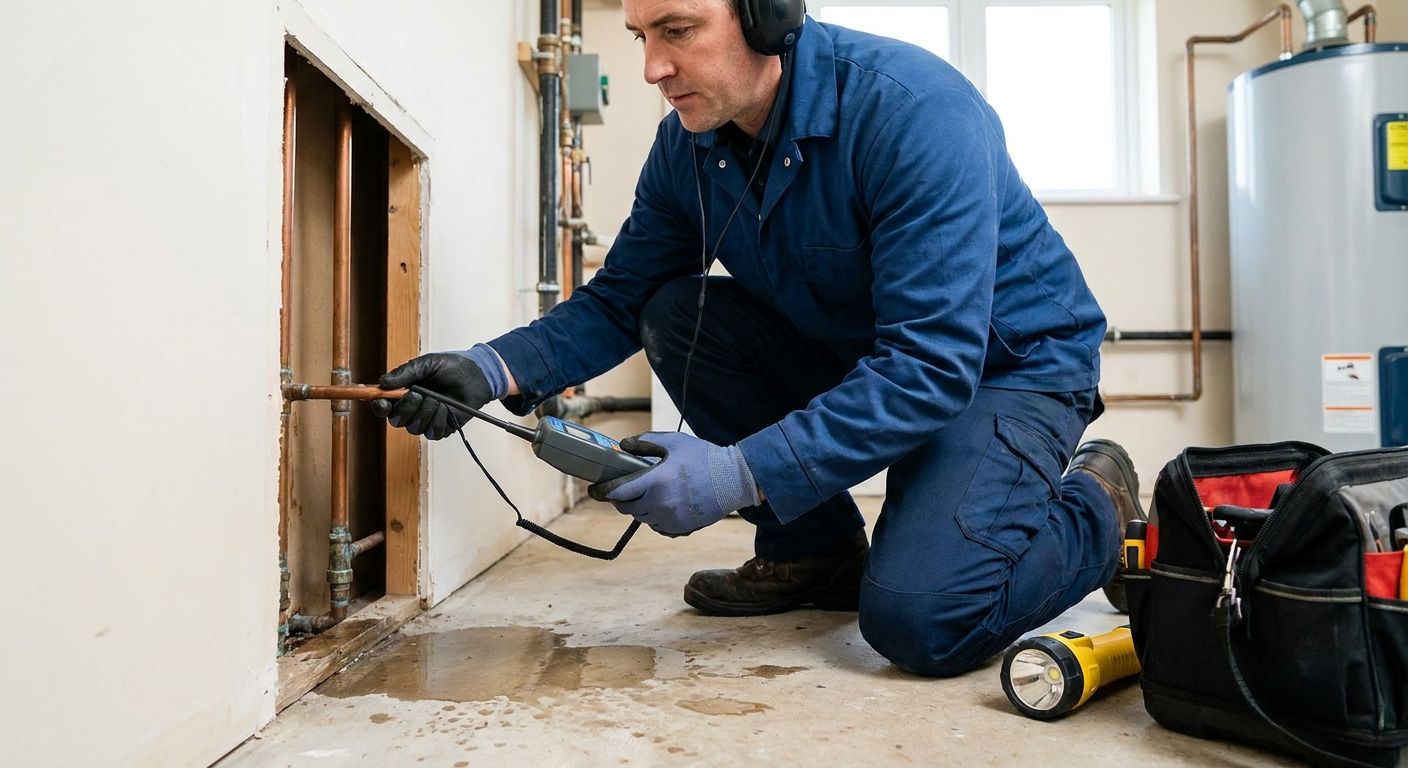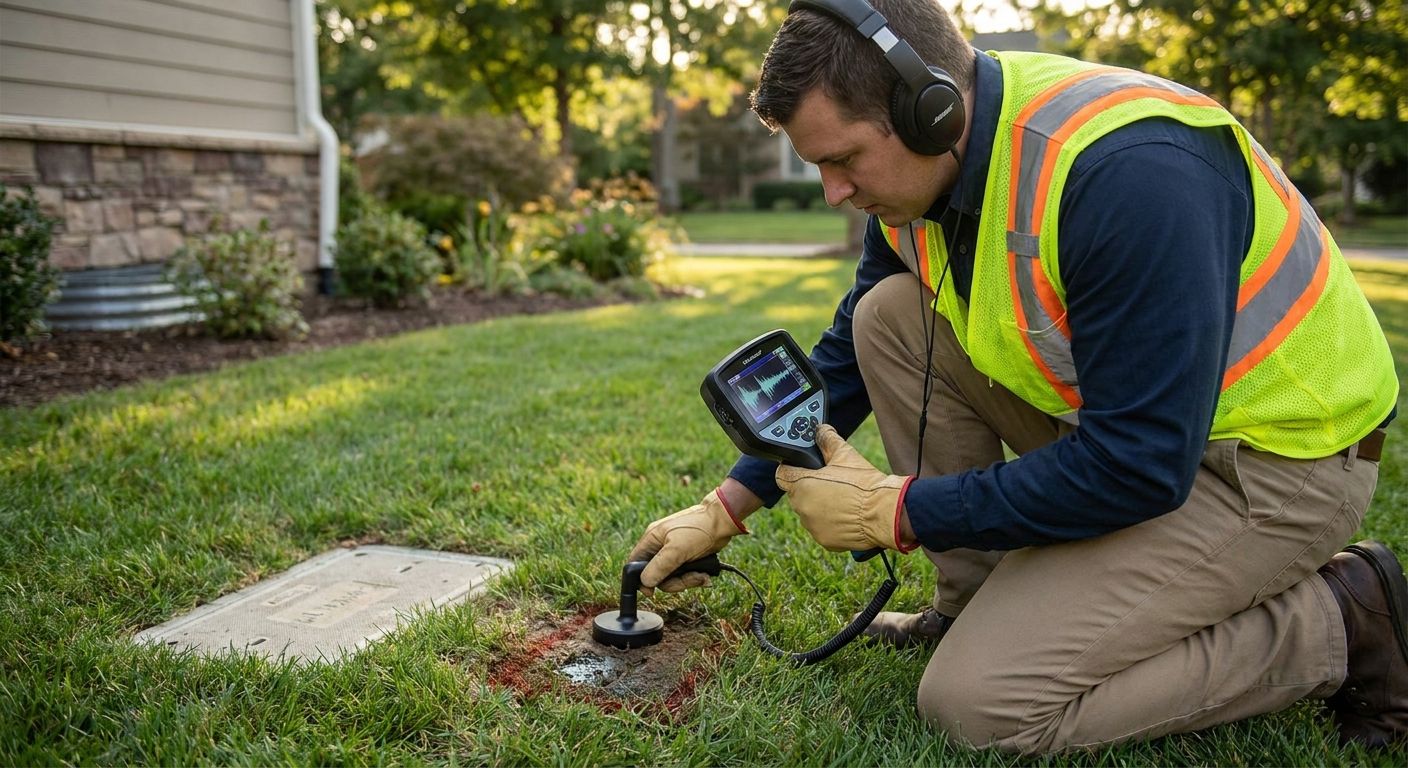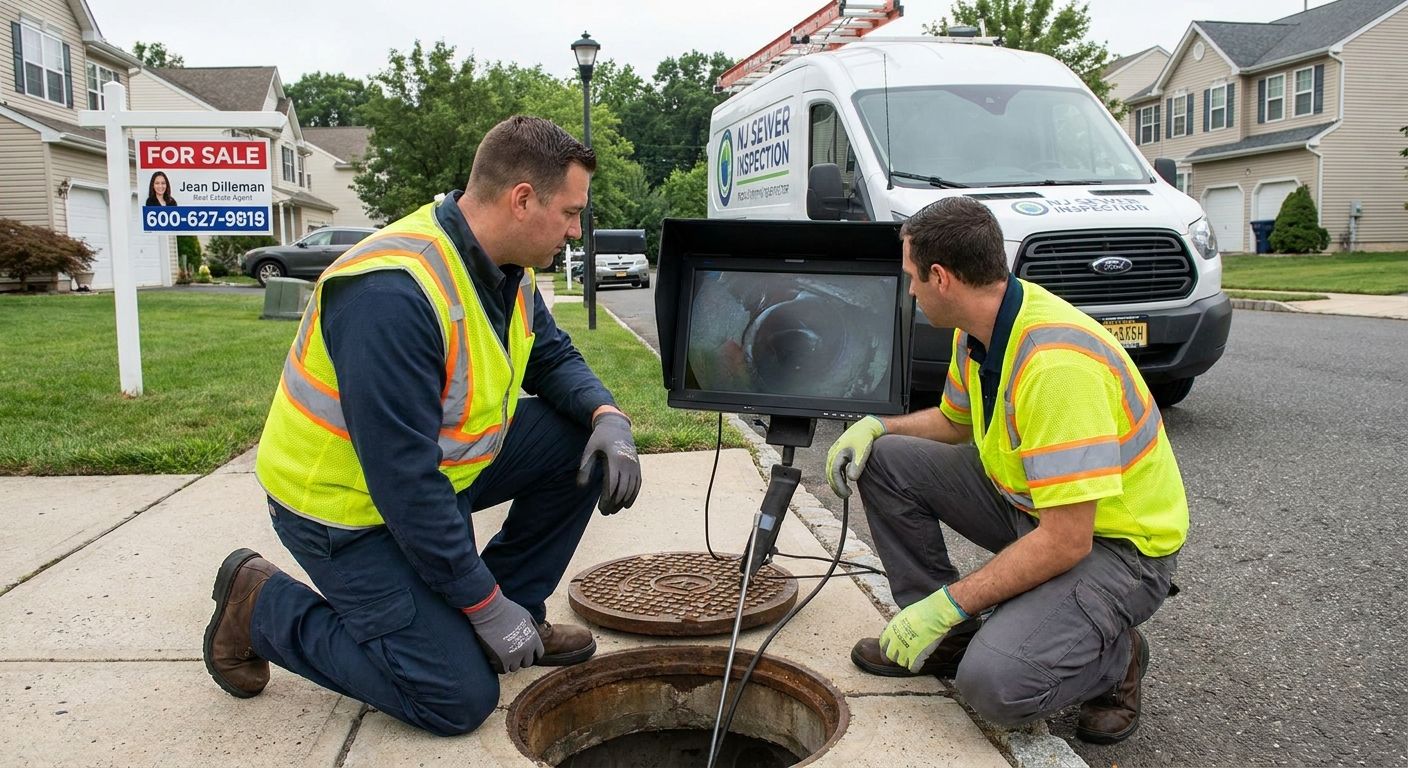
Sewer lateral inspection for home sale in New Jersey means running a video camera through the underground pipe connecting your house to the municipal sewer main, and it's the single most common reason a closing gets delayed in townships with point-of-sale sewer ordinances. Home sellers face a different clock than landlords or buyers: the inspection has to happen, pass, and get certified before the contract deadline, not whenever it's convenient.
- Sewer lateral inspection for home sale catches root intrusion and pipe damage before a buyer's attorney does — schedule it the week you list, not the week before closing.
- Townships with point-of-sale sewer ordinances can hold a closing hostage over a failed lateral in 2026, so check your municipal requirement before you sign a listing agreement.
- CIPP lining fixes most root and joint failures without digging up the yard; full excavation is the fallback for collapsed or severely bellied pipe.
- Statewide Sewer & Drain runs video camera inspections across Middlesex, Monmouth, Ocean, and Union counties with a report you can hand straight to a buyer's attorney.
Why sewer lateral inspection matters for New Jersey home sellers
Much of Middlesex, Monmouth, and Union county housing stock predates 1970, which means clay or cast iron laterals running under mature street trees. Roots find joints in old clay pipe and cast iron corrodes from the inside, and neither problem shows up on a standard home inspection because home inspectors don't run cameras through sewer lines.
A growing number of New Jersey municipalities require a certificate of sewer compliance before title transfers, tied to a point-of-sale ordinance rather than anything the buyer requests. Sellers who find out about this requirement after going under contract are the ones who lose weeks at the closing table. Check the Statewide Sewer & Drain homepage for current service areas before you assume your township is exempt.
Check your township's point-of-sale sewer ordinance
Start here, before you list. Municipal requirements vary by town and by whether the property sits on a public sewer main versus a private system.
- Confirm whether your township requires a certificate of sewer compliance before closing
- Find the notice-to-comply deadline — some towns give 30 days, others less
- Ask whether a re-inspection is required after any repair
- Check the fee schedule for the municipal inspection or permit
- Confirm whether the certificate transfers with a video file or just a pass/fail letter
Schedule the video camera inspection before you list
Don't wait for the buyer's inspection contingency to surface a problem. Run the camera the same week you take listing photos, so you have time to fix anything before an offer is even on the table.
- Request digital footage, not just a written summary
- Ask for footage timestamped and labeled with address and date
- Get a written report noting pipe material, joint condition, and any defects
- Confirm the inspector locates the cleanout and documents its condition
- Keep a copy for your listing file, not just your attorney's
Know what fails a lateral inspection
A handful of conditions account for most failed inspections in older New Jersey neighborhoods. Root intrusion tops the list, especially on tree-lined streets in Matawan and surrounding Middlesex County towns — see how to tell if your sewer line has tree root damage for the specific signs a camera picks up.
- Root intrusion at pipe joints
- Offset or separated joints from ground shifting
- Bellied or sagging sections holding standing water
- Cracked, corroded, or collapsing cast iron
- Grease or scale buildup narrowing the pipe diameter
Get repair estimates before you negotiate
Once you know what's wrong, get estimates on more than one repair method. The right fix depends on how much of the pipe is damaged and whether the ground above it is accessible.
- Spot repair for a single damaged section
- CIPP pipe lining for root intrusion or cracking without a full collapse
- Trenchless pipe bursting for a badly bellied or undersized line
- Full excavation for collapsed sections or pipe under a structure
Disclose findings and negotiate before contract, not after
Sellers who disclose a known sewer issue up front control the negotiation. Sellers who don't get renegotiated against after attorney review, usually for more than the repair would have cost.
- Put inspection findings in your seller's disclosure
- Offer a repair credit or complete the fix before listing — decide which before you get an offer
- Get municipal sign-off in writing if your town requires a certificate
- Keep the video file ready to hand to a buyer's attorney on request
File for your certificate of sewer compliance early
If your township requires one, this step has its own timeline separate from your real estate contract. Preparing for a municipal sewer lateral inspection walks through what the township inspector checks and how to get the paperwork moving before a buyer's deadline forces the issue.
Get a lateral inspection before you list
Video camera inspection across Middlesex, Monmouth, Ocean, and Union counties.
Comparing inspection and repair options for sellers
| Option | Best for | Key limitation |
|---|---|---|
| Video camera inspection | Confirming lateral condition before listing | Documents the problem, doesn't fix it |
| CIPP pipe lining | Root intrusion or cracked pipe with intact structure | Won't seal a fully collapsed section |
| Trenchless pipe bursting | Replacing an undersized or badly bellied lateral | Needs an access pit at each end of the run |
| Full excavation replacement | Collapsed pipe or lines running under a structure | Disturbs landscaping and driveways, longest timeline |
A sewer lateral inspection for home sale is a documentation step, not a repair — you still need one of the three fixes above if the camera finds a problem.
Common mistakes New Jersey home sellers make
- Waiting until the buyer's inspector flags it. By then you've lost negotiating leverage and days off your contract timeline.
- Assuming a general home inspection covers the sewer lateral. Standard inspectors don't run cameras through underground pipe — it's a separate service.
- Missing the township's notice-to-comply deadline. Some New Jersey municipalities give as little as 30 days once notified, and that clock doesn't pause for your closing date.
- Not getting written proof of a passed inspection. A verbal "it's fine" from a contractor doesn't satisfy a title company or a buyer's attorney.
- Assuming a renovated kitchen or new roof means the lateral is fine too. Underground pipe condition has nothing to do with what's visible inside the house, and older Middlesex and Monmouth county homes often run 1960s-era clay or cast iron regardless of interior updates.
FAQ
What's the best way to check a sewer lateral before selling a house in New Jersey?
A video camera inspection of the lateral is the standard method — it's the only way to see root intrusion, offset joints, or corrosion inside the pipe before a buyer's attorney or township inspector does. Schedule it before you list, not after you're under contract.
Is a sewer lateral inspection required to sell a house in NJ?
It depends on the township. Many New Jersey municipalities have point-of-sale sewer ordinances requiring a certificate of compliance before title transfers, while others leave it to buyer discretion. Check your local sewer authority before listing.
How much does it cost to fix a failed sewer lateral before a home sale?
Cost depends on the repair method — spot repair, CIPP lining, trenchless bursting, or full excavation — and how much of the line is damaged. Get an estimate after the camera inspection identifies the specific defect.
Is CIPP lining better than full excavation for a home sale timeline?
CIPP lining is usually faster and less disruptive because it doesn't require digging up the yard, which matters when you're trying to close on schedule. Full excavation is only necessary for collapsed sections or pipe running under a structure that lining can't reach.
How long does a video camera inspection take before closing?
The camera run itself takes under an hour in most residential laterals. The bigger time factor is scheduling it early enough that any repair and re-inspection can happen before your contract deadline.
Do all New Jersey townships require a sewer certificate before closing?
No. Point-of-sale sewer ordinances vary by municipality — some require a certificate of compliance, others don't regulate it at closing at all. Confirm with your local sewer authority rather than assuming.
Can I sell a house with a known sewer line problem in New Jersey?
Yes, but you need to disclose it in your seller's disclosure and decide whether to offer a repair credit or complete the fix before listing. Undisclosed known defects create legal exposure after closing.
What happens if my sewer lateral fails inspection right before closing?
The closing typically delays until the repair is done and a re-inspection passes, which can push a deal back weeks depending on the repair method. This is why scheduling the inspection before you list, rather than during attorney review, avoids the delay entirely.
One last thing
The lateral failures that stall New Jersey closings almost never show up anywhere else in a home inspection report — a seller can have a spotless roof, HVAC, and foundation and still get a repair demand over eight feet of root-damaged clay pipe nobody saw coming. Run the camera before the sign goes in the yard, in 2026 and every year after, and you negotiate from a report instead of reacting to one.