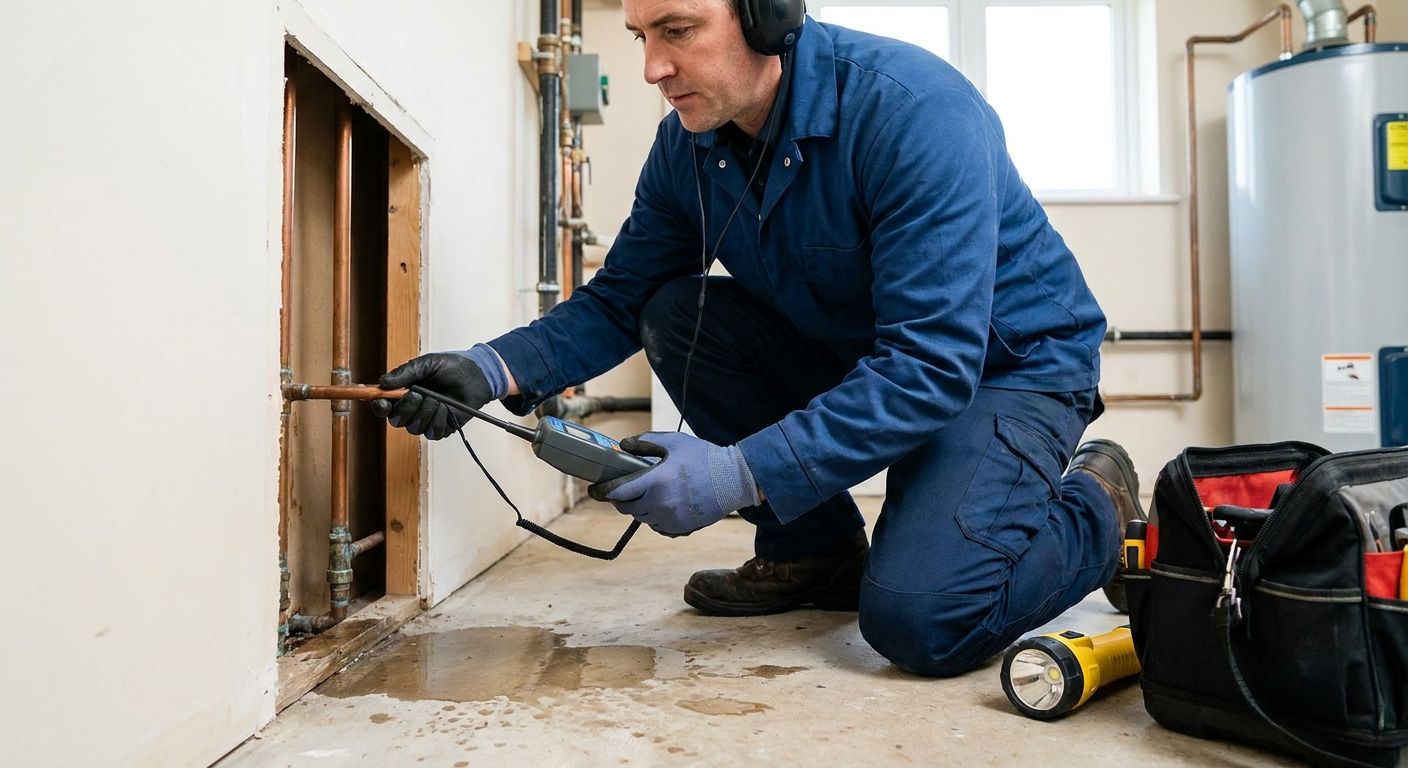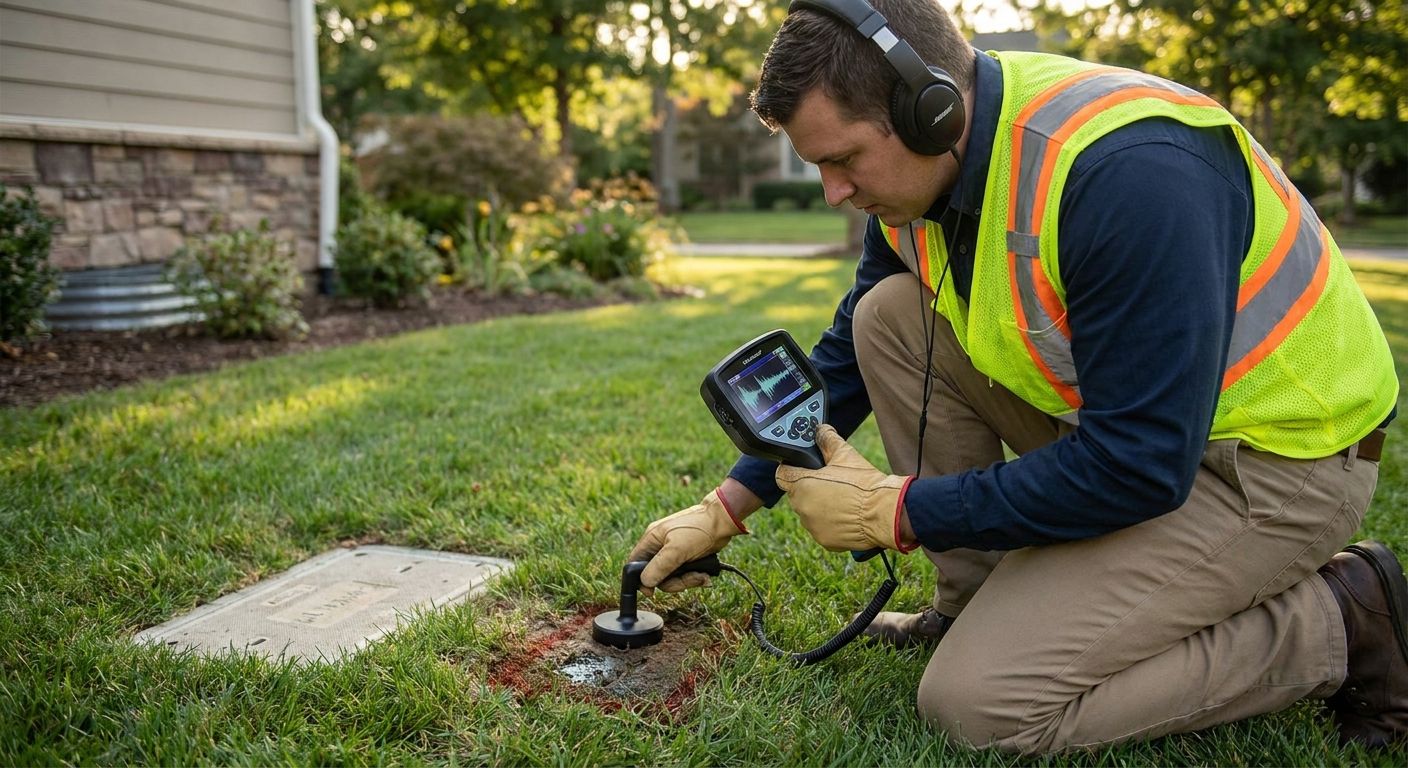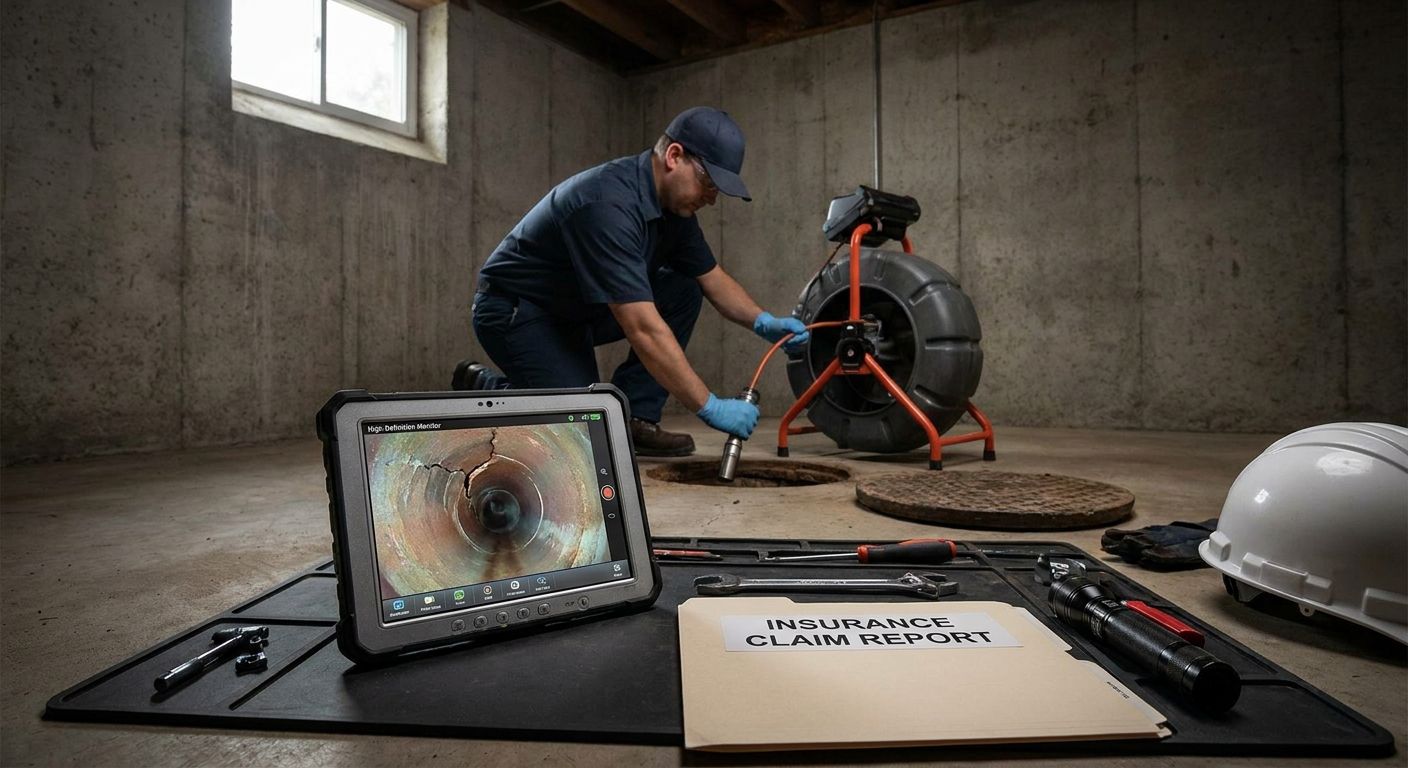
A sewer camera inspection for an insurance claim is a recorded video walkthrough of a damaged drain or sewer line, used as evidence to support a homeowner's claim rather than as a general maintenance check. Homeowners filing a claim need footage formatted for an adjuster, not just a plumber's verbal opinion about what's wrong underground. That distinction changes what you ask for, when you schedule it, and how you store the file.
- A sewer camera inspection insurance claim needs time-stamped video, not a verbal report, to satisfy most New Jersey adjusters in 2026.
- Statewide Sewer & Drain LLC records footage before repairs start so the damage isn't erased before the adjuster sees it.
- Tree root damage and gradual pipe deterioration are commonly excluded as wear-and-tear, so footage timing matters as much as footage quality.
- DIY phone photos work for surface damage claims but can't document interior pipe condition the way a camera inspection can.
Why this matters for homeowners filing a claim
Insurance adjusters weigh visual evidence over descriptions. A plumber saying the line is cracked near the tie-in carries less documentary weight than 12 minutes of footage showing the crack, the pipe material, and the depth reading on screen. If a sewer backup already flooded a basement, the first move matters more than people think — see how to respond to a sewer backup emergency for what to do before any inspection happens.
Homeowners in Middlesex, Monmouth, Ocean, and Union counties deal with a mix of aging clay and cast iron lines and mature street trees, both of which produce damage patterns insurers scrutinize closely in 2026. A camera inspection either supports a sudden-event claim (a pipe collapse, a backup) or exposes a pre-existing condition insurers will use to deny it. Getting the footage recorded correctly, before cleanup or repair, is the difference between a paid claim and a denied one.
The 7-step process for insurance-ready camera inspection
Document the damage yourself first
Before any professional shows up, take your own record. This step is free and it protects you if scheduling takes a day or two.
- Photograph standing water, staining, and any visible pipe or fixture damage
- Note the date and time the backup or damage was discovered
- Write down which drains or fixtures were affected first
- Save any receipts for emergency cleanup such as a wet-vac rental
- Avoid running water through affected lines until the inspection is scheduled
Schedule a professional inspection before repairs start
Once the scene is documented, call a licensed drain contractor. Statewide Sewer & Drain LLC runs video camera inspections across Matawan and the surrounding counties specifically so damage gets recorded before anyone touches the pipe.
- Ask specifically for recorded video, not a verbal walk-through
- Confirm the technician can access cleanouts without excavation
- Request the inspection happen before any snaking, jetting, or digging
- Get a same-week appointment if the line is actively backing up
- Confirm the crew can flag whether the issue sits on the private line or the municipal lateral
Get the inspection recorded on video, not just verbal notes
A verbal summary from a technician doesn't hold up the same way footage does. Insist on the actual file, not a paraphrase.
- Ask for the raw video file, not a screenshot or a summary
- Confirm the footage includes an on-screen distance counter
- Check that the camera passes the full length of the affected section
- Request footage of both the damage point and clean sections for comparison
- Make sure the file opens on a standard device, not software only the contractor has
Request a written report with time-stamped footage
A report ties the footage to a date, an address, and a technician's findings. Adjusters ask for that pairing almost every time.
- Get the report on company letterhead with a license number
- Confirm the footage timestamp matches the report date
- Ask for pipe material and diameter to be noted in writing
- Have the technician state plainly whether the damage looks sudden or gradual
- Keep both the digital file and a printed copy
Match the camera findings to your policy's covered perils
This is where claims get denied. Many homeowner policies exclude gradual deterioration and root intrusion as normal wear while covering sudden pipe collapse or a backup from a covered event. If the footage shows tree root damage in the sewer line, read your policy exclusions before you submit anything.
- Pull your policy's sewer and drain backup endorsement language
- Check whether gradual damage or wear and tear is explicitly excluded
- Note whether a separate backup endorsement is required to pay out at all
- Ask your agent directly whether root intrusion counts as a covered event
- Flag any prior claims on the same line, which insurers will ask about
Submit the video file and report with your claim, not after
Submitting footage with the initial claim, rather than after a request, speeds up adjuster review and avoids a second site visit.
- Attach the raw video file, not a compressed or edited clip
- Include the written report as a separate document
- Add your own photos and receipts from step one
- Note the date repairs are scheduled, since adjusters may want to inspect first
- Keep a copy of everything you send, with the submission date
Keep a paper trail for the adjuster's follow-up visit
Adjusters sometimes send their own inspector after receiving your footage. Organized documentation speeds that second round.
- Keep contractor invoices separate from the insurance report
- Log every call with the adjuster, including date and what was discussed
- Save any denial or request-for-more-information letters
- Ask in writing why anything gets denied, not just verbally
- Track the claim number on every document you send after the first submission
Schedule a documented camera inspection
Video footage and a written report, recorded before repairs start.
Comparing your documentation options
| Option | Best for | Key limitation |
|---|---|---|
| DIY phone photos | Minor, visible surface damage claims | Can't show interior pipe condition or the depth of a break |
| Rented drain camera | Handy landlords comfortable running equipment | Footage often isn't accepted as third-party documentation |
| Professional video camera inspection | Homeowners needing insurer-accepted evidence | Requires scheduling before any repair work begins |
| Municipal sewer lateral inspection | Disputes over city-owned line responsibility | A separate process from a private claim, with a longer wait |
Verdict: a professional video camera inspection paired with a written report is the only option here built for insurance submission in 2026 — the other three are either too thin on detail or too slow for a live claim.
Common mistakes homeowners make with insurance camera inspections
- Starting repairs before the inspection is recorded — once the section is cut open or relined, the visual evidence is gone for good.
- Accepting a verbal summary instead of the actual video file — adjusters ask for the footage itself, not a technician's recollection of it.
- Ignoring policy exclusions for root damage and gradual wear — plenty of 2026 claims get denied not because the footage was bad, but because the damage type was never covered.
- Waiting too long after a backup to schedule — standing water and time obscure or worsen the original damage point.
- Submitting footage without a written report — a video file with no date, address, or technician notes attached is easy for an adjuster to question.
FAQ
Does homeowners insurance cover a sewer camera inspection?
Most policies don't pay for the inspection itself, but adjusters use the footage to decide whether the underlying repair is covered. Check your policy's sewer and drain backup endorsement for the specifics.
What does a sewer camera inspection show an insurance adjuster?
It shows pipe material, the exact location and type of damage, and whether the failure looks sudden or gradual. Adjusters use that to decide if the damage matches a covered event.
Can I use my own phone footage instead of a professional inspection?
Phone footage works for surface damage like a flooded basement floor, but it can't show interior pipe condition. For anything involving the line itself, adjusters generally want licensed contractor footage with an on-screen distance counter.
How long does a sewer camera inspection take?
A standard residential inspection usually runs under an hour once a cleanout is accessible. Commercial or longer runs take more time depending on how many access points exist.
Will insurance deny a claim without a camera inspection?
Not automatically, but claims without visual documentation are far easier to question or deny. A recorded inspection gives the adjuster something concrete to evaluate instead of a description.
What's the difference between a camera inspection and a line locate?
A camera inspection records the interior condition of the pipe. A line locate finds the physical position and depth of the pipe underground, which matters for excavation planning rather than damage documentation.
How soon after a sewer backup should I schedule an inspection?
Schedule it before any cleanup crew disturbs the affected line, ideally within a day or two of the backup. Waiting risks losing the clearest evidence of what caused the failure.
Is tree root damage covered by homeowners insurance?
Often not, since many policies treat root intrusion as gradual wear rather than a sudden event. Footage still matters because it can show whether roots caused a sudden collapse, which some policies do cover.
One last thing
The detail adjusters flag most often isn't the damage itself — it's the timestamp. Footage recorded after a backup but before cleanup carries far more weight in 2026 than footage recorded a week later, once the scene has been disturbed and repairs have started. If a backup just happened, get the camera in the line before anyone reaches for a mop.