A slow bathroom sink drain almost always traces back to a clog of hair, soap scum, and toothpaste residue sitting in the P-trap or the first few feet of pipe, and most homeowners clear it themselves with hot water, a plunger, or a hand-crank drain snake before it needs a professional visit.
- Hair and soap scum cause most slow bathroom sink drains; clear the P-trap first.
- A $10-20 hand-crank drain snake reaches clogs a plunger can't touch.
- Skip chemical drain cleaners on older galvanized or cast iron lines in 2026 homes.
- Bathroom sink drain repair needs a professional when the slowdown returns within weeks.
- Statewide Sewer & Drain runs video camera inspection when DIY methods stop working.
Why this matters
A bathroom sink that drains slow rarely fixes itself. The clog builds in layers — a strand of hair catches soap scum, then toothpaste and skin cells stick to that, and the opening in the pipe keeps shrinking until water barely moves.
Ignore it long enough and the trap fills solid, the sink backs up completely, and standing water starts smelling like sewer gas. Catching it at the "slow" stage with the right tool saves you from an emergency call later, which is exactly why Statewide Sewer & Drain treats a slow drain as a warning sign, not a minor annoyance.
How to clear a slow bathroom sink drain
Work through these steps in order — each one is a step up in force, so don't skip to chemicals before trying the simple stuff.
- Remove the stopper and pull visible hair by hand. Most bathroom sink stoppers lift straight out or unscrew with a quarter turn; a bent wire hanger or a $3 plastic hair-removal tool grabs what your fingers can't reach.
- Run hot (not boiling) water for two minutes. Heat softens soap scum buildup enough to move it along, especially on PVC pipe common in newer construction.
- Plunge the drain. Block the overflow hole with a wet rag, cover the drain fully with a small sink plunger, and push-pull 15-20 times without breaking the seal.
- Try baking soda and vinegar. Pour a half cup of baking soda down the drain, follow with a half cup of white vinegar, cap it for 15 minutes, then flush with hot water — this loosens buildup without the corrosive risk of store-bought chemical cleaners.
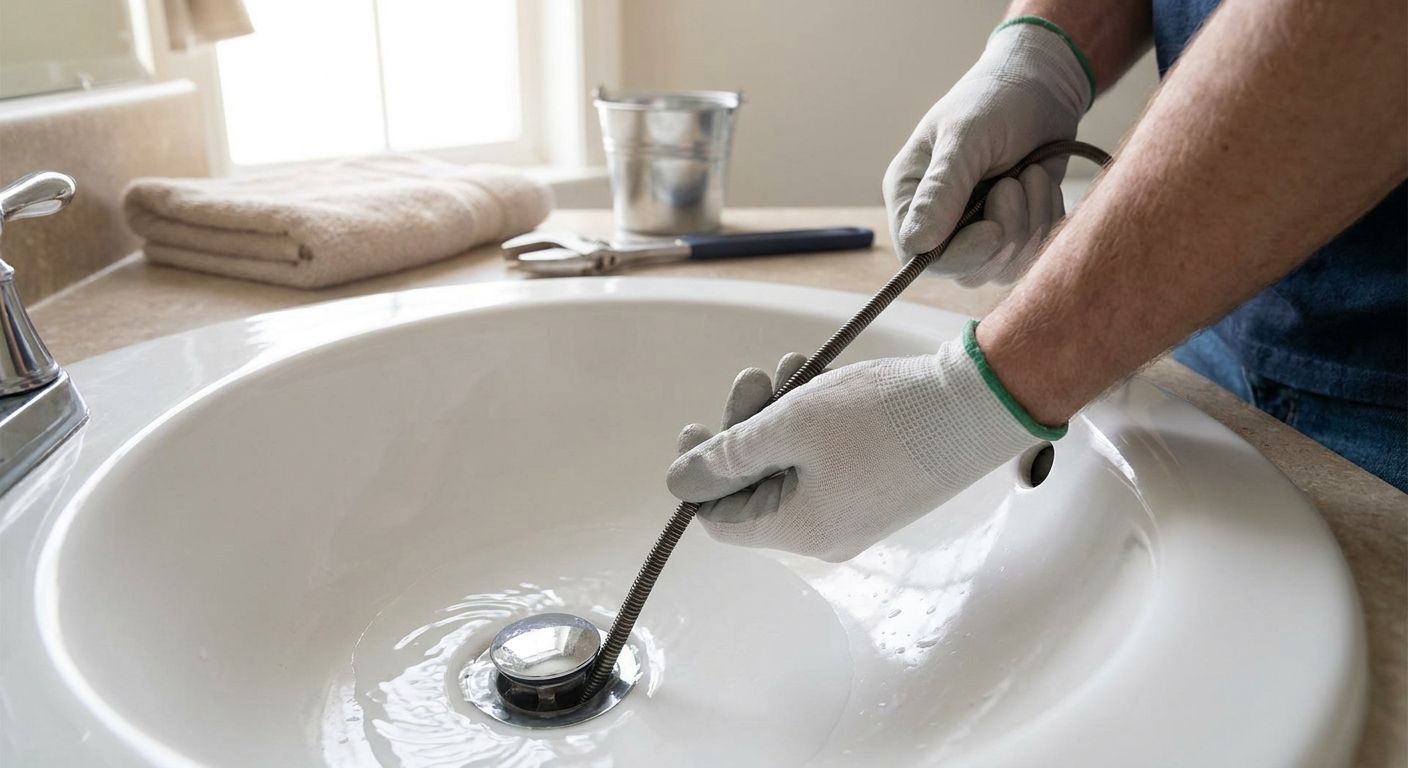
- Snake the drain. Feed a hand-crank drain auger past the P-trap, crank while pushing forward, and pull back slowly to bring debris out with the cable.
- Check the P-trap directly. Place a bucket underneath, loosen the slip nuts by hand or with pliers, and clear the trap of anything the snake missed before reassembling.
If the sink still drains slow after all six steps, the clog sits deeper in the branch line than a hand snake reaches, and that's a job for a motorized auger or hydro jetting.
Why bathroom sink drains slow down
- Hair and soap scum buildup — the single most common cause in bathroom sinks specifically, versus grease in kitchen lines
- Mineral scale from hard water narrowing the inside diameter of older 1.25-inch bathroom sink drain pipe
- Toothpaste and cosmetic residue that hardens over time and traps other debris
- A collapsed or bellied section of pipe in homes built before the 1990s, especially with cast iron or galvanized steel lines
- Tree root intrusion further down the branch line, which shows up as a slow sink combined with a slow tub or toilet
- A vent stack blockage that stops air from equalizing pressure, making drainage sluggish even with a clear pipe
A slow bathroom sink that keeps returning within weeks after cleaning almost never means the trap is dirty again — it means the blockage is past the trap, and that calls for a video camera inspection rather than another round of vinegar.
Get a drain inspection scheduled
Video camera inspection finds what a snake can't reach.
Is a slow bathroom sink drain a sign of a bigger sewer problem?
A slow bathroom sink alone is usually just a local clog, but a slow sink combined with a slow tub, toilet, or floor drain points toward a main line problem. When multiple fixtures back up at once, the blockage sits in the shared drain line, not the sink trap — see how to respond to a sewer backup emergency for what to check next.
Can hydro jetting fix a slow bathroom sink drain?
Hydro jetting clears a slow bathroom sink drain when hair and scale have built up along a longer stretch of pipe than a hand snake can reach. It blasts high-pressure water through the full diameter of the line instead of just punching a hole through the clog, which is why it lasts longer than snaking alone on recurring slowdowns.
Should I use a chemical drain cleaner on a slow bathroom sink?
Skip chemical drain cleaners on a slow bathroom sink drain if your home has older galvanized or cast iron pipe, because the caustic chemicals corrode aging metal from the inside. On modern PVC they work occasionally, but they still leave chemical residue standing in the trap if the clog doesn't fully clear, which makes a follow-up snake or camera job harder and less safe.
Bathroom sink drain repair rarely needs anything more than the six DIY steps above, but when a slow drain turns into a full clog with standing water and a sewer odor, that's the point to bring in a licensed crew with a camera and a jetter rather than keep pouring chemicals down the same pipe.
FAQ
How do I fix a slow-draining bathroom sink?
Fix a slow-draining bathroom sink by clearing hair from the stopper, plunging the drain, and running a hand-crank snake past the P-trap. Most slow bathroom sinks clear within the first three steps; a recurring slowdown after that points to a deeper blockage.
What causes a bathroom sink to drain slowly?
Hair combined with soap scum and toothpaste residue causes most slow bathroom sink drains, building up in the P-trap and the first few feet of pipe. Mineral scale from hard water and aging galvanized pipe narrow the passage further over time.
Will baking soda and vinegar unclog a bathroom sink?
Baking soda and vinegar loosen light soap scum and residue in a bathroom sink drain within about 15 minutes of sitting time. It won't clear a solid hair clog or a blockage past the P-trap the way a drain snake or hydro jetting will.
When should I call a plumber for a slow bathroom sink?
Call a plumber for a slow bathroom sink when plunging and snaking don't restore normal drainage, or when the slowdown returns within a few weeks of clearing it. Multiple slow fixtures at once signal a main line issue that needs a camera inspection, not more DIY attempts.
Can a slow bathroom sink drain fix itself?
A slow bathroom sink drain does not fix itself — the clog layers up over time as more hair and residue stick to what's already there. Left alone, a slow drain typically progresses to a full stoppage within weeks.
Does hydro jetting damage old pipes?
Hydro jetting is safe on sound PVC, cast iron, and most metal pipe when run by a trained technician at the correct pressure for the pipe material. It's the corroded or already-cracked sections of old pipe that pose risk, which is why a camera inspection typically runs before jetting on older homes.
Why does my bathroom sink smell bad even though it drains okay?
A bathroom sink that smells bad while still draining usually has a dry P-trap or built-up biofilm coating the inside of the pipe past the trap. Running water regularly and clearing the trap by hand usually resolves the smell within a day.
One last thing
The stopper is the part homeowners skip and the part that solves the problem fastest — most bathroom sink stoppers pull straight out with a firm tug, and hair wrapped around the bottom of that stopper is the actual clog in a large share of slow-drain calls, not something buried deep in the pipe. Check it before you reach for the snake.
If the slow drain keeps coming back after that, a slow bathroom sink in 2026 is cheaper to fix with a camera inspection now than a full backup later, and that's the exact call Statewide Sewer & Drain fields across Middlesex, Monmouth, Ocean, and Union counties.