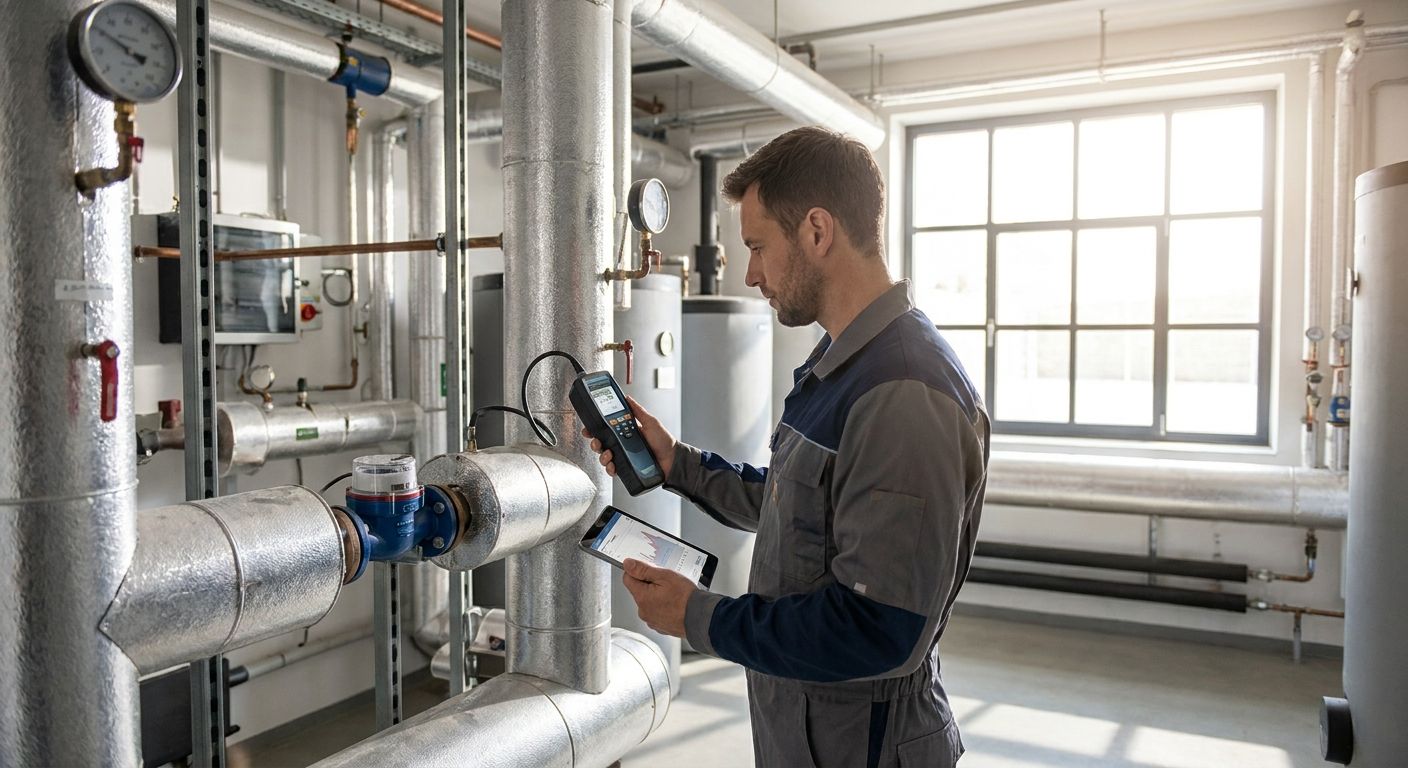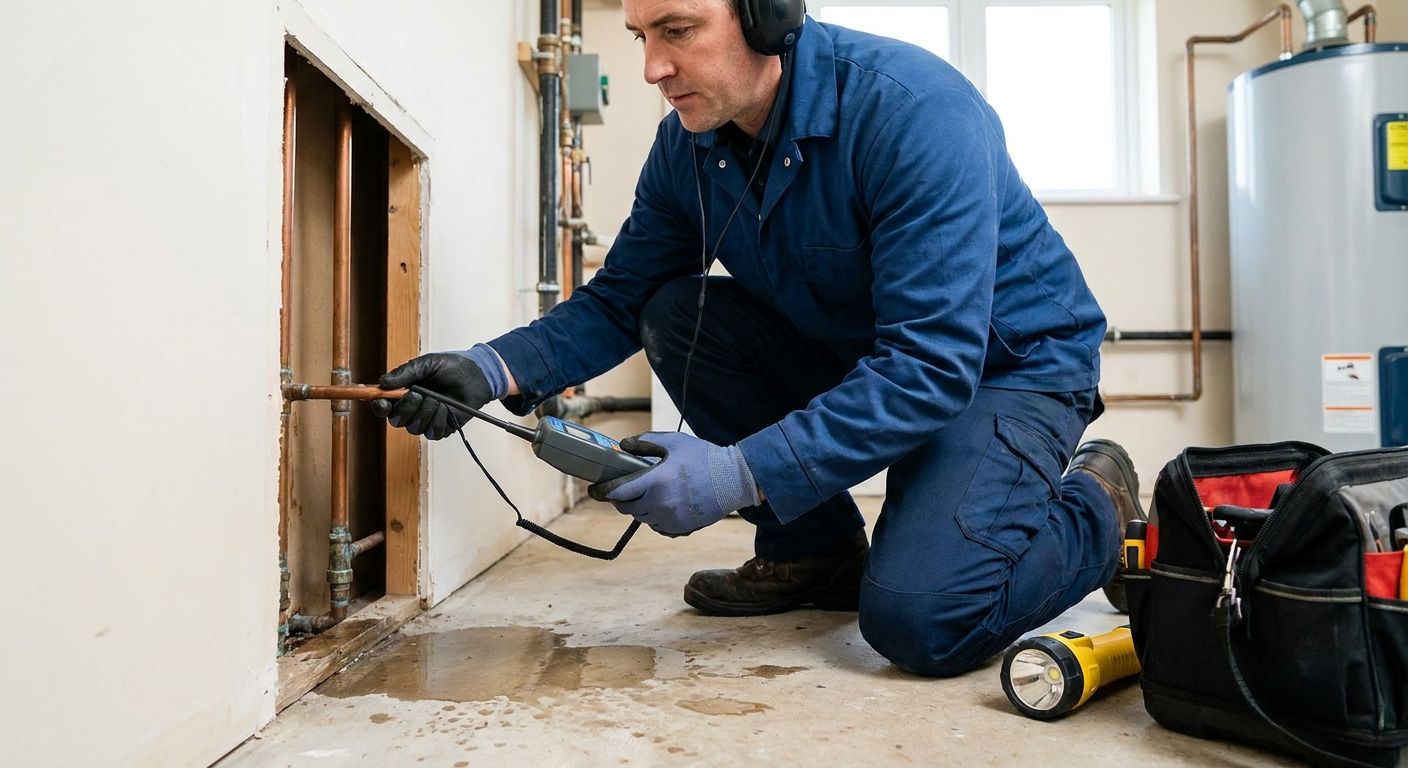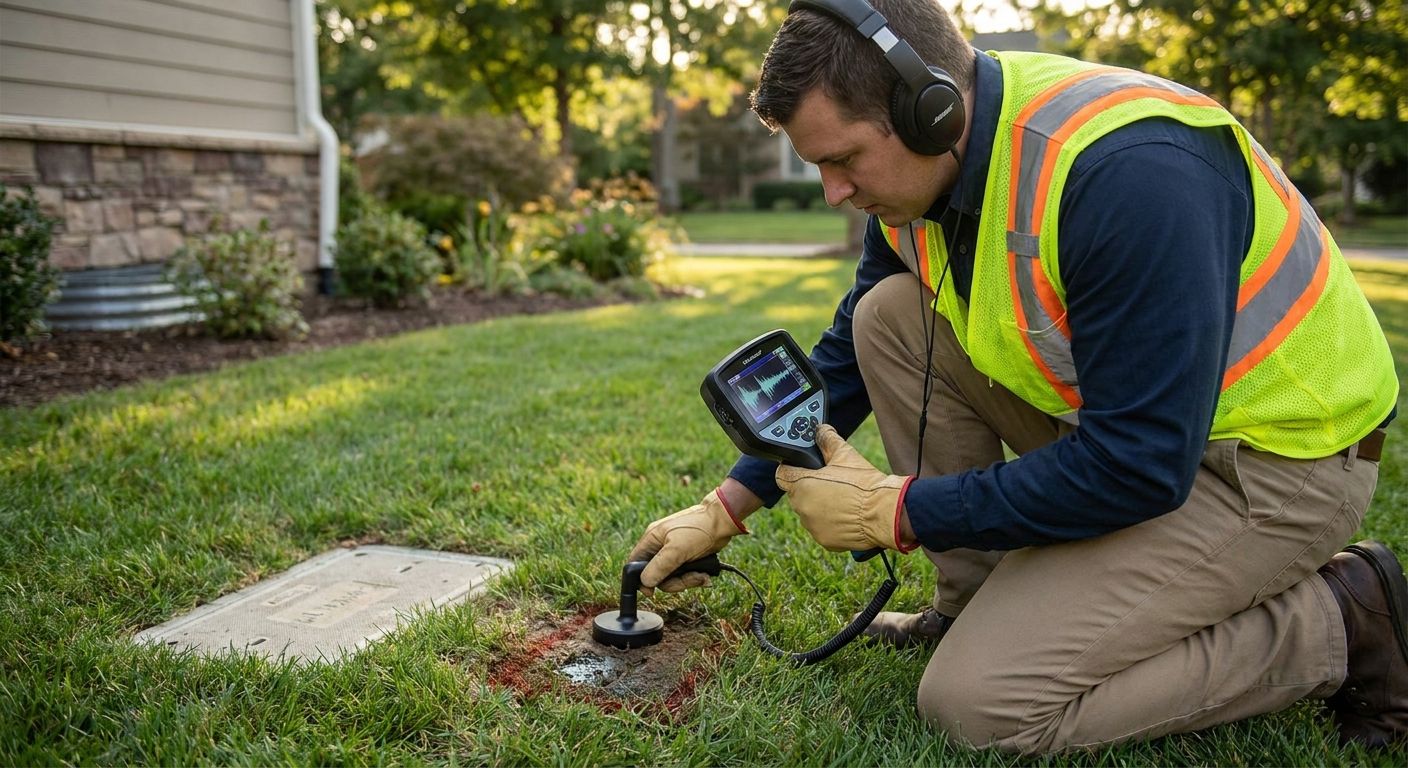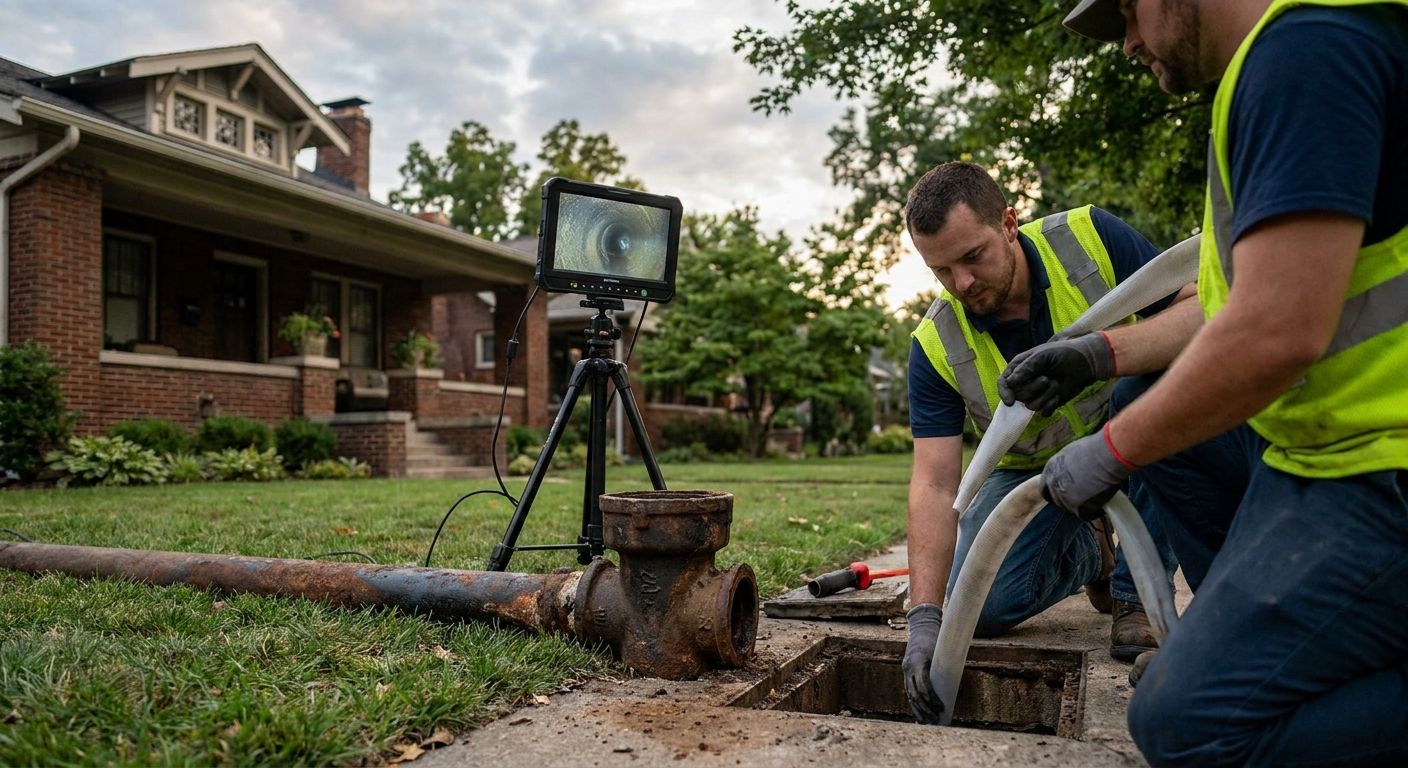
Trenchless sewer repair for older homes with cast iron pipes fixes corroded, cracked, or root-invaded sewer lines without tearing up the lawn, driveway, or basement slab, using pipe lining or pipe bursting instead of open trenching. Homes built before the mid-1970s across Middlesex, Monmouth, Ocean, and Union counties still run on original cast iron laterals, and those lines fail differently than the PVC used in newer construction — corrosion from the inside out, not just cracks from outside pressure.
- Trenchless sewer repair fixes cast iron sewer lines through pipe lining or pipe bursting without digging up the yard.
- Cast iron sewer pipe typically lasts 50-75 years before internal corrosion narrows the line enough to cause backups.
- CIPP lining works on corroded but structurally intact cast iron; pipe bursting is for collapsed or undersized sections.
- Video camera inspection before any trenchless work confirms which method fits — skipping it is the most common costly mistake.
Why trenchless sewer repair matters for cast iron pipe homes
Cast iron sewer pipe corrodes from the inside through a process called tuberculation — mineral scale builds up along the pipe wall, narrowing the channel long before a full collapse happens. A house that never had a sewer problem for 40 years can start backing up every few months once that scale buildup crosses a threshold, and standard rodding just punches a hole through the buildup instead of clearing it.
Open-trench replacement on an older lot in Statewide Sewer & Drain's service area often means digging through mature landscaping, driveways, or a sidewalk the township owns. Trenchless sewer repair skips most of that by working through one or two small access pits, which matters more for a 1950s Cape Cod on a tight Union County lot than it does for new construction with open yard space.
Trenchless sewer repair is the right call for most cast iron sewer lines that are corroded or root-invaded but not fully collapsed — it costs less in restoration and takes days instead of weeks compared to full excavation.
Watch for the warning signs cast iron gives before it fails
Cast iron rarely fails without symptoms first. Catching them early is free and takes no tools beyond paying attention to your own drains.
- Multiple drains gurgling or draining slowly at the same time, not just one fixture
- A sewer smell in the basement or crawlspace that comes and goes
- Rust-colored water backing up into a tub or floor drain
- A soft, sunken, or unusually green patch of lawn tracking the line's path
- Recurring backups after heavy rain that clear on their own within hours
Check the age and material of your line yourself
Before calling anyone, you can usually confirm whether you're dealing with cast iron without spending a dime.
- Pull your township's building permit history — homes built before roughly 1975 in most of NJ commonly used cast iron laterals
- Look at the exposed cleanout in the basement; cast iron shows a dark, heavy, often rust-streaked pipe compared to white or orange PVC
- Ask neighbors with same-era homes what their sewer line turned out to be during past repairs
- Check if your township publishes sewer main material maps, which sometimes note lateral era too
Get a video camera inspection to confirm condition
Once symptoms show up, a camera inspection replaces guesswork with an actual picture of what's failing and where. This is where a professional visit becomes worth the cost.
- Confirms exact material and condition rather than relying on the age of the house alone
- Locates tuberculation buildup, joint offsets, and root intrusion points along the run
- Measures the usable footage of pipe still structurally sound
- Produces recorded footage you can reference for insurance or future repair decisions
- Rules out a collapsed section that would take pipe bursting off the table for lining
If a backup happens before you get to this step, see how to respond to a sewer backup emergency for what to shut off and what to leave alone until a camera goes down the line.
Clear the line with hydro jetting before lining
A liner won't bond to a pipe wall coated in decades of scale and grease. Hydro jetting strips that buildup down to bare cast iron so any lining material actually adheres.
- Standard cable rodding punches a hole through blockage but leaves scale on the walls
- Jetting pressure gets adjusted for older, more brittle cast iron versus newer pipe
- A jetted line confirms the full run is reachable before committing to lining
- Post-jet camera pass double-checks the pipe wall is clean enough to line
Decide between CIPP lining and pipe bursting
This is the fork in the road, and it depends entirely on what the camera and jetting revealed.
- CIPP (cured-in-place pipe) lining fits corroded or cracked cast iron that's still structurally round and intact
- Pipe bursting fits collapsed sections, badly offset joints, or lines that need to be upsized
- Access pit locations and count depend on which method and how long the run is
- Root intrusion at a single joint may point to a targeted repair instead of lining the whole run
Confirm permits and utility locates before any pit is opened
Even trenchless work needs a couple of small excavation points, and skipping this step causes real delays.
- Call NJ One Call (811) before any digging, including small access pits
- Pull the township permit required for sewer lateral work in your municipality
- Get a line locate to mark other utilities crossing the lateral path
- Verify property line location if the lateral runs near a shared boundary
Schedule around symptoms, don't wait for a full backup
Cast iron corrosion is progressive, not linear — a line that's been slow for months can go from annoying to a basement full of sewage in one heavy rain event.
- Book a camera inspection at the first sign of recurring slow drains, not after a backup
- Prioritize repair before winter, when freeze-thaw ground movement stresses already-weak joints
- If a backup happens overnight or on a weekend, 24-hour emergency service exists for exactly this — see 24-hour emergency service for Middlesex County if you're in that area
- Don't keep rodding the same recurring clog point for years instead of addressing the underlying pipe condition
Get a camera inspection scheduled
Confirm your cast iron line's condition before choosing a repair method.
Comparison: trenchless and traditional repair options for cast iron
| Option | Best for | Key limitation |
|---|---|---|
| CIPP lining | Corroded but structurally round cast iron, root intrusion in an otherwise sound run | Won't fix a fully collapsed section — needs an intact host pipe to cure against |
| Pipe bursting | Collapsed sections, offset joints, undersized lines needing upsizing | Requires access pits at both ends and enough lateral clearance to pull the bursting head |
| Spot repair | One isolated crack or joint failure found on camera | Doesn't address corrosion elsewhere in the same cast iron run |
| Open-trench replacement | Pipe under structural obstructions or severe bellies trenchless methods can't reach | Most disruptive to landscaping and driveways, slowest to complete |
For most cast iron laterals with scattered corrosion and no full collapse, CIPP lining wins on speed and yard disruption — pipe bursting wins when a section has already given out structurally.
Common mistakes homeowners make with cast iron sewer lines
- Treating a recurring backup as "just a clog" and rodding the same spot for years instead of getting a camera down the line
- Assuming the entire lateral needs replacement when only one joint or short section has actually failed
- Skipping hydro jetting before lining and ending up with a liner that won't bond to scaled cast iron walls
- Ignoring a cast iron line because "it's held up this long" — tuberculation buildup accelerates, it doesn't stay steady
- Choosing the cheapest trenchless bid without confirming the liner is rated for a cast iron host pipe specifically
If you're comparing contractors for this kind of work, how to choose a reliable drainage company near you covers what to ask before signing anything.
FAQ
What's the best trenchless sewer repair method for cast iron pipe?
CIPP lining is the best trenchless sewer repair method for cast iron pipe that's corroded or root-invaded but still structurally round. Pipe bursting is the better choice when a section has already collapsed or the line needs to be upsized.
Is trenchless sewer repair cheaper than digging up the yard?
Trenchless sewer repair usually costs less in restoration work because it avoids tearing up landscaping, driveways, or sidewalks. Total project cost still depends on pipe length, depth, and access, so get a quote based on your camera inspection results.
How long does cast iron sewer pipe last before it needs replacement?
Cast iron sewer pipe typically lasts 50 to 75 years before internal corrosion narrows the line enough to cause regular backups. Homes built before the mid-1970s in New Jersey are the ones most likely to still have original cast iron laterals.
Can you do pipe bursting on cast iron sewer lines?
Yes, pipe bursting works on cast iron sewer lines and is often used when a section has collapsed or the existing pipe needs to be upsized. It requires access pits at both ends of the run to pull the bursting head through.
How do you know if your sewer line has cast iron pipe?
Check your home's construction date first — cast iron laterals are common in houses built before roughly 1975. A video camera inspection or a look at the exposed cleanout pipe in the basement confirms the material directly.
Is CIPP lining permanent?
CIPP lining creates a new structural pipe inside the old one and is designed as a long-term fix, not a temporary patch. It only works when the host cast iron pipe is still round and intact enough to line.
What happens if trenchless repair isn't an option for my cast iron line?
If a section has fully collapsed or sits under an obstruction trenchless methods can't reach, open-trench replacement becomes the fallback. A camera inspection determines this before any digging starts.
What should I do if my cast iron sewer line backs up overnight?
Stop using water in the house immediately and avoid running the washer, dishwasher, or multiple toilets. Call for 24-hour emergency service so a camera inspection can identify the failure point before more sewage backs up.
One last thing
Cast iron sewer pipe fails from the inside first — the exterior can look solid while tuberculation has already narrowed the interior channel enough to slow every drain in the house. That's why a camera inspection catches problems years before a visible backup does, and it's the single step homeowners skip most often before calling for trenchless sewer repair after the fact instead of before it.
If your main line is already showing the early signs, how to unclog a main sewer line before it backs up walks through what to check first.