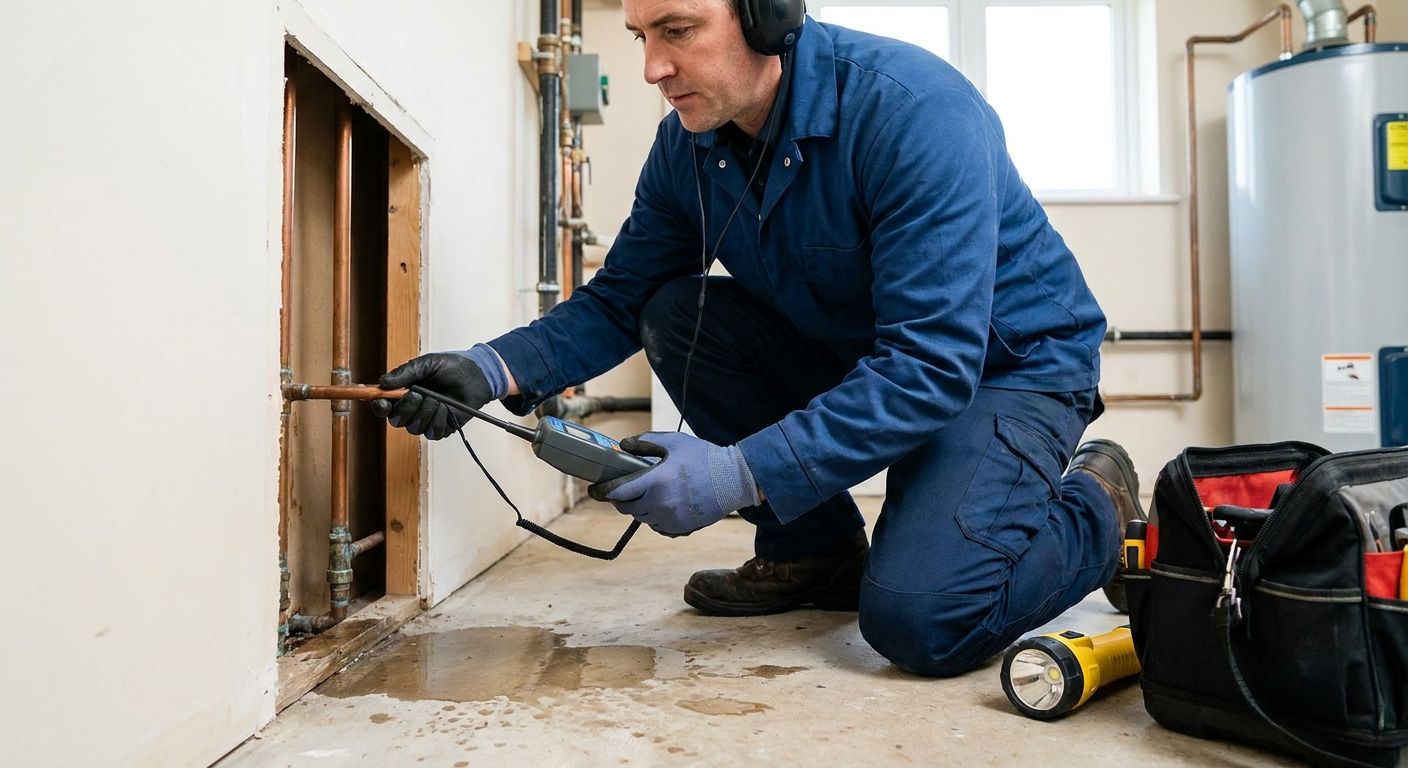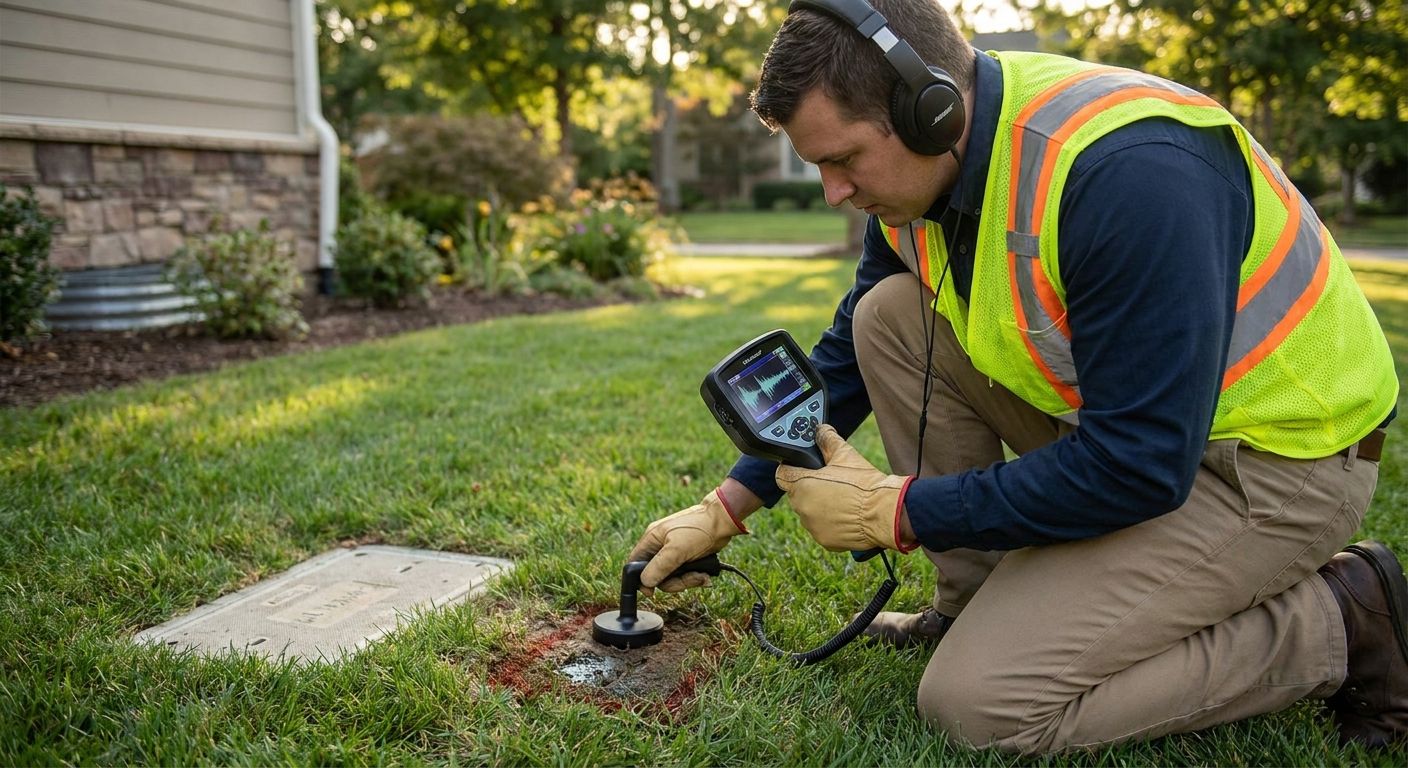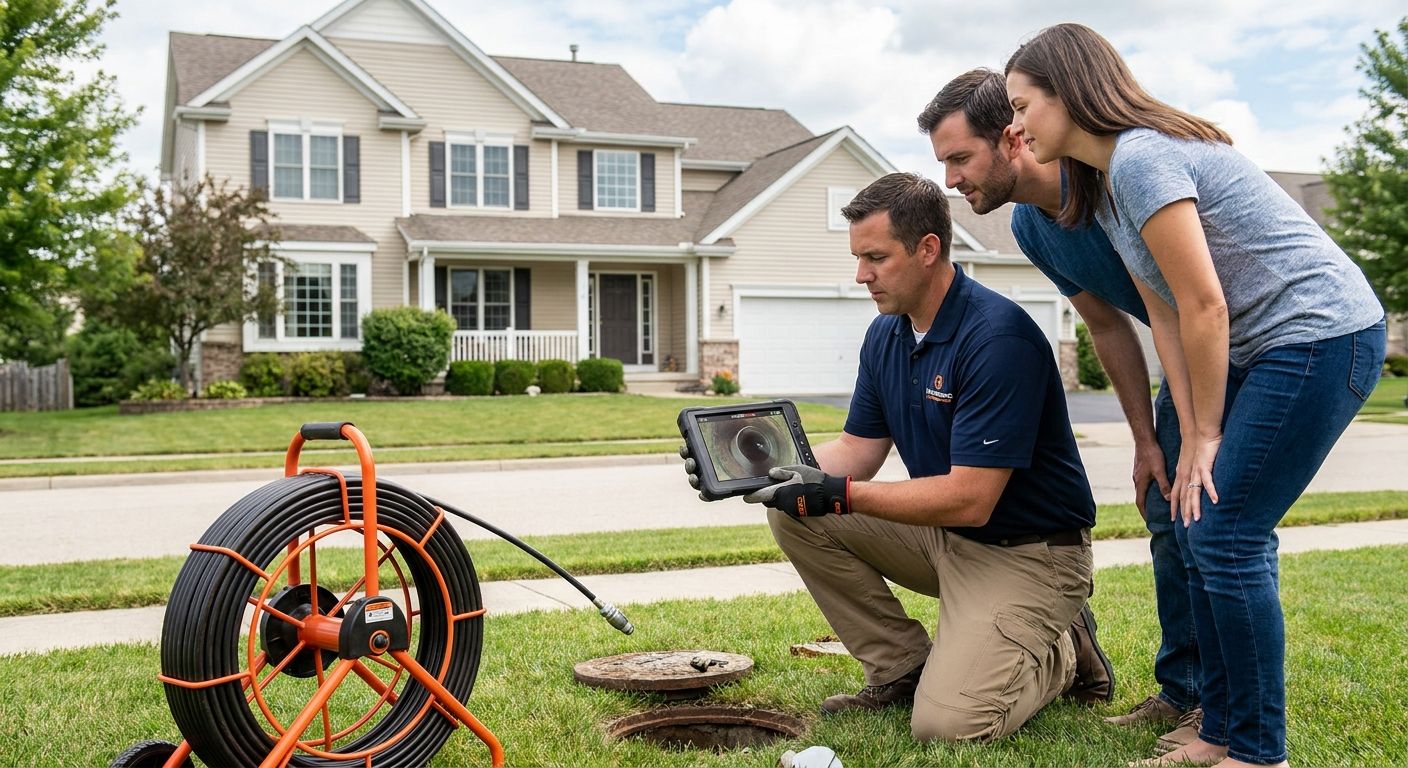
Video camera inspection for home buyers before closing sends a fiber-optic camera through the sewer line to show cracks, bellies, root intrusion, and pipe age before you sign anything. For a buyer closing on a New Jersey home in 2026, the footage from this one inspection can become a contract contingency, a repair credit, or a reason to walk away.
- Sewer camera inspection near me finds sewer line damage a standard home inspection misses before closing.
- Statewide Sewer & Drain runs the inspection and hands buyers recorded video plus a written report.
- Cast iron and clay sewer lines older than 40 years carry the highest risk of root intrusion and collapse.
- Schedule the inspection inside your due diligence window — repair costs found after closing land on you.
Why sewer camera inspection matters for home buyers
A standard home inspector walks the property, runs the faucets, and flushes the toilets. Underground sewer lines don't show up in that walkthrough — searches for sewer camera inspection near me spike among buyers precisely because the pipe running from the house to the street stays invisible until it backs up.
Homes across Middlesex, Monmouth, Ocean, and Union counties still carry sewer lines installed decades before PVC became standard, and in 2026 plenty of those original lines are still in the ground. Cast iron and clay pipe corrodes, shifts, and cracks under tree roots — problems a visual walkthrough can't catch. Statewide Sewer & Drain runs the camera through the cleanout or a vent stack and records the entire line, cleanout to street connection or septic tie-in.
For a buyer, that recording becomes leverage. A cracked or collapsed section found during due diligence turns into a seller credit or a repair condition written into the contract. The same defect found six months after closing is 100% your bill.
Schedule the inspection inside your attorney review or due diligence window
Most New Jersey purchase contracts in 2026 still run a 10 to 14 day attorney review period, and separate inspection contingencies sometimes extend that window. Book the sewer scope the same week you book the general home inspection, not after the report comes back.
- Call as soon as the contract is signed, not after the general home inspection report lands
- Confirm the inspection company can access the cleanout or will pull a toilet if there's no visible cleanout
- Ask whether the seller's water is still on — a dry line won't show blockages accurately
- Get the appointment in writing with a date that falls inside your contingency period
- Tell your real estate agent the date so repair negotiations don't stall the closing timeline
Confirm what the camera can and cannot see
A sewer camera shows the inside of the pipe: cracks, offsets, root masses, grease buildup, and bellies where a section has sunk. It does not show soil conditions outside the pipe and it does not guarantee a remaining lifespan.
- Ask if the camera has a locator that pinpoints depth and distance from the house
- Ask for footage of the full run, not just the first section from the cleanout
- Confirm whether the municipal lateral, the section between house and street main, is included or just the private line
- Ask if the technician notes pipe material at each section — clay, cast iron, PVC, Orangeburg
- Find out if a second visit is included when the first attempt hits a blockage the camera can't pass
Hiring a licensed plumber to run the full video inspection is the faster path to a report you can actually use. Statewide Sewer & Drain skips the guesswork of a rented camera or a quick pass from a general inspector and hands buyers footage they can put in front of an attorney.
Get the recorded footage and a written report, not a verbal opinion
A verbal "looks fine" from anyone standing at the cleanout isn't a report — it's an opinion with no paper trail for your attorney or the seller's agent to review.
- Request the raw video file, not just a summary clip
- Ask for timestamps or footage markers where damage or root intrusion appears
- Get a written summary listing pipe material, condition, and any recommended follow-up
- Confirm the report includes distance-to-defect measurements, not just "root intrusion found"
- Save the file before closing — some companies don't retain footage past a set period
Check specifically for tree root intrusion and pipe age
Root intrusion is the most common defect found in pre-closing camera inspections across older Jersey neighborhoods where mature trees sit near the sewer line's path. Learn the signs of tree root damage before the inspection so you know what to ask the technician on-site.
- Ask whether roots are hairline, minor, or a solid mass restricting flow
- Ask how many joints show root entry — one joint is a repair, five joints is a re-line
- Find out the pipe's estimated age from material and, where available, municipal permit records
- Ask if the technician recommends hydro jetting now, or a full line assessment first
- Get a second opinion if the report says "significant" without a number or percentage of blockage
Weigh renegotiating, requesting repair, or walking away
The report gives a buyer three real options before closing, and the right one depends on the dollar amount and how the rest of the pipe material is holding up.
- Renegotiate the price to cover the estimated repair cost if the defect is moderate
- Request the seller complete the repair before closing, with a follow-up camera pass to confirm
- Ask for a credit at closing and handle the repair yourself on your own timeline
- Walk away if the line shows a full collapse or multiple failure points on an older home
- Loop in your real estate attorney before sending a repair demand — timing matters under contract
Know when the fix is a re-line, not a full excavation
Older homes with cast iron pipe don't always need a dig-and-replace job. Trenchless repair for aging cast iron lines can resolve corrosion and small cracks from the inside without tearing up the yard, and knowing this changes how you negotiate.
- Ask if the defect is a candidate for CIPP lining instead of open-trench replacement
- Get a rough scope of work in writing, not a verbal "it'll probably need a re-line"
- Confirm whether the repair method affects any warranty terms the seller is offering
- Ask how disruptive the repair timeline is if you plan to move in within weeks
- Compare the re-line estimate against the price reduction the seller is offering
Inspection options for buyers before closing
| Option | Best for | Key limitation |
|---|---|---|
| General home inspector's basic scope | Buyers on a tight timeline who want a quick pass/fail | Often skips full-line footage and root detail |
| DIY camera rental | Buyers with hands-on plumbing experience | No trained eye to flag early-stage cracks or offsets |
| Licensed plumber's full video inspection (Statewide Sewer & Drain) | Buyers who need a report they can use to negotiate | Requires cleanout access; scheduling must fit the contract window |
| Municipal lateral inspection | Buyers in towns requiring a lateral certification before transfer | Covers only the section between house and street main |
For a report you can hand to an attorney or negotiate with, a licensed plumber's full video inspection beats a general home inspector's scope or a DIY rental — it's the option built to produce distance-to-defect footage a seller can't easily dispute.
Common mistakes home buyers make with sewer camera inspection
- Skipping it because the home inspector said the plumbing "looks fine." A visual walkthrough never sees underground pipe.
- Booking the inspection after the attorney review period closes. Once the window shuts, leverage disappears even if the report finds a collapsed line.
- Assuming a clean cleanout means a clean line. Root intrusion often starts well past where a quick look stops.
- Negotiating a credit without a written estimate attached. Sellers and their agents want a number, not "it needs work."
- Confusing the private line with the municipal lateral. The house-to-street section and the street-to-main section can have different owners and different repair responsibilities.
Book an inspection before your window closes
Statewide Sewer & Drain runs full-line video inspections for New Jersey home buyers.
FAQ
What's the best time to schedule a sewer camera inspection before closing?
Schedule it the same week as your general home inspection, inside your attorney review or due diligence window. Booking it late means any defect found has less negotiating power left on the clock.
How much does a sewer camera inspection near me cost?
Cost varies by pipe length, access point, and whether a cleanout already exists. Ask the plumber for a written quote before scheduling instead of estimating from a general range.
Can a sewer camera inspection cancel a home sale?
Yes, if the inspection contingency in the contract allows the buyer to walk away over a material defect. A collapsed or heavily root-damaged line found during due diligence is grounds most attorneys treat as material.
Is a sewer camera inspection different from a home inspector's plumbing check?
Yes. A general home inspector checks visible fixtures and drainage speed inside the house. A sewer camera inspection runs a scope through the underground line to show the pipe itself.
Does a sewer camera inspection cover the municipal lateral line?
Not always. Confirm with the technician whether the scope covers only the private line from the house to the property boundary, or extends to the street main.
What does root intrusion in a sewer line mean for a home buyer?
Root intrusion means tree roots have entered the pipe through a joint or crack, and it ranges from a minor issue to a near-total blockage. The severity, not the presence of roots alone, decides whether it's a negotiating point.
Should I still get a sewer camera inspection on a newer home?
Yes, especially if mature trees sit near the line's path. Newer PVC pipe resists root intrusion better than clay or cast iron, but joints and connections can still fail.
One last thing
Plenty of pre-1960s homes across the coverage area have no accessible cleanout at all — the technician has to pull a toilet or use a roof vent to get the camera into the line. Ask about cleanout access before you schedule, not on inspection day, or the appointment can turn into a second trip and a lost afternoon before your 2026 closing date.