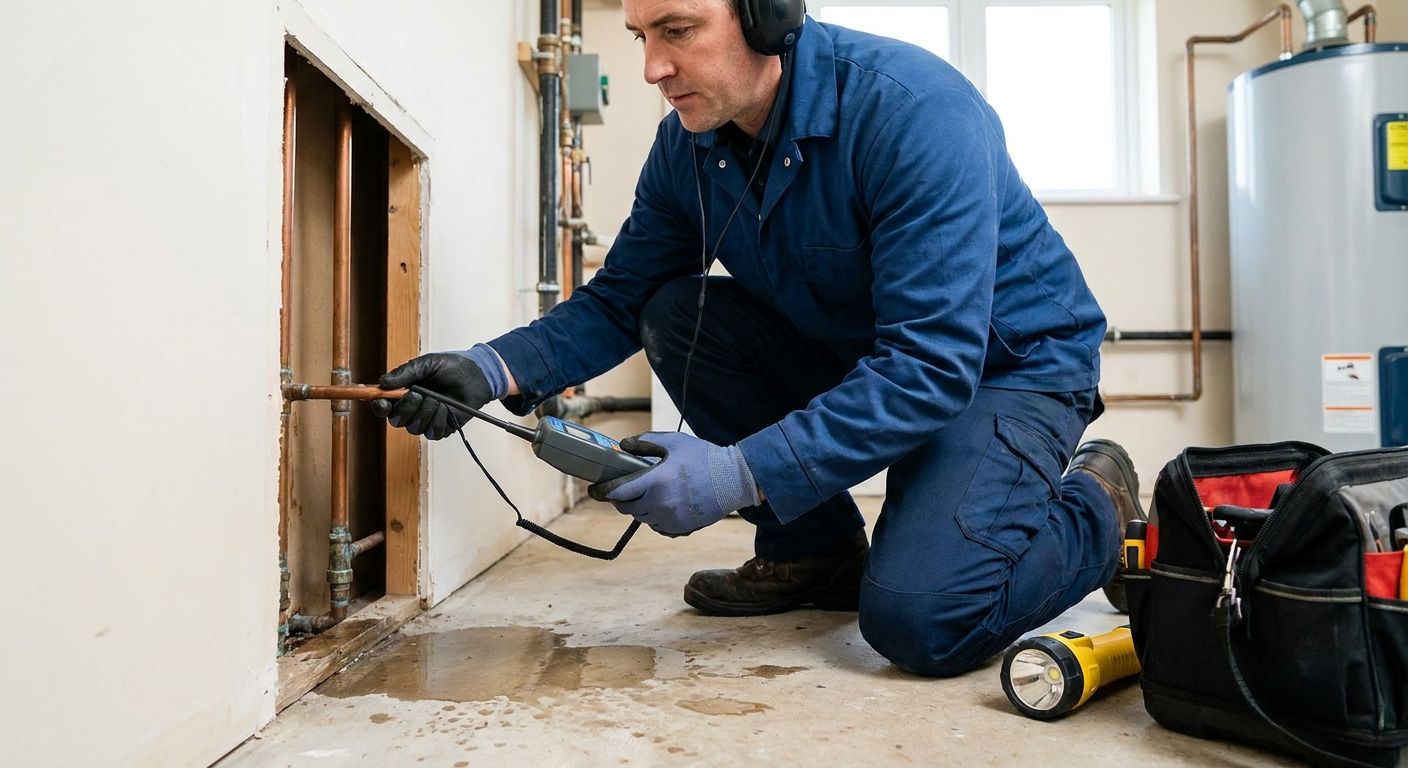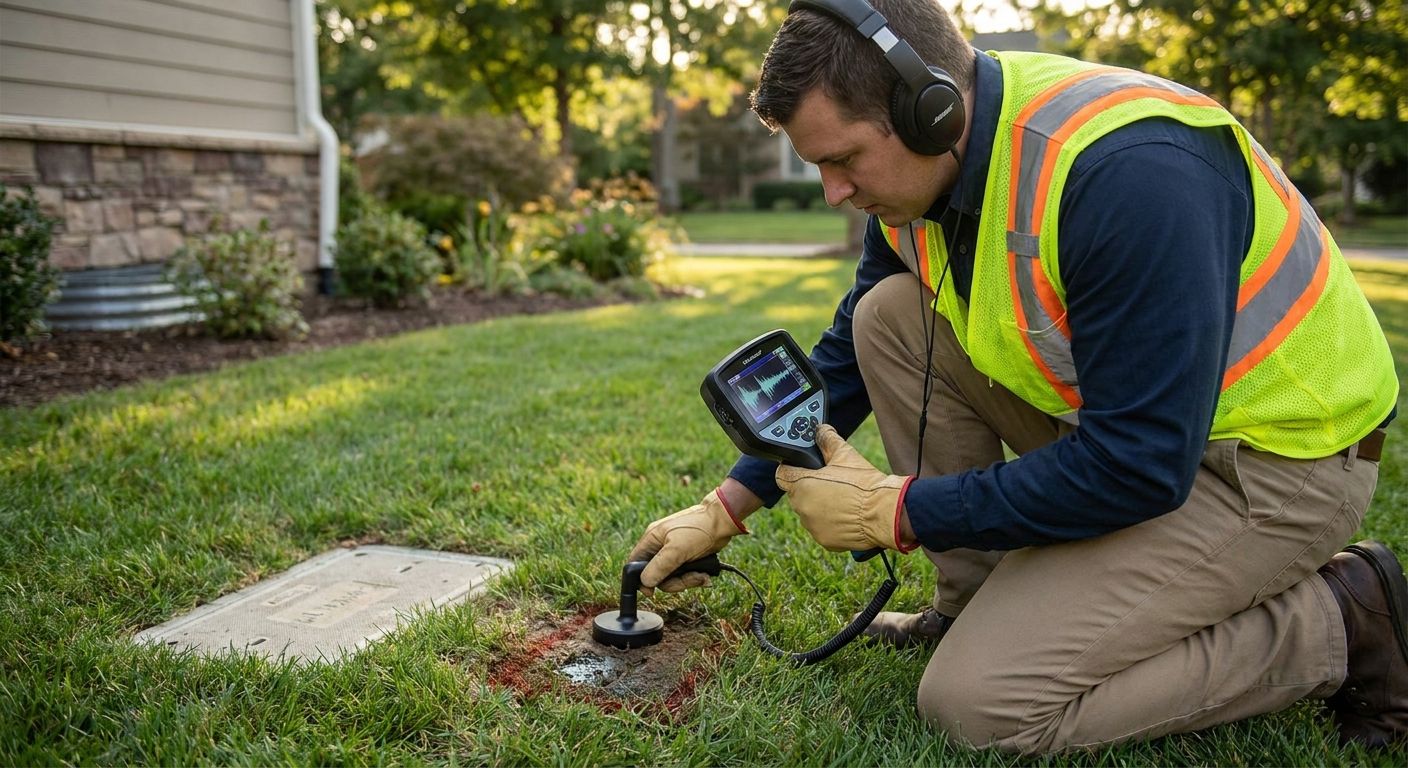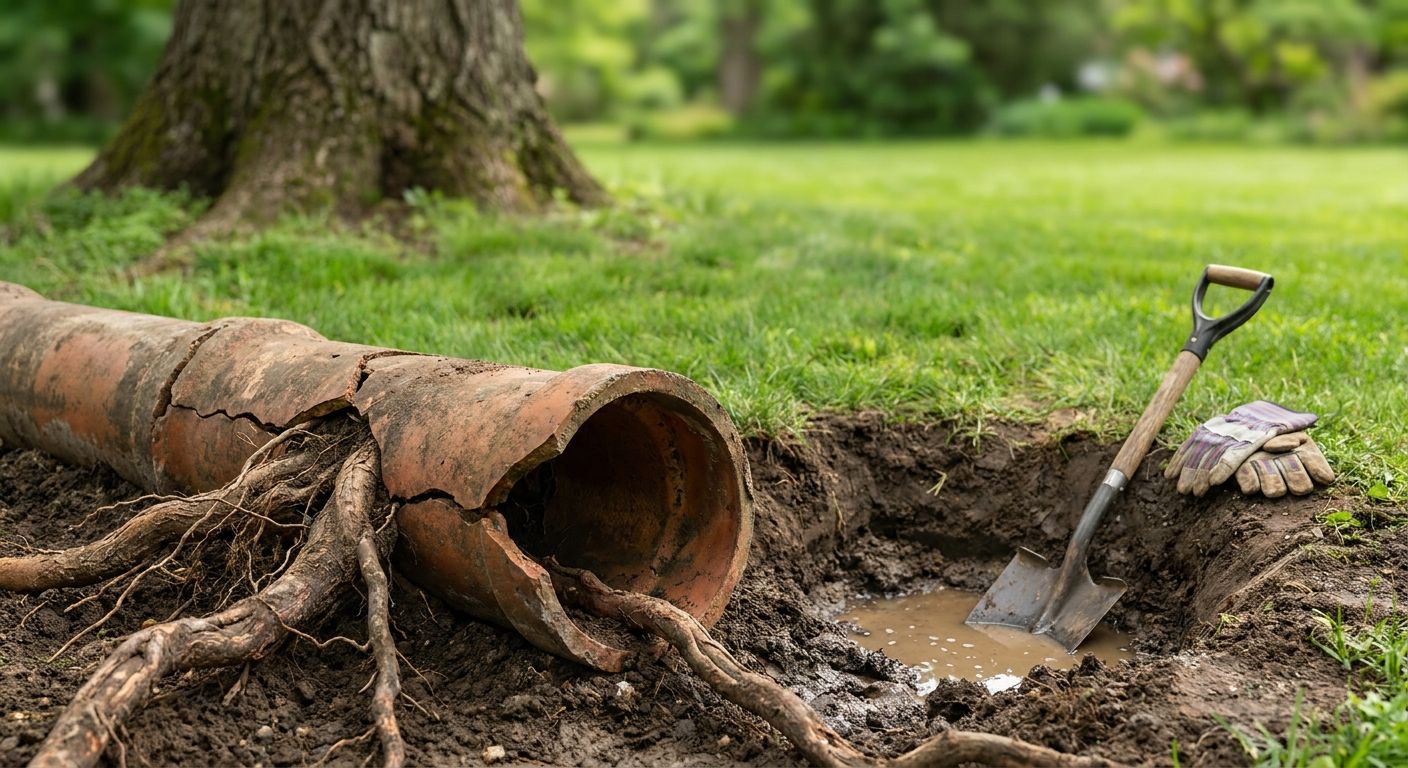
Slow drains at every fixture, gurgling toilets, a sewage smell in the yard, and a suspiciously green strip of grass running the length of your pipe are the signs of tree root damage in a sewer line that show up before a full backup does. A camera inspection is the only way to confirm roots versus a cracked or offset pipe, because from the surface those two problems look nearly identical.
- Slow drains at every fixture plus a sewage smell in the yard are the clearest signs of tree root damage sewer line owners see before a full backup.
- Roots grow in through hairline cracks at pipe joints, not through solid pipe walls, so surface repairs alone rarely stop regrowth.
- Hydro jetting clears roots temporarily; trenchless repair or CIPP pipe lining fixes the crack that let them in.
- A lush green strip of grass over the pipe run in 2026 spring growth is a strong visual clue roots have reached the line.
- Statewide Sewer & Drain runs video camera inspections across Middlesex, Monmouth, Ocean, and Union counties before recommending any repair.
Why this matters
A sewer line clogged by tree roots doesn't announce itself with one bad flush. It shows up as a pattern: the kitchen sink drains slow, then the shower backs up a day later, then the toilet gurgles when the washing machine drains. That pattern across multiple fixtures at once is the tell that separates a local clog from a main line problem, and root intrusion is one of the most common causes of main line problems in homes with mature trees near the yard or street.
Ignore the early signs long enough and a partial root mass turns into a full blockage, usually during a heavy rain when the line is already carrying more flow than it can handle. That's when a Tuesday afternoon slow drain turns into a Saturday night emergency call.
Signs of tree root damage in a sewer line
Here's what actually shows up, ranked by how early it appears in the process:
| Sign | What it usually means |
|---|---|
| Multiple drains slow or gurgle together | Roots are partially blocking the main line, not one branch line |
| Sewage odor in the yard or basement | Roots have cracked the pipe enough to let sewage seep out before it reaches the street |
| Lush green strip of grass over the pipe run | Sewage leaking from root-cracked pipe is fertilizing the ground above it |
| Recurring clog at the exact same spot | Roots have anchored at one joint and keep regrowing after clearing |
| Gurgling toilet when you run the washing machine | Air is trapped behind a partial blockage further down the line |
| Backup that returns within days of a cleaning | The root mass wasn't fully removed, or the crack causing it wasn't addressed |
The single most reliable sign is a backup that involves more than one fixture at the same time. A slow bathroom sink on its own is a local clog. A slow bathroom sink plus a gurgling toilet plus a slow shower on the same day points at the main line, and roots are one of the top causes of that pattern in older Middlesex, Monmouth, Ocean, and Union county homes.
The 2026 seasonal clue most homeowners miss
Root activity tracks with growth season. Spring and early summer 2026 are when root systems push hardest for water, which is exactly when hairline cracks in old clay or cast iron pipe get invaded fastest. If your slow-drain pattern started right as the trees leafed out, that timing alone is a strong point toward roots over a mechanical break.
Why root intrusion happens
Roots don't punch through solid pipe. They exploit weak points that already exist. The factors that make a line vulnerable:
- Pipe material — clay and cast iron pipe, common in homes built before the 1980s across Middlesex and Monmouth counties, have joints every few feet, and joints are where roots get in
- Pipe age — older pipe has had decades of ground shift, freeze-thaw cycles, and minor settling to open up hairline gaps
- Tree proximity — a mature tree within 20-30 feet of the sewer line run has root systems that can extend well past the trunk looking for water
- A moisture source already leaking — roots are drawn to the moisture from an existing small leak, so a pipe that's already slightly damaged attracts roots faster than one that's fully intact
- Flat or low-slope pipe runs — standing water in a low spot in the line is an even stronger moisture signal for roots to chase
- No recent camera inspection — root masses that start small and go unnoticed for a year or two have time to thicken into a full blockage
“If it ain't flowing, get going — the sooner you catch root intrusion, the cheaper the fix.”
Once roots are confirmed, the fix depends on how much damage the crack itself has done. Hydro jetting cuts the root mass out and restores flow immediately, but it doesn't repair the crack the roots grew through, so regrowth is common within a year or two if that's the only step taken. For a line with a confirmed crack or offset joint, trenchless sewer repair built for tree root damage addresses the structural problem instead of just the symptom.
Can you clear tree roots out of a sewer line yourself?
A store-bought root-cutting auger can knock a hole through a root mass and get water flowing again, but it doesn't remove the crack that let the roots in, and it won't reach roots wrapped around a joint several feet down. A DIY cut is a temporary fix, not a repair. Expect the same backup to return within months if the underlying crack isn't addressed.
Does a camera inspection confirm tree root damage for sure?
Yes — a video camera inspection is the only way to confirm roots versus a collapsed section, a belly in the line, or a disconnected joint, because a hydro jetting company can clear a blockage without ever seeing what caused it. The camera shows exactly where the roots entered, how much pipe is affected, and whether the fix is a spot repair or a full relining job.
How often should a sewer line near mature trees get checked?
A line running near mature trees is worth a camera check every year or two once the property is over 20-25 years old, especially if the neighborhood has clay or cast iron pipe common to older sections of Middlesex, Monmouth, Ocean, and Union counties. Waiting for a backup to force the issue almost always costs more than catching root growth early.
FAQ
What are the first signs of tree root damage in a sewer line?
The first signs are slow drains at more than one fixture at the same time, gurgling from the toilet when another fixture drains, and a faint sewage smell in the yard. A single slow drain on its own usually isn't roots — it's the pattern across fixtures that points to the main line.
How do I know if it's tree roots or a broken pipe?
You can't tell from the surface symptoms alone — both roots and a broken or offset pipe cause the same slow-drain, backup, and odor pattern. A video camera inspection is the only reliable way to see which one you actually have.
Can tree roots grow into a sewer line without any visible symptoms?
Yes, roots can grow inside a line for a year or more before symptoms show up, especially if the root mass is small and the pipe still drains slowly instead of backing up. That's why a periodic camera check catches problems earlier than waiting for a backup.
Does hydro jetting remove tree roots for good?
Hydro jetting cuts through the root mass and restores flow the same day, but it doesn't repair the crack the roots grew through. Roots commonly regrow within a year or two unless the crack itself gets fixed with a lining or spot repair.
Is trenchless repair better than digging up the yard for root damage?
Trenchless repair fixes the damaged section from inside the existing pipe without excavating the yard, which is why it's become the standard approach for root-damaged clay and cast iron lines. A full dig-and-replace is still sometimes needed if the pipe has collapsed rather than just cracked.
Why does grass grow greener over a sewer line with root damage?
Sewage leaking from a root-cracked pipe acts as fertilizer for the grass directly above it, which is why a lush green strip along the pipe run — especially one that stands out from the rest of the lawn — is a visual sign worth investigating.
How much sewer line does one tree root system typically affect?
Root intrusion is usually concentrated at one or two joints near where the roots first found a crack, though a root mass left unaddressed for years can extend several feet along the pipe. A camera inspection maps the exact affected length before any repair plan is set.
One last thing
Roots don't need a big crack to get started — a gap smaller than a pencil at a pipe joint is enough for a root hair to find moisture and start growing. Once it's in, the root thickens over months and years, and the growing root itself widens the original crack, which is why a small problem left alone turns into a full pipe failure. If a camera inspection in 2026 shows joints already compromised along most of the run, CIPP pipe lining seals the whole length from inside without digging up the yard.
Get a camera inspection before it backs up
Confirm root damage in your sewer line before it turns into an emergency call.