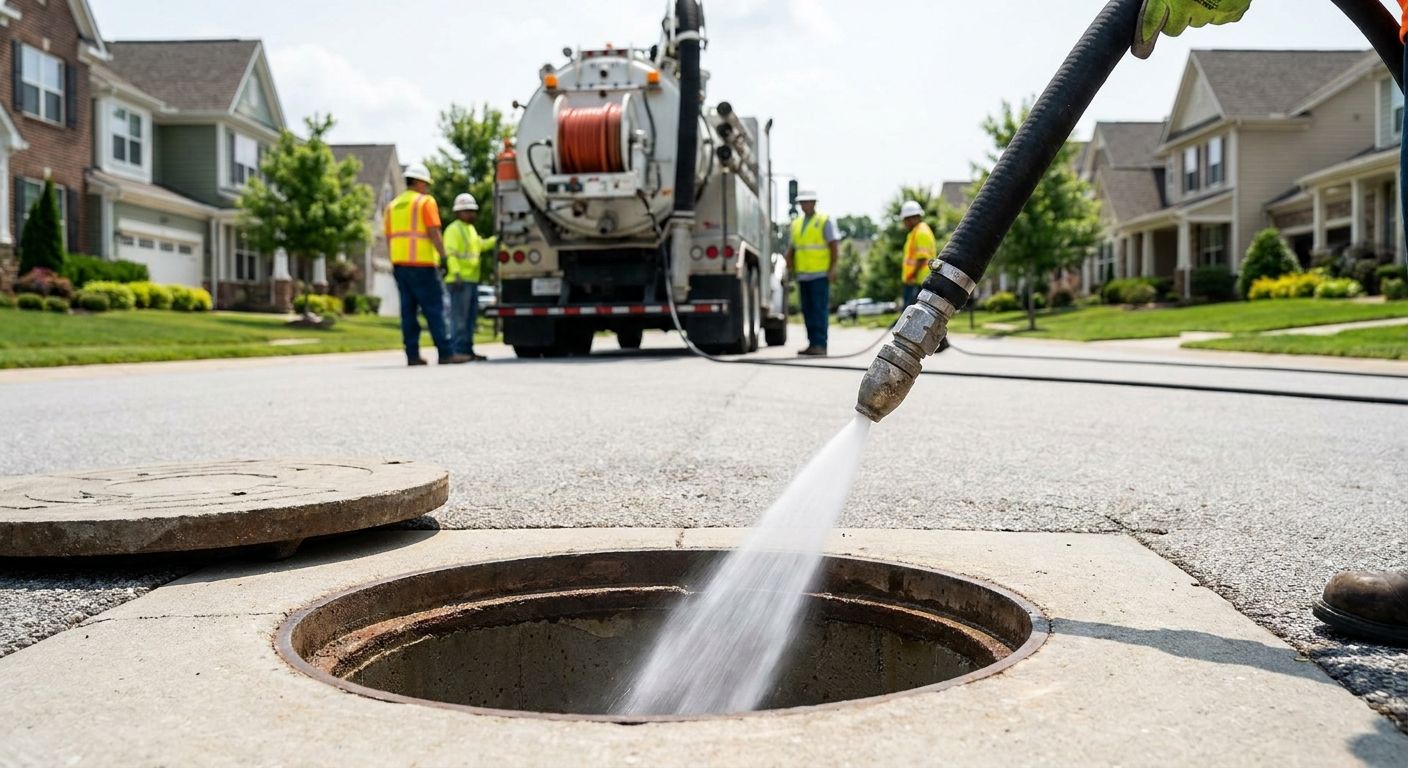
Hydro jetting HOA sewer mains means running high-pressure water, typically 3,000 to 4,000 PSI, through the shared sewer lateral or main that serves a community's units to strip grease, scale, and root intrusion back to bare pipe wall without excavating common-area pavement. A single-family homeowner deals with one household's waste stream; an HOA main carries flow from a dozen units or more, runs under mature street trees the association planted decades ago, and backs up into multiple owners' properties at once when it fails.
That difference changes everything about how the work gets scoped, scheduled, and paid for.
- Hydro jetting hoa sewer mains clears root intrusion and grease better than cabling on shared community lines in 2026.
- Statewide Sewer & Drain runs camera inspection before jetting to confirm pipe material and avoid damaging brittle cast iron.
- Communal mains under mature trees need a jetting cycle every 12 to 24 months, not just reactive calls.
- CIPP pipe lining is the next step when jetting keeps clearing the same root mass every cycle.
Why hydro jetting matters for HOA communities
An HOA sewer main is a shared liability. One clog in a communal lateral can back up into three or four units simultaneously, and the association — not one homeowner — is on the hook for cleanup, camera work, and any pipe repair behind it.
Community landscaping makes it worse. Mature street trees lining an HOA's common areas send roots straight into aging clay or cast iron joints, and grease from multiple kitchens compounds inside longer shared runs in ways a single-family line never sees. Hydro jetting hoa sewer mains on a set cycle, rather than waiting for a backup, is the only approach that keeps a community's line at full diameter year-round.
Boards that treat the main like a one-time emergency fix instead of a maintained asset end up paying for the same clog twice. A line already showing tree root damage rarely stays clear after a single cabling pass — the roots regrow into the cut channel within months.
Inspect the main with video camera before scheduling any work
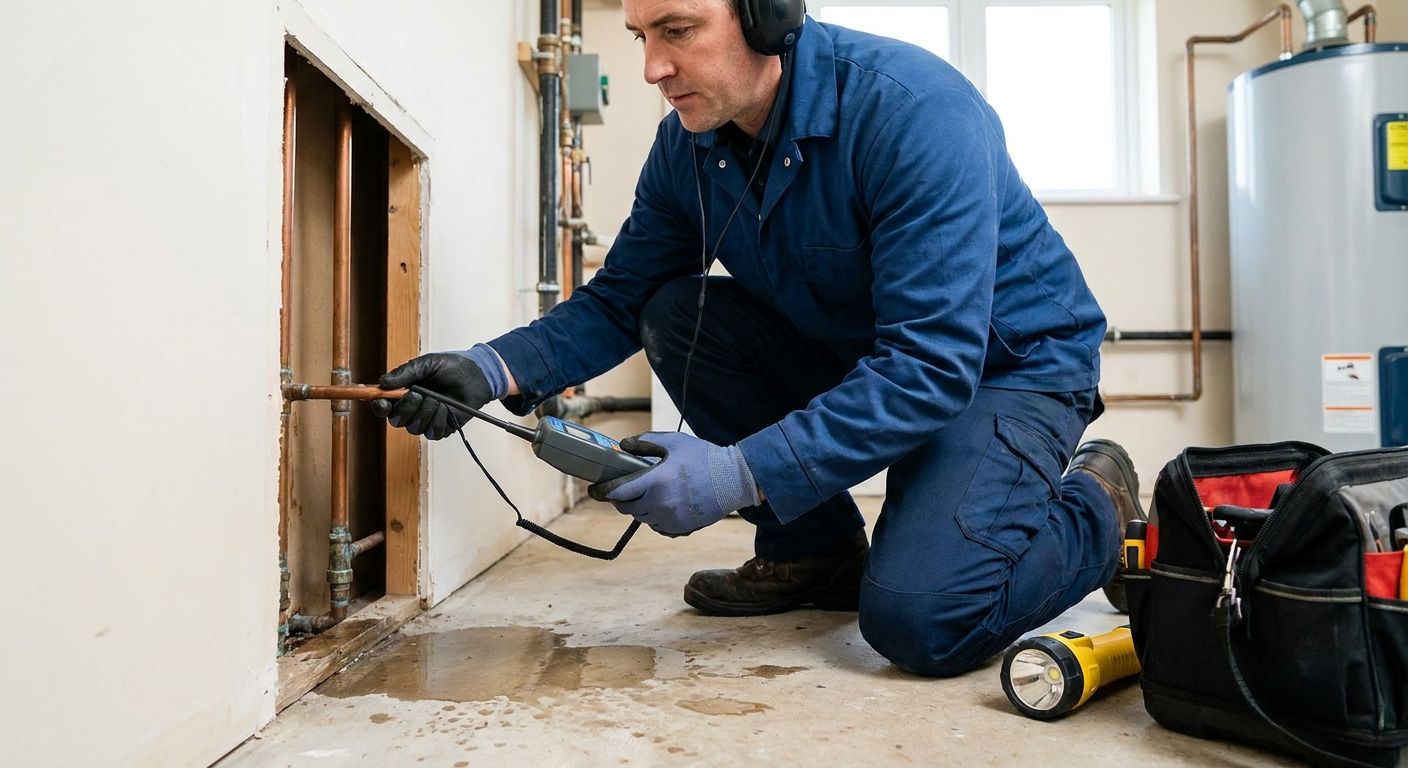
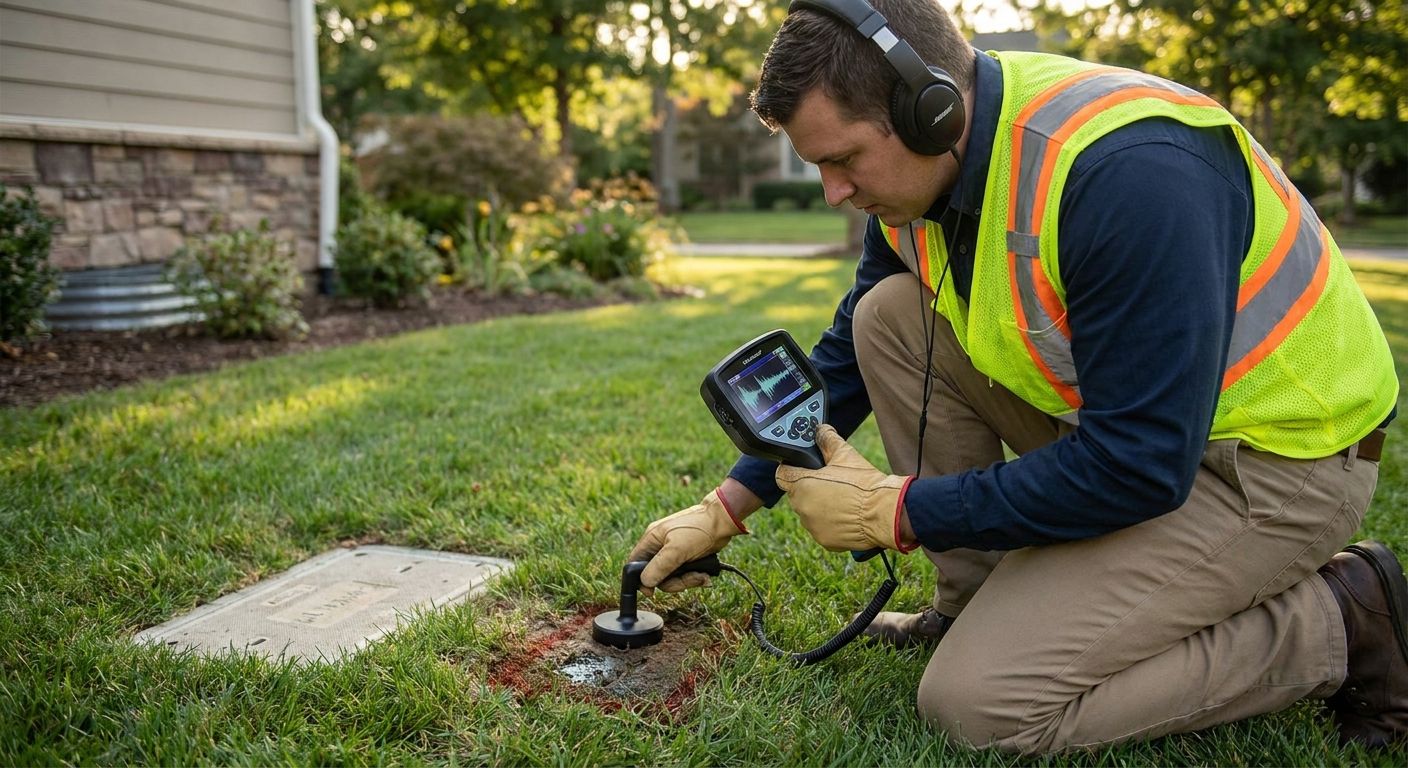
Boards often approve jetting or repair work based on a homeowner's description of a backup. That's a guess, not a diagnosis. A camera inspection shows exactly where the blockage sits, what caused it, and whether the pipe itself is structurally sound enough to jet.
- Run the camera from the nearest cleanout, not just from inside one affected unit
- Note pipe material at each section — clay, cast iron, PVC, or Orangeburg
- Flag any offset joints, bellies, or collapsed sections before jetting
- Record footage with distance markers so the board has a baseline for future comparisons
- Check for tree root intrusion at every joint, not just the visible blockage point
Classify the pipe material and age before choosing pressure
Jetting pressure that clears a 15-year-old PVC main safely can erode a brittle, 60-year-old cast iron joint. HOA communities built before the 1980s commonly run clay or cast iron laterals that need a lower-pressure pass or a different nozzle.
- Confirm the install date from HOA records or the original site plan
- Match nozzle type to pipe diameter — a warthog nozzle for larger mains, a penetrating nozzle for tight root masses
- Reduce PSI on any confirmed cast iron section with visible corrosion
- Skip jetting entirely on pipe already showing camera-confirmed cracks; that pipe needs lining or replacement first
Set a maintenance cycle instead of waiting for the next call
A reactive HOA that only jets after a backup pays emergency rates and covers cleanup costs every time. A scheduled cycle costs less over a budget year and keeps the line at full flow.
- Jet communal mains under mature trees every 12 to 24 months
- Extend the cycle to 24-36 months for newer PVC systems with no known root history
- Tie the jetting schedule to the HOA's annual reserve study so the board budgets for it in 2026 and every year after
- Log each jetting date and camera result in the association's maintenance file
Clear root intrusion at the source, not just the symptom
Cutting through a root mass with a jetter clears flow immediately, but the roots keep growing back through the same cracked joint unless something addresses the entry point.
- Mark every root intrusion location from the camera pass on a site map
- Flag joints with recurring root growth for spot repair or lining, not repeat jetting
- Coordinate with the HOA's landscaping contractor before removing or trimming trees directly over problem joints
- Compare jetting frequency against root removal methods to decide if the line needs a permanent fix
Coordinate resident access and notice before the crew arrives
HOA mains often run through common areas but connect to individual unit laterals. Jetting work that requires access to a cleanout inside a unit needs advance notice, and skipping this step is the single most common cause of delayed service calls.
- Post notice to all affected units at least 48 hours before scheduled work
- Identify which cleanouts are inside units versus in common-area easements
- Confirm parking and equipment staging with the property manager, not individual owners
- Have a board contact on-site or reachable for the crew's arrival window
Document line condition after cleaning for the board's records
A post-jetting camera pass proves the work was done and gives the board a documented baseline for the next cycle. Skipping this step means the next board or property manager has no record of what the line looked like before the next problem.
- Run a follow-up camera pass immediately after jetting, same day if possible
- Compare footage against the pre-jetting inspection at the same distance markers
- File both videos with the HOA's maintenance records, not just the vendor's files
- Note any sections still flagged for repair so they carry into next year's reserve budget
“If the maintenance crew snaked the line and it backed up again in three months, cabling isn't fixing the problem, it's rearranging it.”
Comparison: cleaning and repair options for HOA sewer mains
| Option | Best for | Key limitation |
|---|---|---|
| Video camera inspection | Every HOA main before any cleaning decision | Diagnoses but doesn't clear anything on its own |
| Cabling / snaking | Small, isolated clogs with no root history | Cuts a channel through roots; they regrow within months |
| Hydro jetting | Communal mains with grease buildup or root intrusion | Won't fix an already-cracked or collapsed pipe section |
| CIPP pipe lining | Aging clay or cast iron mains with recurring root damage | Requires the line to be structurally round enough for the liner |
| Pipe bursting / full replacement | Collapsed sections or pipe with multiple failure points | Most disruptive to common-area landscaping and pavement |
Verdict: hydro jetting hoa sewer mains on a fixed cycle is the correct baseline for any community with mature trees over the main, and CIPP lining becomes the right move only once jetting stops holding between cycles.
Get a camera inspection scheduled
Video inspection and jetting for HOA common-area sewer mains across four New Jersey counties.
Common mistakes HOA boards make with sewer main maintenance
- Treating one backup as a one-time fix. A board that approves a single cabling job after a backup, then moves on, sees the same unit flood again within a year because the root mass or grease buildup that caused it never got removed at the source.
- Skipping camera documentation to save money. Approving jetting or repair work without a camera pass means the board has no record of pipe condition, which makes budgeting the next reserve study a guess instead of a plan.
- Assuming all units share equal responsibility for lateral versus main. Disputes over who pays for what section of pipe drag on for months when the HOA governing documents and the camera footage don't clearly separate individual laterals from the shared main.
- Waiting for multiple complaints before acting. By the time three units in the same building report slow drains in the same week, the shared main is likely already restricted to a fraction of its working diameter.
- Choosing the cheapest bid without checking pipe material knowledge. A crew that jets a brittle cast iron main at the same pressure used on PVC risks cracking joints that were holding, turning a maintenance visit into an emergency repair.
FAQ
How often should an HOA hydro jet its sewer mains?
Communal mains running under mature trees need jetting every 12 to 24 months in 2026; newer PVC systems with no root history can extend to 24-36 months. The right interval depends on what the camera inspection shows at the last cleaning.
Is hydro jetting safe for old cast iron HOA sewer lines?
Hydro jetting is safe for cast iron at reduced pressure once a camera inspection confirms the joints aren't already cracked or corroded through. Skipping the inspection step is what turns a routine jetting job into a burst pipe.
What's the difference between jetting a lateral and jetting a shared HOA main?
A lateral serves one unit's connection to the street; the shared main carries flow from every connected unit. Jetting the main requires coordinating access across multiple owners and confirming pipe material along a much longer run.
Does hydro jetting remove tree roots permanently from a sewer main?
Hydro jetting clears root mass from the pipe interior but doesn't stop regrowth if the root is entering through a cracked or offset joint. Recurring root intrusion at the same spot points to a joint repair or CIPP lining, not another jetting cycle.
Who pays for hydro jetting on an HOA shared sewer main?
Payment responsibility depends on the HOA's governing documents and whether the blockage sits in the shared common-area main or an individual unit's lateral. Camera footage showing exactly where the clog sits is what settles that question, not guesswork.
Can hydro jetting damage an HOA's older sewer pipes?
Jetting at the wrong pressure on a brittle or already-cracked section can worsen damage, which is why a camera pass always comes before jetting on any main over 40 years old. Matching nozzle and PSI to confirmed pipe condition prevents this.
What's the difference between hydro jetting and cabling for an HOA main?
Cabling cuts a channel through a blockage; hydro jetting strips the full pipe wall back to bare surface. For communal mains with grease buildup or root intrusion, jetting clears more of the line and holds longer between cleanings.
When does an HOA need CIPP lining instead of just jetting?
CIPP lining becomes the right call once jetting clears the same section every cycle and the pipe material is old clay or cast iron with confirmed structural weakness. Jetting alone can't fix a pipe that's cracked, only clear what's blocking it.
One last thing
The camera footage from the first jetting cycle is worth more to a board than the jetting itself. It's the only record that turns next year's reserve study from a guess into an actual line-item, and it's the piece most HOAs skip to save money in year one and regret by year three.