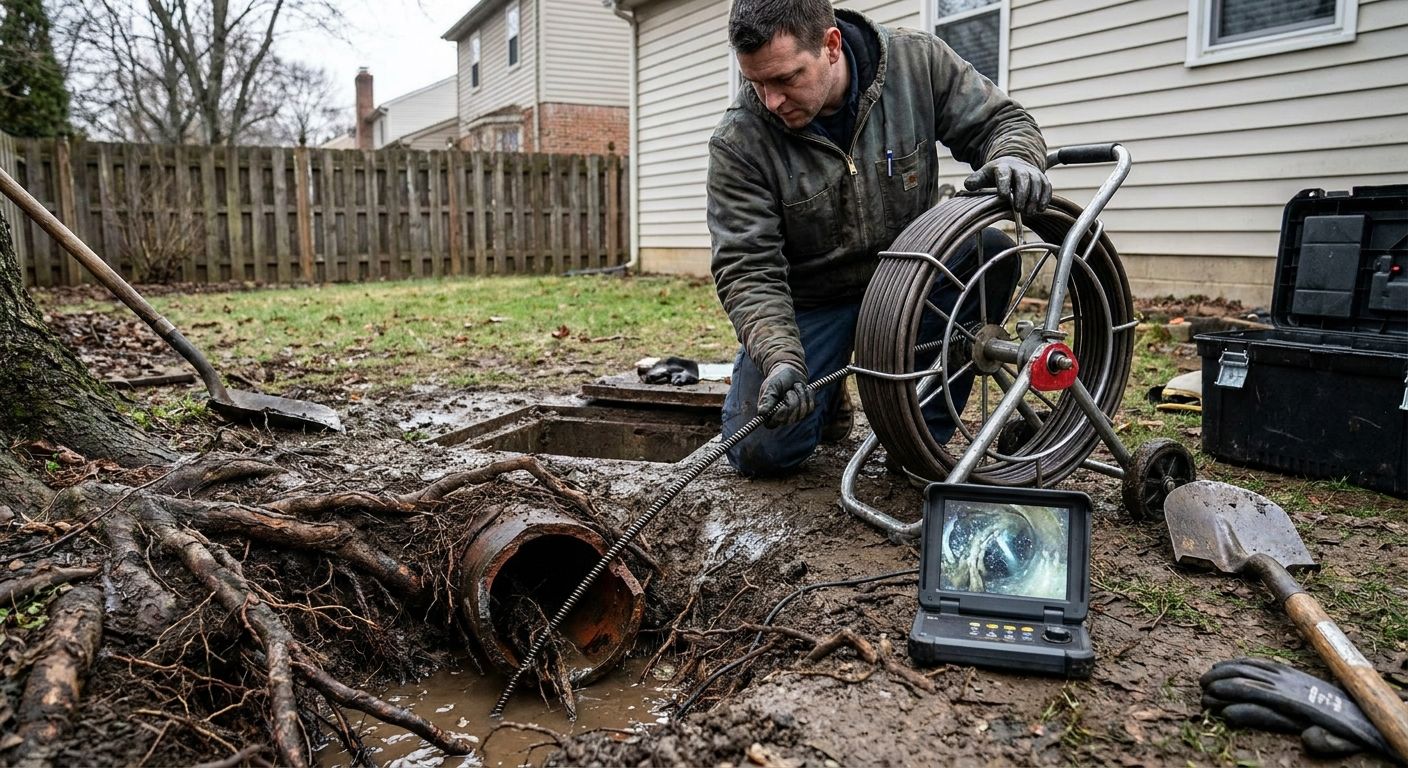
Tree roots get pulled out of a sewer line with a mechanical auger, a hydro jetter, or both — the tool depends on how thick the root mass is and whether the pipe itself has cracked or separated at the joint. Cutting the roots out clears the blockage that day, but it doesn't fix the gap the roots grew through, so the problem comes back unless that gap gets sealed or the pipe gets relined.
- Tree root sewer line removal starts with a video camera inspection, then mechanical cutting or hydro jetting clears the line.
- Cutting roots out is a fix for the symptom — the crack or open joint the roots entered through still needs repair.
- Cast iron and clay pipes older than a few decades are the most common candidates for repeat root intrusion in 2026.
- Trenchless CIPP lining seals the pipe from the inside without digging up the yard.
- Statewide Sewer & Drain runs camera inspections before quoting root removal so the estimate matches the actual damage.
Why this matters
A sewer line clogged with roots doesn't announce itself until the backup happens — slow drains, gurgling toilets, and a wet spot in the yard over the pipe route are the early signs most homeowners miss in 2026. Roots don't grow through solid pipe; they find an existing crack, a separated joint, or a hairline fracture and follow the moisture in from there. That's why the best trenchless repair method for tree root damage matters as much as the removal itself — clear the roots without addressing the entry point and you're paying for the same service call again within a season or two.
Middlesex, Monmouth, Ocean, and Union county homes built before the 1980s are the most exposed. Clay and cast iron pipe from that era has joints sealed with material that shrinks and gaps over decades, and mature trees planted close to the house line have had 40+ years to find those gaps.
How do you remove tree roots from a sewer line?
Tree root removal from a sewer line follows a set sequence — skipping the inspection step is the most common reason homeowners end up paying for the same repair twice.
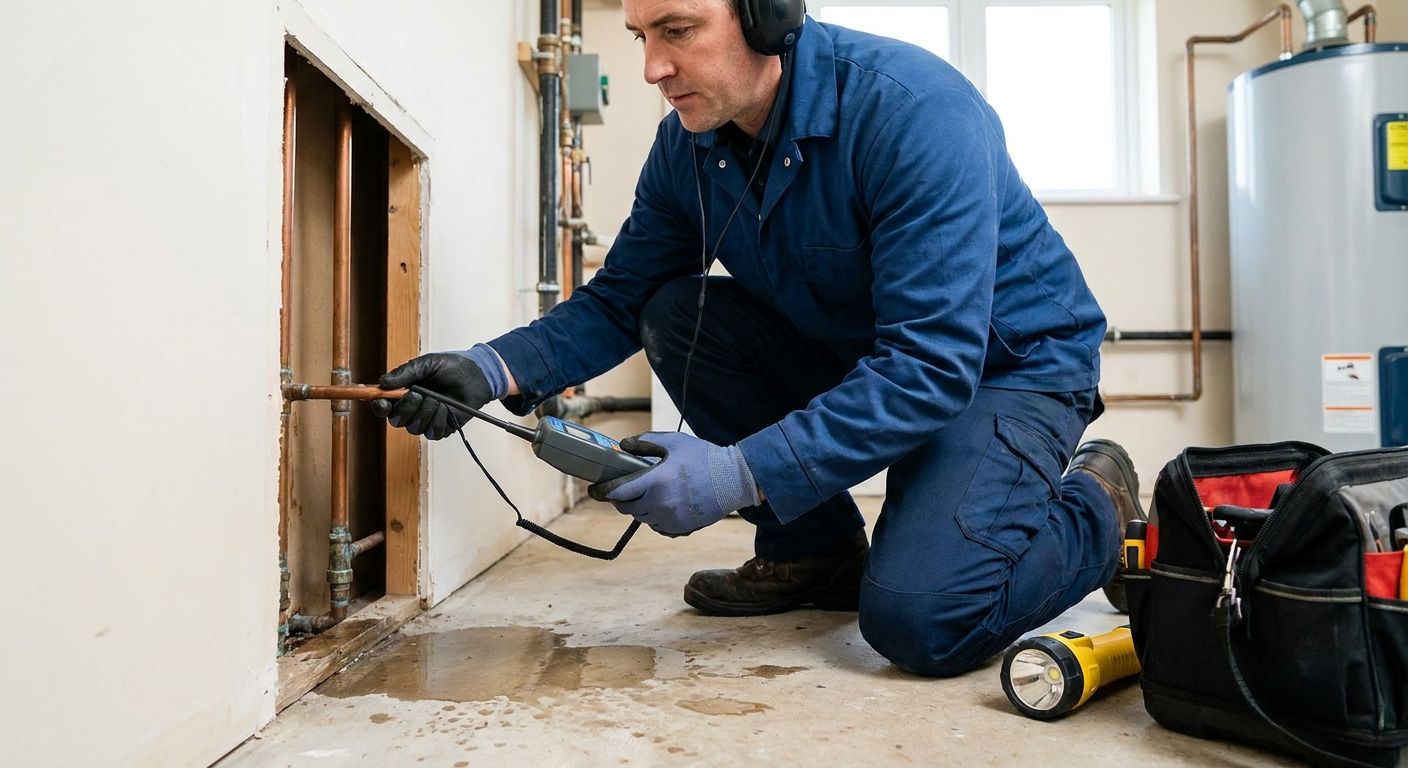
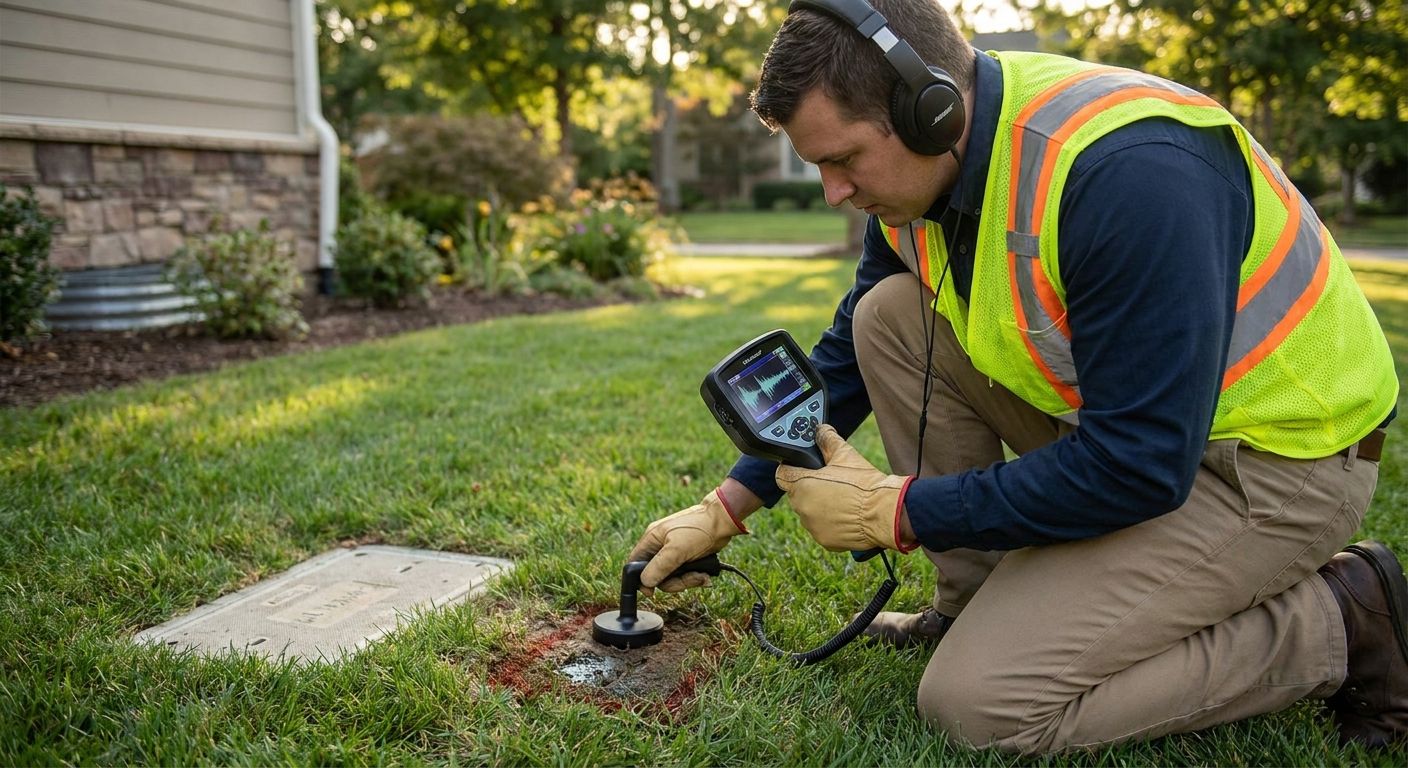
- Camera inspection first. A video camera run through the line locates the root mass, measures how much of the pipe diameter is blocked, and shows whether the intrusion is coming through a cracked pipe wall or a separated joint.
- Mechanical cutting for dense root masses. A rotary cutter head or root saw shreds the root ball and pulls debris back toward the access point, opening the line enough to restore flow.
- Hydro jetting to clear the pipe walls. A high-pressure water jet scours root hairs and buildup off the interior wall that the cutter head leaves behind, which matters because leftover root hairs regrow fastest.
- Re-inspect with the camera. A second camera pass confirms the line is fully clear and gives a clean look at pipe condition — this is the point where cracks, offsets, or bellies show up.
- Repair the entry point. Spot repair, a full relining job, or in severe cases a section replacement seals whatever let the roots in to begin with.
Skip step 5 and the roots find the same gap again — that's the difference between a real fix and a temporary clear-out.
Mechanical root cutting
A rotary cutter or root saw on a flexible cable is the go-to tool for a root mass that's dense enough to stop water flow entirely. It physically shreds the roots and clears an opening, but it leaves fine root hairs on the pipe wall that regrow faster than a cut you'd expect from a clean removal. Best for: severe blockages where water isn't moving through the line at all. Verdict: Do this first when the line is fully blocked — nothing else works until the mass is broken up.
Hydro jetting for root removal
Hydro jetting pushes water at high pressure through a nozzle that cuts root growth and scours the inside of the pipe at the same time. It clears root hairs a mechanical cutter leaves behind and flushes grease and sediment that gives new roots something to grip. Best for: lines with moderate root intrusion or as the follow-up pass after mechanical cutting on a severe blockage. Verdict: Buy this as the standard maintenance pass on any line with a known root history — it's the step that slows regrowth.
Trenchless relining for repeat root problems
When a line has cast iron pipe that's cracking at multiple points, cutting roots out every year isn't a fix — it's a maintenance loop. CIPP pipe lining inserts a resin-saturated liner into the existing pipe and cures it in place, creating a new interior pipe wall with no joints for roots to find. Verdict: Go this route once a line has recurring root intrusion at the same spot — it stops the cycle instead of resetting the clock.
“Cutting the roots out clears the pipe. It doesn't fix the crack they grew through.”
Why tree root intrusion varies from house to house
Some homes get roots in the line every two years; others go a decade without a callback. The difference comes down to a handful of factors:
- Pipe age and material — clay and cast iron installed before modern joint sealants crack and separate faster than PVC.
- Tree species and proximity — willows, poplars, and maples planted within 20-30 feet of the line send aggressive root systems toward any moisture source.
- Existing pipe damage — a line with even one hairline crack gives roots a permanent entry point that reopens after every cutting.
- Soil type and drainage — clay soil that holds moisture near the pipe draws roots toward it faster than sandy, well-draining ground.
- How the line was last serviced — a cut-and-clear job with no camera follow-up leaves the entry crack unaddressed, so roots return.
- Pipe slope and belly sections — low spots in the line collect standing water that roots target even without a crack right at that point.
Get a camera inspection before you guess
See the exact root intrusion and pipe condition before paying for a fix.
Can tree roots back up a sewer line completely?
Yes — a root mass dense enough can stop flow entirely, and once that happens the backup shows up as slow drains throughout the house or sewage backing into the lowest fixture. If drains in multiple rooms are slow at once instead of just one sink, that's usually the main line, not a single fixture trap, and clearing the main line before it backs up completely is the move before it turns into an emergency.
How do I know if tree roots are in my sewer line?
Multiple slow drains at once, gurgling sounds from toilets when a washing machine drains, and unusually green or soggy patches in the yard along the pipe route are the tell-tale signs in 2026. A camera inspection is the only way to confirm it without guessing, since the same symptoms can point to a collapsed pipe or a grease clog instead.
Does cutting tree roots out of a sewer line damage the pipe?
Cutting roots out doesn't damage a sound pipe, but a pipe that's already cracked or offset can chip further under repeated mechanical cutting over multiple service visits. That's the practical argument for relining a line with a known crack instead of scheduling another cutting pass every year.
Statewide Sewer & Drain runs the camera pass before quoting root removal so the estimate reflects the actual pipe condition, not just the blockage. That distinction matters most on older homes across Middlesex and Monmouth counties where cast iron and clay pipe from decades ago is still in the ground.
FAQ
What's the best way to remove tree roots from a sewer line?
The best approach combines mechanical cutting to break up the root mass with hydro jetting to clear root hairs off the pipe wall, followed by a camera inspection to confirm the entry point is sealed. Skipping the camera step is why roots come back at the same spot.
Can I remove tree roots from a sewer line myself?
A drugstore root-killer chemical can slow surface root growth in an accessible cleanout, but it doesn't reach a dense root mass or fix the crack roots grew through. Anything beyond a light buildup needs a mechanical cutter or hydro jetter that homeowners don't own.
Does hydro jetting kill tree roots in a sewer line?
Hydro jetting cuts through root growth and scours root hairs off the pipe wall, but it doesn't kill the root system itself — the tree keeps growing and sending roots back toward the same crack. That's why jetting works best as a maintenance pass, not a one-time cure.
How often do tree roots come back after removal?
Roots come back on whatever schedule the entry crack stays open — a sealed joint or relined section stops regrowth, while a cut-and-clear job with no repair usually sees roots return within a year or two. The pipe condition, not the cutting method, decides how fast it repeats.
Is trenchless pipe repair better than digging up the yard for root damage?
Trenchless CIPP lining seals a damaged pipe from the inside without excavating the yard, and it removes the joints roots typically exploit. Full excavation is still necessary when a pipe section has collapsed rather than just cracked.
Does homeowners insurance cover tree root sewer damage?
Most homeowners insurance policies treat tree root intrusion as a maintenance issue rather than sudden accidental damage, so coverage is the exception rather than the rule. Check the specific policy language before assuming a claim will be approved.
How do I know if my sewer line has tree root damage or just a clog?
A camera inspection is the only reliable way to tell the difference — grease and paper clogs look different on camera than a root mass pushing through a cracked joint. Recurring backups in the same spot point toward roots more than a one-time clog.
One last thing
The repeat calls aren't random — they cluster on the same handful of streets across Middlesex, Monmouth, Ocean, and Union counties where cast iron and clay pipe from the same construction era is still in the ground. If a neighbor on the same block had root intrusion, the odds are higher your line has the same joint material and the same problem waiting. A camera inspection before it backs up costs less than an emergency call after it does, and in 2026 that's still the cheapest insurance against a Saturday night sewage backup.