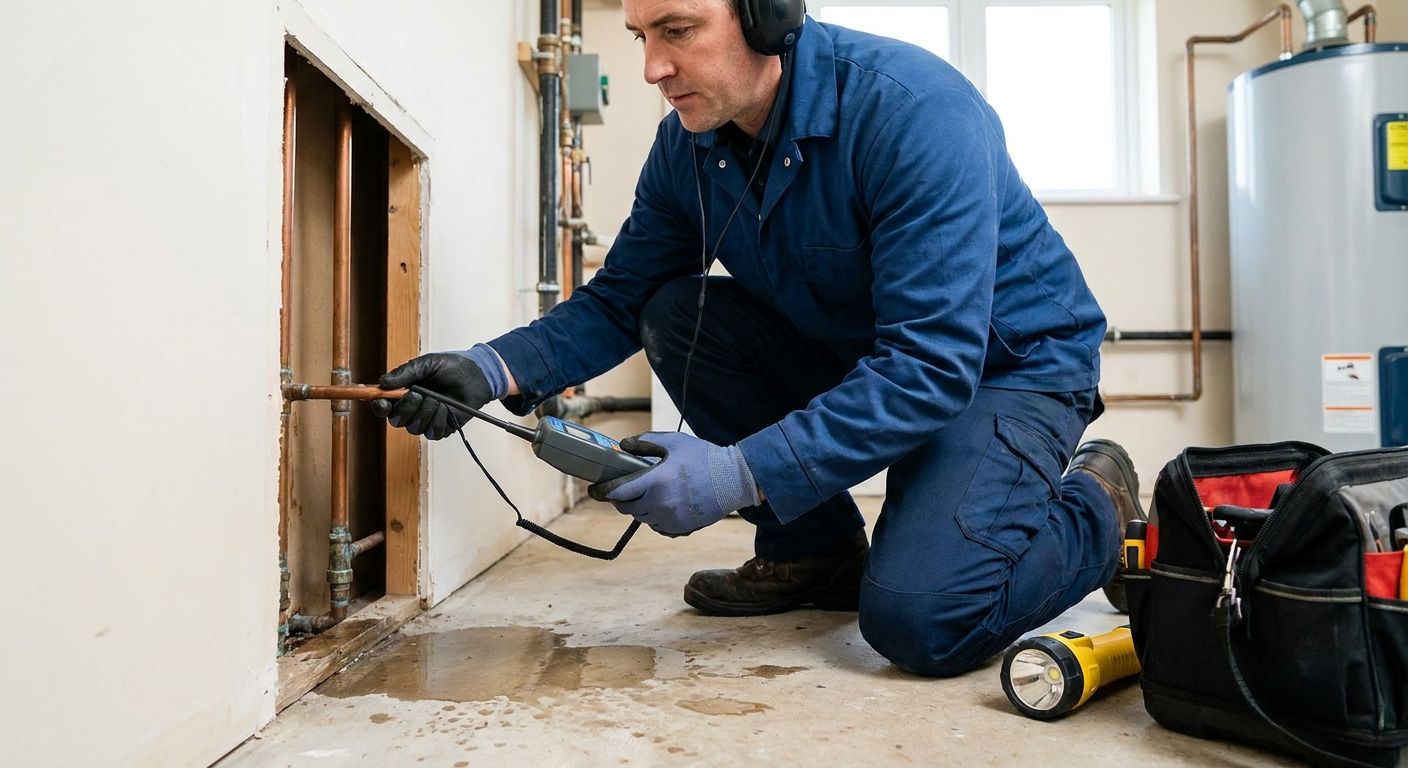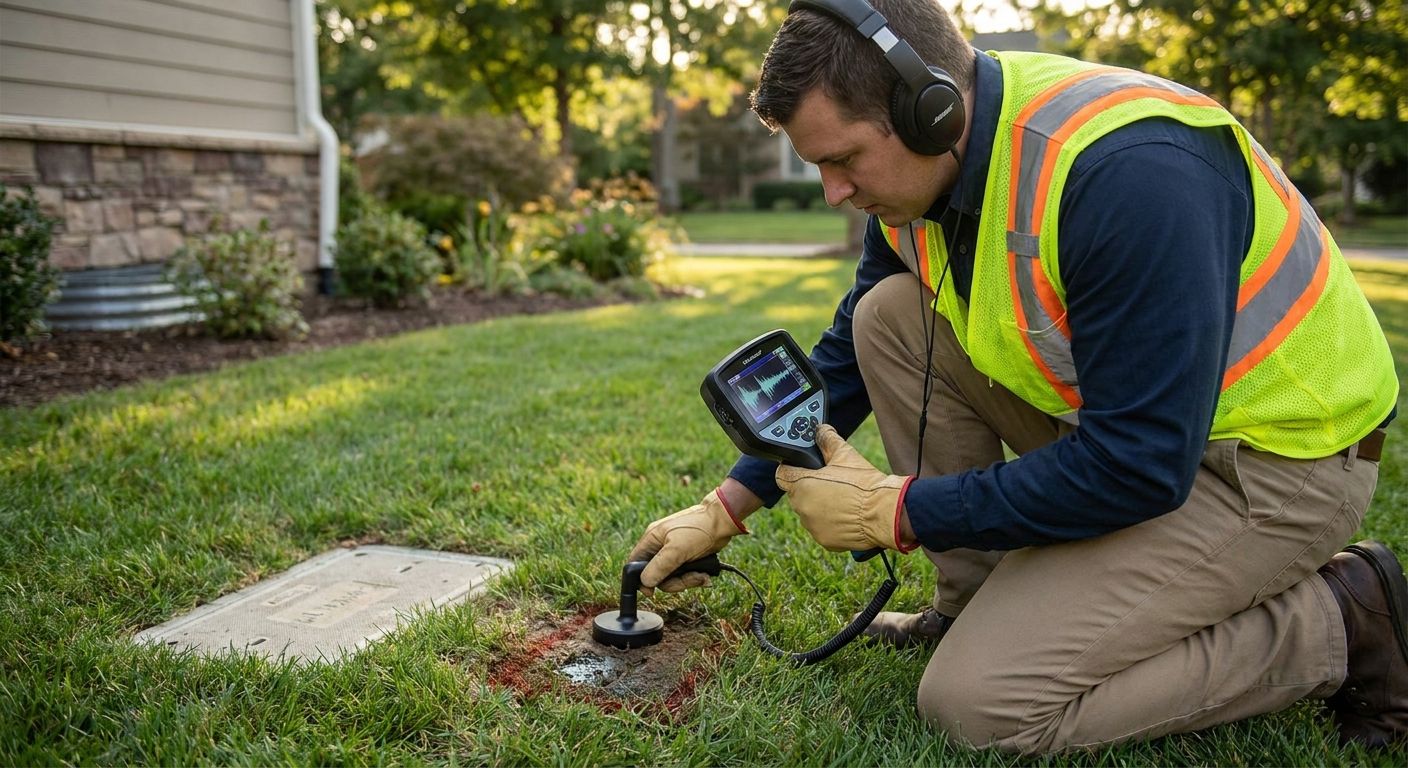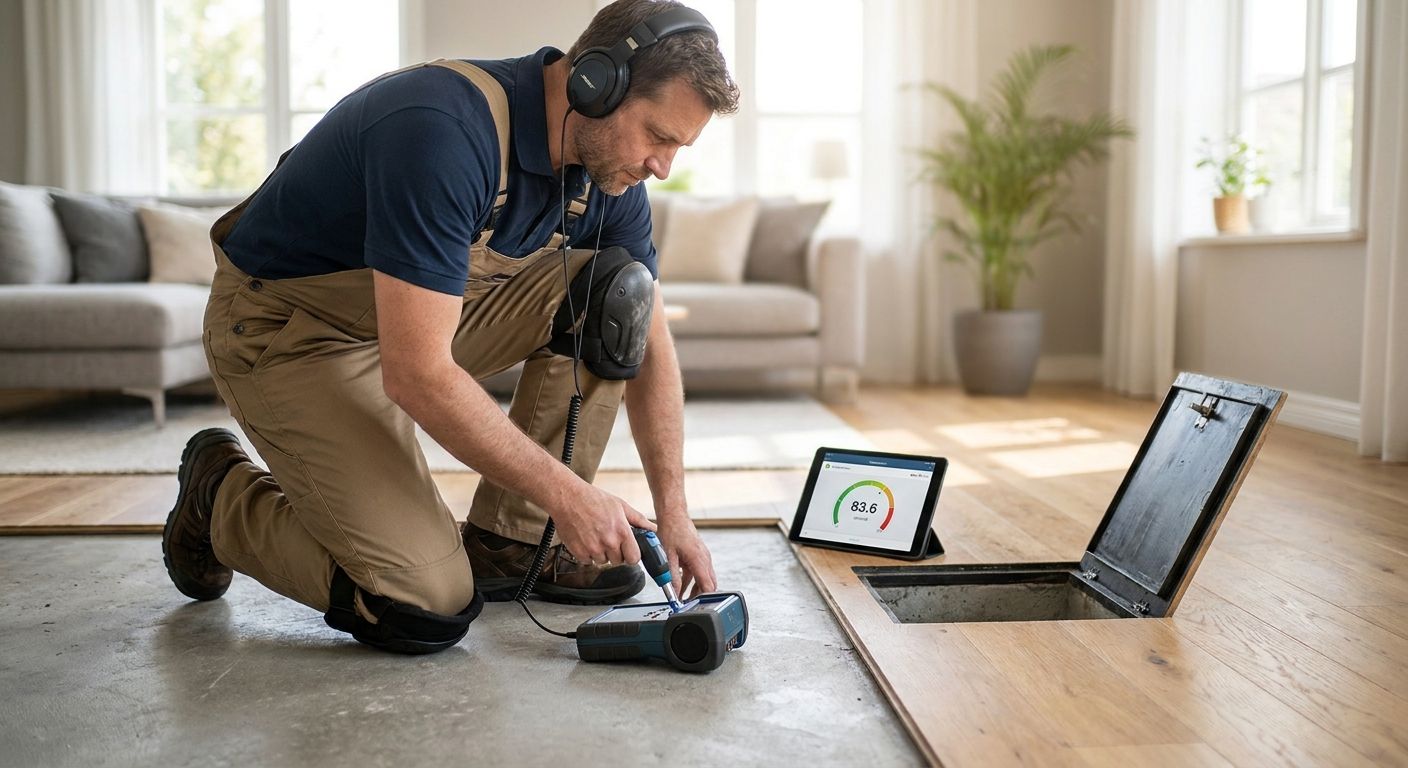
Slab foundation leak detection near me starts with one question: is the leak in the slab, or is it somewhere you can actually see it? Homes built on a concrete slab hide their water and sewer lines under the floor, which means a leak doesn't show up as a puddle — it shows up as a warm spot, a spike on the water bill, or a hairline crack in the tile. Finding it without tearing up the whole floor takes electronic leak detection, not a hammer and a guess.
- Leak detection near me for slab foundation homes starts with a water meter test, not demolition.
- Statewide Sewer & Drain uses electronic leak detection and video camera inspection to pinpoint slab leaks in Matawan, NJ homes.
- Spot repair works for one isolated leak; repiping avoids future slab cuts on aging cast iron lines.
- Warm floor spots, rising water bills, and running-water sounds with fixtures off are the three fastest slab leak signs.
Why leak detection matters for slab foundation homes
A slab leak doesn't stay small. Water traveling under a concrete foundation finds the path of least resistance, and that path is often up through the slab into drywall, flooring, or the framing above it. By the time you see a stain or smell mildew, the leak has likely been running for weeks.
Homes in Matawan and across Middlesex, Monmouth, Ocean, and Union counties often have supply and drain lines from decades of construction eras — copper, cast iron, galvanized — all sitting under the same slab. Age matters here: older cast iron lines corrode from the inside, and a slab leak is frequently the first visible sign of a much larger pipe condition problem underneath the house.
Finding a reliable drainage company near you before you have a leak — not during one — is the difference between a controlled diagnostic visit and an emergency call at 11 p.m. with water already coming through the ceiling.
Watch for slab leak warning signs
Slab leaks give off signals before they become visible damage. Catching them early keeps the repair to a spot fix instead of a full section replacement.
- An unexplained jump in the water bill with no change in usage
- A warm patch on the floor, usually tied to a hot water line leak
- The sound of running water when every fixture in the house is off
- Musty smell or damp carpet edges near an exterior wall or slab seam
- Cracks appearing in tile, baseboards, or the slab itself
- Low water pressure at one or two fixtures but not others
Confirm the leak before anyone cuts into anything
Don't let a contractor open the slab based on a guess. Confirm the leak exists and rule out above-ground causes first — this step is free and takes under an hour.
- Shut off every fixture and appliance that uses water
- Read the water meter, wait 15-20 minutes, and read it again
- If the dial has moved with zero usage, water is flowing somewhere in the system
- Turn off the main shutoff valve and watch the meter again — if it stops, the leak is on the house side, not the street side
- Record two or three readings over a couple of hours to rule out a stuck toilet flapper or irrigation valve
Bring in electronic leak detection instead of guessing where to cut
This is where a homeowner's options run out and a professional visit earns its cost. Acoustic listening equipment picks up the sound of water escaping under pressure, and thermal imaging cameras read temperature differences across the slab to flag hot water line leaks specifically. Statewide Sewer & Drain runs leak detection on slab foundation homes across Middlesex, Monmouth, Ocean, and Union counties to narrow the leak down to a specific spot instead of opening the whole floor.
- Acoustic detection listens for the leak through the slab and flooring
- Thermal imaging flags hot spots consistent with a hot water supply leak
- Moisture mapping confirms how far water has already migrated
- Detection findings get marked directly on the floor before any cutting starts
- A second pass after repair confirms the leak is actually gone
If the meter keeps moving with every fixture off, water is leaking somewhere in the slab or the yard line — that's the one line worth remembering before you call anyone.
Run a video camera inspection to confirm pipe condition
Electronic leak detection tells you where the water is escaping. A camera tells you why. Running a scope through the affected line shows cracks, root intrusion, offset joints, and corrosion that electronic detection alone can't confirm.
- Camera footage identifies the exact defect — crack, hole, joint separation, or corrosion
- Combining camera inspection with leak detection narrows the repair to one section instead of the whole line
- Footage becomes documentation for video camera inspection for insurance documentation if the claim goes to an adjuster
- Older cast iron homes often reveal a second weak spot on camera even when only one leak is active
Choose the right repair path for a slab leak
Not every slab leak needs the same fix. The right call depends on the pipe's age, the leak's location, and whether this is likely to happen again.
| Option | Best for | Key limitation |
|---|---|---|
| Spot repair (slab cut) | One isolated leak in newer copper pipe | Doesn't address other weak spots in aging line |
| Pipe rerouting | Avoiding future slab cuts entirely | More labor to run new line through walls or attic |
| Trenchless / CIPP lining | Main drain or sewer line leaks in older cast iron | Not used on pressurized supply lines |
| Full repipe | Multiple failure points on galvanized or cast iron | Larger project scope than a single leak repair |
Verdict: a spot repair is the right call for one leak in newer copper pipe, but a home with cast iron under the slab is a candidate for rerouting or repiping before the second leak shows up.
Get slab leak detection scheduled
Electronic leak detection and camera inspection for Matawan-area slab foundation homes.
Document everything for insurance and resale
A slab leak repair often intersects with an insurance claim, and if you're selling the house later, a documented repair is worth more than an undocumented one.
- Photos and video from the camera inspection before and after repair
- Water meter readings and the water bill showing the anomaly
- The repair invoice listing the method used and the section addressed
- A copy of the electronic leak detection report showing the confirmed location
- Keep these records on file for a future sewer lateral inspection for NJ home sellers if the property goes on the market
Homes with older cast iron under the slab benefit from a 24-hour response plan on file before a leak turns into a backup. Statewide Sewer & Drain runs 24-hour emergency service in Monmouth County for exactly this situation.
Common mistakes slab foundation homeowners make
- Waiting through two or three high water bills before testing the meter, letting the leak run for weeks
- Assuming a warm floor spot without visible water means there's no urgency
- Letting a plumber cut into the slab based on a guess instead of confirmed electronic leak detection
- Skipping camera inspection on a cast iron home and missing a second weak point that fails a year later
- Fixing the leak but throwing away the documentation, then fighting an insurance adjuster with no records
Cast iron and galvanized homes built before the 1970s carry a higher risk of a second slab leak within a few years of the first. If the camera inspection shows corrosion beyond the repaired section, trenchless sewer repair for older cast iron pipe is worth pricing out before the next leak forces an emergency call.
FAQ
What does leak detection near me actually involve for a slab foundation home?
Leak detection for a slab home uses acoustic listening equipment and thermal imaging to locate a leak under the concrete without cutting the whole floor open. A video camera inspection often follows to confirm the pipe defect causing it.
Is a warm spot on the floor always a slab leak?
A warm spot usually means a hot water supply line is leaking under the slab, since the escaping hot water raises the surface temperature above it. It's not always a leak, but it's a strong enough signal to test the water meter that day.
Can leak detection find a leak without cutting into my slab?
Yes. Electronic leak detection pinpoints the leak's location through sound and temperature readings before any cutting happens, so the repair opens only the specific section instead of a wide area of floor.
How long does a slab leak take to cause real damage?
Damage depends on the leak's size and location, but water migrating under a slab can reach framing, drywall, and flooring within weeks. Homeowners who catch the warning signs early avoid the structural damage that comes with a leak left running for months.
Does homeowners insurance cover slab leak repair?
Coverage varies by policy and cause, so check the specifics with your insurer directly. Documentation from a camera inspection and a professional leak detection report strengthens any claim regardless of the outcome.
What's the difference between spot repair and repiping for a slab leak?
Spot repair opens one section of slab to fix a single isolated leak, typically in newer copper pipe. Repiping reroutes the line through walls or the attic entirely, bypassing the slab so future leaks don't require cutting concrete again.
How do I find reliable leak detection near me in Matawan, NJ?
Look for a provider that runs both electronic leak detection and video camera inspection rather than one or the other, since combining the two narrows the repair to the actual defect instead of guesswork.
One last thing
The fastest confirmation test costs nothing: shut off every fixture in the house, read the water meter, wait 20 minutes, read it again. If it moved, there's a leak somewhere in the system — slab, yard line, or otherwise — and that single check is the difference between calling for a scheduled diagnostic visit in 2026 and discovering the leak only after it's already through the ceiling.