Best overall for landlords: professional sewer camera inspection paired with a written report. Best for properties with a grease or root history: hydro jetting plus a camera pass. Best budget option: a DIY visual and flow check before you call a pro. Here's the sewer camera inspection checklist that catches problems before a new tenant does in 2026.
- Professional video camera inspection is the core of any sewer camera inspection checklist for landlord turnovers in 2026.
- DIY visual checks catch obvious clogs but miss cracked joints and root intrusion below grade.
- Cast iron pipe common in older Middlesex and Monmouth County rentals fails at the joints long before it fails at midspan.
- Municipal sewer lateral inspection rules vary by New Jersey town, so check before listing, not after.
- Hydro jetting paired with a camera pass is the right call for units with a grease or root history.
Why this matters
A tenant turnover is the one window you have to find a sewer problem before it becomes a security-deposit dispute or a 2 a.m. call. Once a new lease starts, you're the one paying for whatever the last tenant flushed and the one before that ignored.
Older rentals across Middlesex, Monmouth, Ocean, and Union counties still run on cast iron and clay lateral lines installed decades before PVC became standard. Some New Jersey towns also require a municipal sewer lateral inspection before a property changes occupants, and skipping it can delay a listing by weeks.
A sewer camera inspection checklist isn't paperwork. It's the difference between finding a root ball in October and explaining a sewage backup to a new tenant in January.
What makes the best sewer camera inspection checklist
- Pipe material and age identified — cast iron, clay, or PVC, because the failure pattern differs for each
- Full video pass, cleanout to tie-in — not just the first 10 feet of line
- Root intrusion, bellies, and offset joints documented on footage — not summarized in one line of a report
- Water flow test run during the camera pass — a dry-line camera pass misses slow drainage
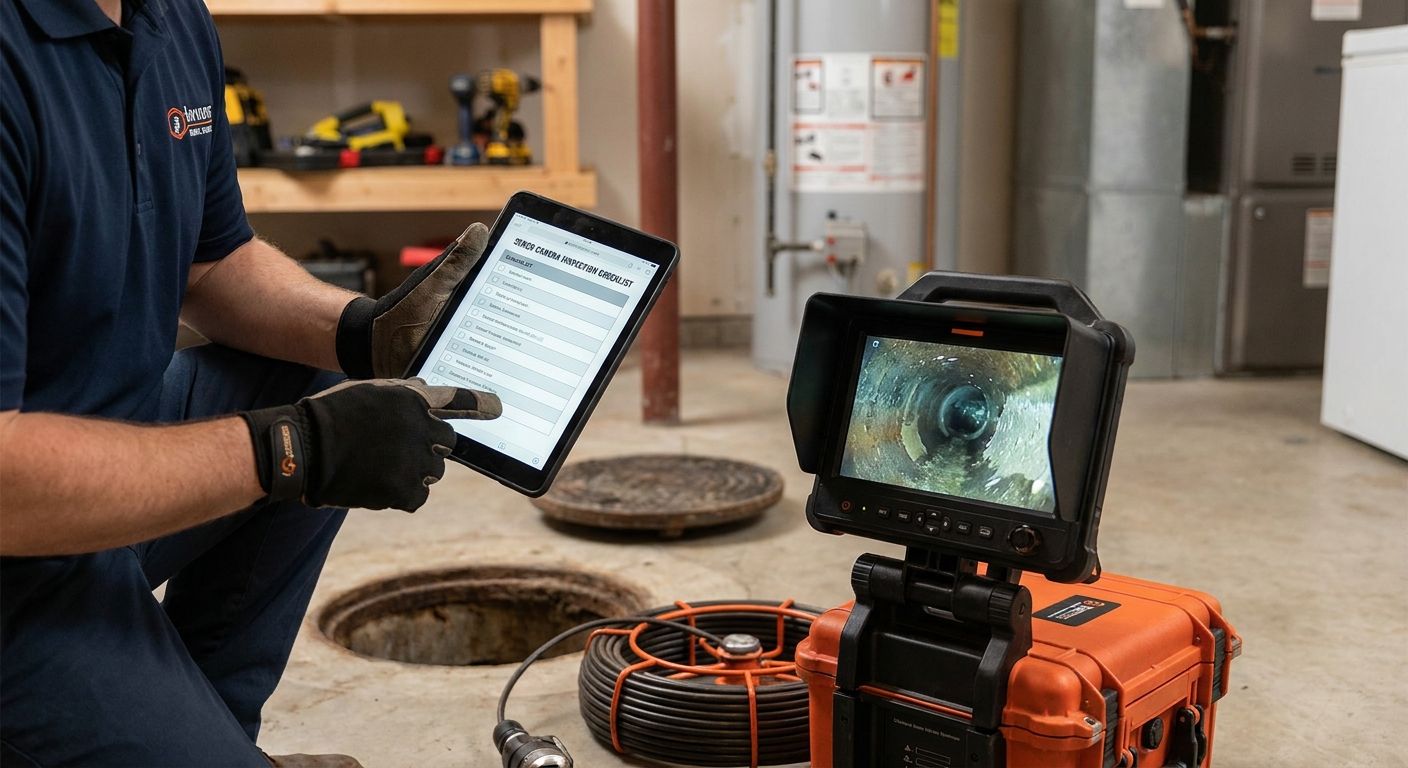
- Timestamped video file handed over — a written report alone isn't proof of condition
- Municipal lateral compliance flagged — only where your township requires it before re-rental
At a glance
| Approach | Best for | Standout feature | Key limitation |
|---|---|---|---|
| Professional sewer camera inspection | Every tenant turnover | Full-length video record of the line | Needs a working cleanout access point |
| Hydro jetting + camera combo | Properties with grease or root history | Clears debris so the camera reads clean footage | Costs more than a camera pass alone |
| DIY visual and flow check | Pre-listing screen before booking a pro | No scheduling, run it yourself | Can't see past the first bend in the line |
| Municipal sewer lateral inspection prep | Towns requiring lateral certification | Meets local compliance before re-rental | Only required in specific municipalities |
| Trenchless condition assessment | Older homes with cast iron pipe | Flags pipe condition without digging | Only worth booking after a camera flags a problem |
1. Professional sewer camera inspection: best for tenant turnover documentation
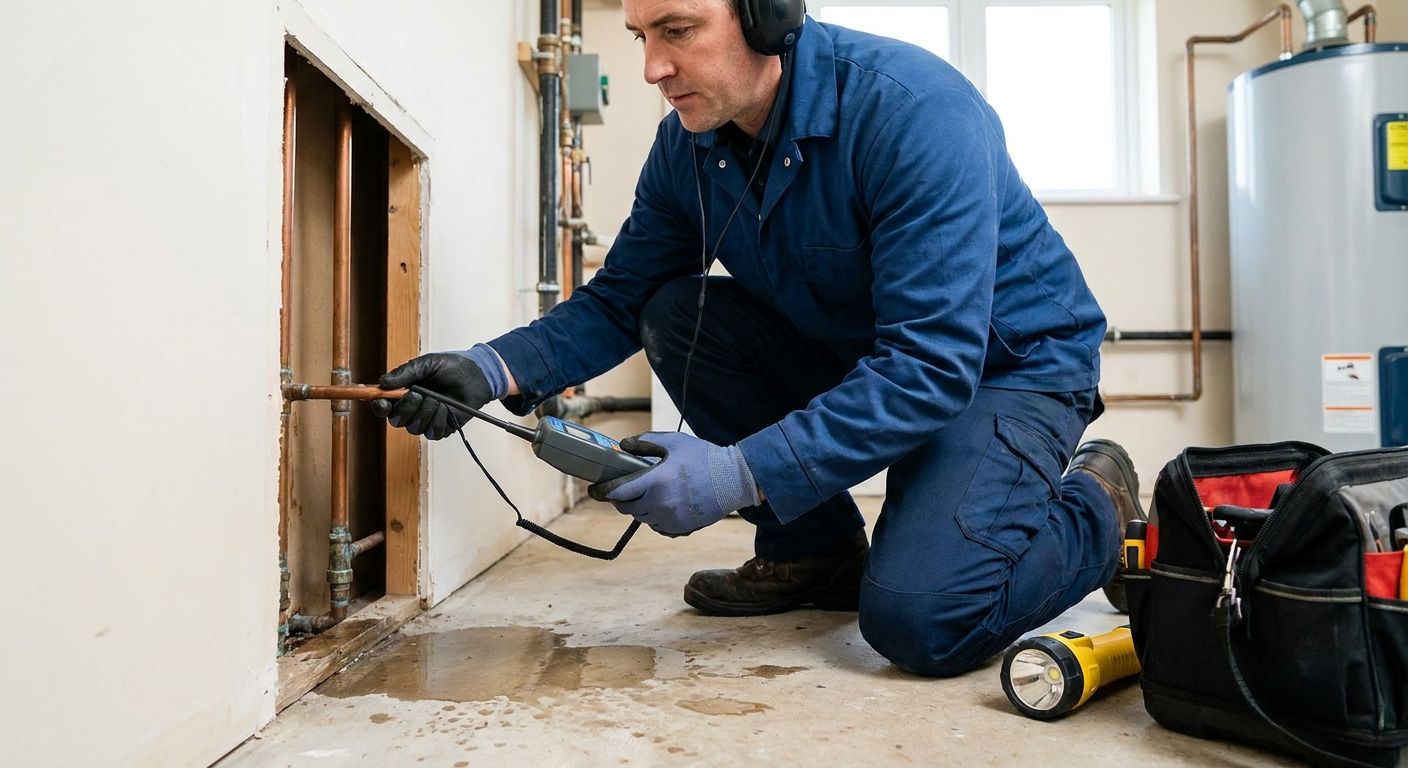
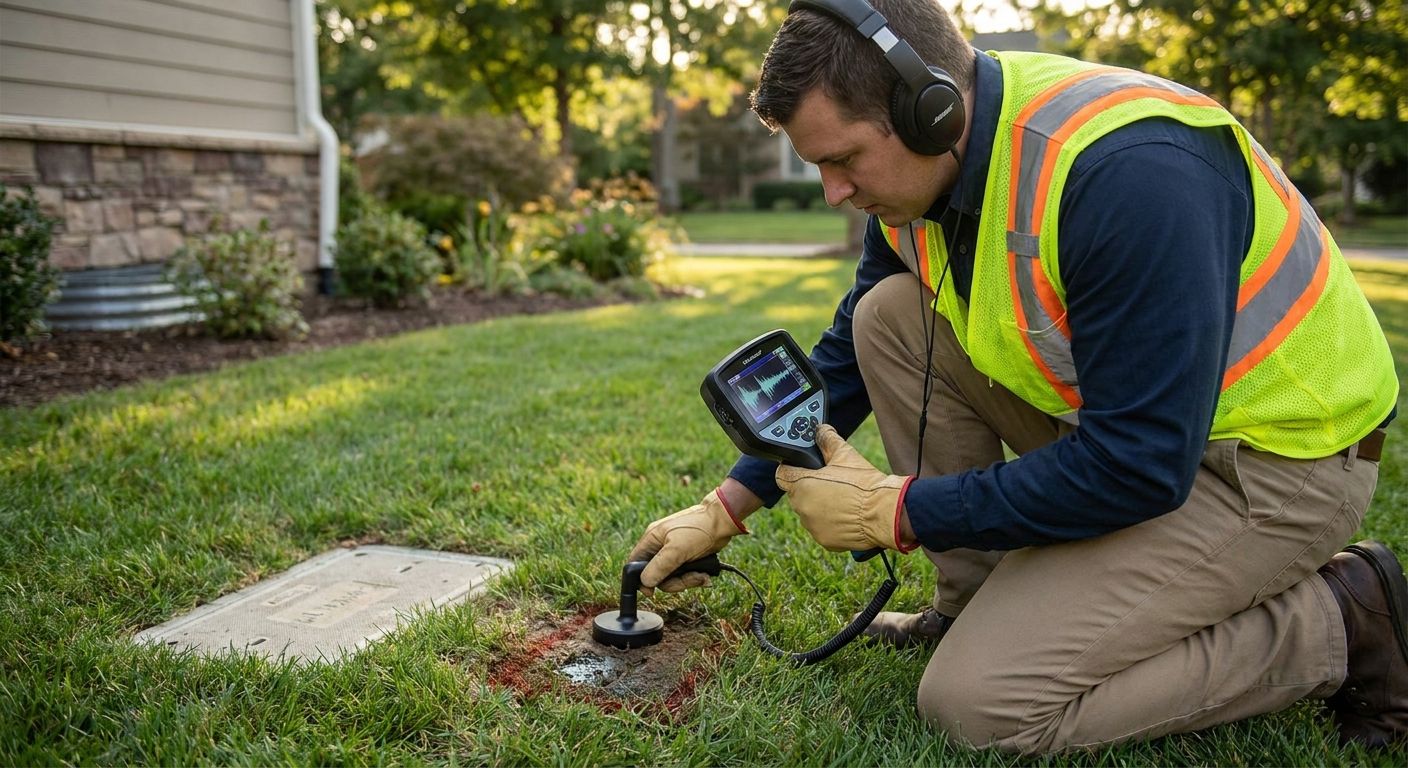
A technician runs a fiber-optic camera the full length of the lateral, from the cleanout to the municipal tie-in, and records it. It's the single most reliable way to see what's actually inside the pipe instead of guessing from symptoms like slow drains or gurgling toilets.
This is also how you catch tree root damage in a sewer line before it turns into a backup. Root hairs show up on camera as fine threads long before they choke the pipe entirely, and that early warning is worth more than any written summary.
Professional sewer camera inspection pros:
- Sees the entire line, not just accessible sections
- Produces a video file you can hand to a buyer, insurer, or new tenant
- Identifies pipe material and joint condition, not just blockages
Professional sewer camera inspection cons:
- Requires an accessible cleanout; older homes sometimes lack one
- A camera pass alone doesn't fix what it finds
- Won't diagnose issues outside the camera's reach past a full collapse
Best for: every landlord doing a tenant turnover, no exceptions. Verdict: Buy. This is the core of the checklist, not an optional add-on.
2. Hydro jetting + camera combo: best for grease or root history
If the unit has a history of slow drains, grease buildup, or previous root intrusion, jetting the line before the camera pass clears debris that would otherwise block the lens. You get a clean read on pipe condition instead of a video full of sludge.
This combo also matters for units above restaurants or shared commercial kitchens, where grease buildup in kitchen drains compounds fast between tenants.
Hydro jetting + camera combo pros:
- Clears the line and inspects it in one visit
- Reveals the true pipe condition under old grease or root mats
- Extends time between clogs for the next tenant
Hydro jetting + camera combo cons:
- Not needed for units with a clean drainage history
- Adds a step compared to a straight camera pass
- Won't repair structural pipe damage the camera finds
Best for: properties with prior backups, grease complaints, or known root intrusion. Verdict: Buy for high-risk units, Skip if the line has no history of problems.
3. DIY visual and flow check: best budget option
Before booking a pro, walk the unit and run water in every fixture at once — kitchen sink, both bathrooms, washing machine — while watching for slow drainage or gurgling. It costs nothing and takes 15 minutes, and it tells you whether a professional inspection is urgent or routine.
DIY visual and flow check pros:
- Free and immediate
- Flags obvious slow drainage before scheduling anyone
- Good baseline for every turnover, even low-risk units
DIY visual and flow check cons:
- Sees nothing below the fixture trap
- Can't detect root intrusion, bellies, or joint offsets
- Gives false confidence when the surface symptoms look fine
Best for: landlords doing a quick pre-listing screen. Verdict: Hold. Use it as a first pass, never as the whole checklist.
4. Municipal sewer lateral inspection prep: best for compliance-required towns
Some New Jersey municipalities require lateral certification before a property can be re-rented or resold, and the inspection standards differ from a routine camera pass. Getting this scheduled early avoids a surprise delay right when you're trying to close a lease.
Municipal lateral inspection prep pros:
- Satisfies township requirements before turnover
- Uncovers issues a standard inspection might not flag
- Prevents last-minute listing delays
Municipal lateral inspection prep cons:
- Only applies in specific municipalities
- Adds a step most landlords don't need
- Requirements and process vary by town, so confirm locally first
Best for: landlords in townships that mandate lateral compliance before re-occupancy. Verdict: Wait until you confirm your municipality actually requires it.
5. Trenchless condition assessment: best for older homes with cast iron pipe
Cast iron sewer pipe typically holds up 50 to 75 years before the joints start failing, and a lot of rental housing in Middlesex and Monmouth counties is well into that window. A trenchless condition assessment goes beyond a standard camera pass to evaluate whether the pipe needs trenchless repair for older homes with cast iron pipes before it fails on a new tenant's watch.
Trenchless condition assessment pros:
- Flags structural pipe degradation without excavation
- Buys time to budget for repair instead of reacting to an emergency
- Fits older housing stock with cast iron or clay laterals
Trenchless condition assessment cons:
- Adds cost beyond a routine camera inspection
- Only worth booking after a camera pass flags a real concern
- Doesn't apply to newer PVC lateral lines
Best for: landlords with pre-1980s housing stock nearing the end of cast iron's service life. Verdict: Wait. Schedule it once the camera inspection tells you the pipe is aging out, not before.
How we ranked
Each approach is weighted against the six criteria above: full-length coverage, documented pipe material, root and joint detail, a flow test, a video file you can keep, and municipal compliance where it applies. Professional camera inspection wins overall because it's the only approach that checks every box on its own; everything else either supplements it or replaces it for a narrower use case.
Which sewer inspection checklist should you choose?
Run the DIY flow check first — it's free. Then book a professional sewer camera inspection for every unit before a new lease starts, no exceptions in 2026. Add hydro jetting only if the line has a grease or root history, and hold the trenchless assessment and municipal lateral prep until the camera footage or your township tells you they're actually needed.
“A written report can say condition acceptable about a pipe that's one root ball away from a backup. Get the video file, not just the summary.”
Book your turnover inspection
Get a full video camera pass before the next lease starts.
FAQ
What's the best sewer camera inspection checklist for landlords before tenant turnover?
The best checklist runs a full video pass from cleanout to municipal tie-in, documents pipe material and joint condition, and includes a water flow test during the pass. Add hydro jetting first if the unit has a grease or root history, and hand over the video file, not just a written summary.
How much does a sewer camera inspection cost in 2026?
Cost depends on pipe length, access, and whether jetting is needed first, so get a quote based on the specific property. Check current pricing directly rather than relying on a flat estimate.
Is a camera inspection necessary before renting out a house?
It's necessary any time the property has aging pipe, a prior backup, or hasn't been inspected in several years. Skipping it shifts the risk of an undetected problem onto the next tenant's lease.
How do I know if my sewer line has root damage?
Slow drains across multiple fixtures, gurgling toilets, and recurring backups are early signs, but a camera pass is the only way to confirm root intrusion. Fine root hairs show up on video long before they fully block the line.
What's the difference between a camera inspection and hydro jetting?
A camera inspection records the condition of the pipe; hydro jetting clears debris, grease, and root mats out of it. Properties with a history of buildup usually need jetting first so the camera can get a clean read.
Do I need a municipal sewer lateral inspection before re-renting a property in New Jersey?
Only in townships that require lateral certification before occupancy changes, and requirements vary by municipality. Confirm with your local town office before listing to avoid a delay.
How long does a sewer camera inspection take?
A standard residential camera pass typically runs within a single service visit, though access issues or a lack of a working cleanout can extend it. Commercial or longer laterals take more time to cover in full.
Can a sewer camera inspection catch cast iron pipe damage?
Yes, a camera pass shows joint separation, scaling, and cracking inside cast iron pipe, which typically holds up 50 to 75 years before joints start failing. If footage shows heavy scaling, a trenchless condition assessment is the logical next step.
One last thing
Ask for the video file, not just the written report. A report can say "minor root intrusion, condition acceptable" about a line that's actually one heavy rain away from backing up into a tenant's basement — the footage doesn't hedge the way a summary sentence can.