When tree roots invade a sewer line, the wrong cleaning method buys you a few weeks before the clog comes back — the right one clears the roots and stops the regrowth cycle. Here's a ranked comparison of the five methods contractors actually use, based on how each performs against root intrusion, pipe age, and long-term prevention.
- Hydro jetting is the best overall drain cleaning for tree roots in 2026 — it strips root mass off pipe walls instead of just punching a hole through it.
- Mechanical rooter cutting clears an active backup fast but leaves root fragments that regrow within months.
- CIPP trenchless lining is the best permanent fix when roots have already cracked the pipe joint.
- Pipe bursting is the right call only when the line is collapsed or too damaged to line.
- Chemical root foam works as a maintenance step between cleanings, not as a standalone fix for an active blockage.
Why this matters
Roots don't grow through solid pipe — they find hairline cracks at joints, and once inside, they branch and thicken until they choke the line. A snake or cable can punch a hole through that root mass and get water flowing again in an hour, which feels like a fix. It isn't. The roots left behind regrow into that same channel, often faster than before, because the cable actually widened the entry point.
If you're seeing slow drains, gurgling toilets, or repeat backups at the same spot in the yard, that's usually root regrowth, not a new problem. Knowing whether your sewer line has tree root damage before you pick a method saves you from paying for a quick clear when you actually need a structural repair.
What makes the best drain cleaning method for tree root blockages
- Root removal, not just displacement — does it strip roots off the pipe wall or just cut a channel through them?
- Pipe condition after treatment — some methods scour the interior clean; others can stress an already-cracked joint.
- How long the fix lasts — measured in months of regrowth-free flow, not one clear drain.
- Compatibility with pipe material and age — cast iron, clay, and PVC each respond differently to jetting pressure and cutting heads.
- Whether it addresses the entry point — cutting roots without sealing the crack they grew through guarantees a repeat call.
- Invasiveness and downtime — trenchless and open-cut repairs take the yard out of commission for different lengths of time.
Drain cleaning methods for tree roots at a glance
| Method | Best for | Standout feature | Key limitation |
|---|---|---|---|
| Hydro jetting | Full root removal on intact pipe | 4,000+ psi water strips roots off pipe walls | Won't fix a cracked or collapsed joint |
| Mechanical rooter/auger | Emergency active backup | Fastest way to restore flow | Leaves root fragments that regrow |
| Chemical root foam | Maintenance between cleanings | Slows regrowth at the crack site | Not a fix for an existing blockage |
| CIPP trenchless lining | Permanent repair, cracked joints | Seals the entry point roots use to get in | Doesn't work on fully collapsed pipe |
| Pipe bursting | Collapsed or severely damaged line | Replaces the pipe without full excavation | Most invasive and highest-cost option here |
1. Hydro jetting: best drain cleaning for tree roots on intact pipe
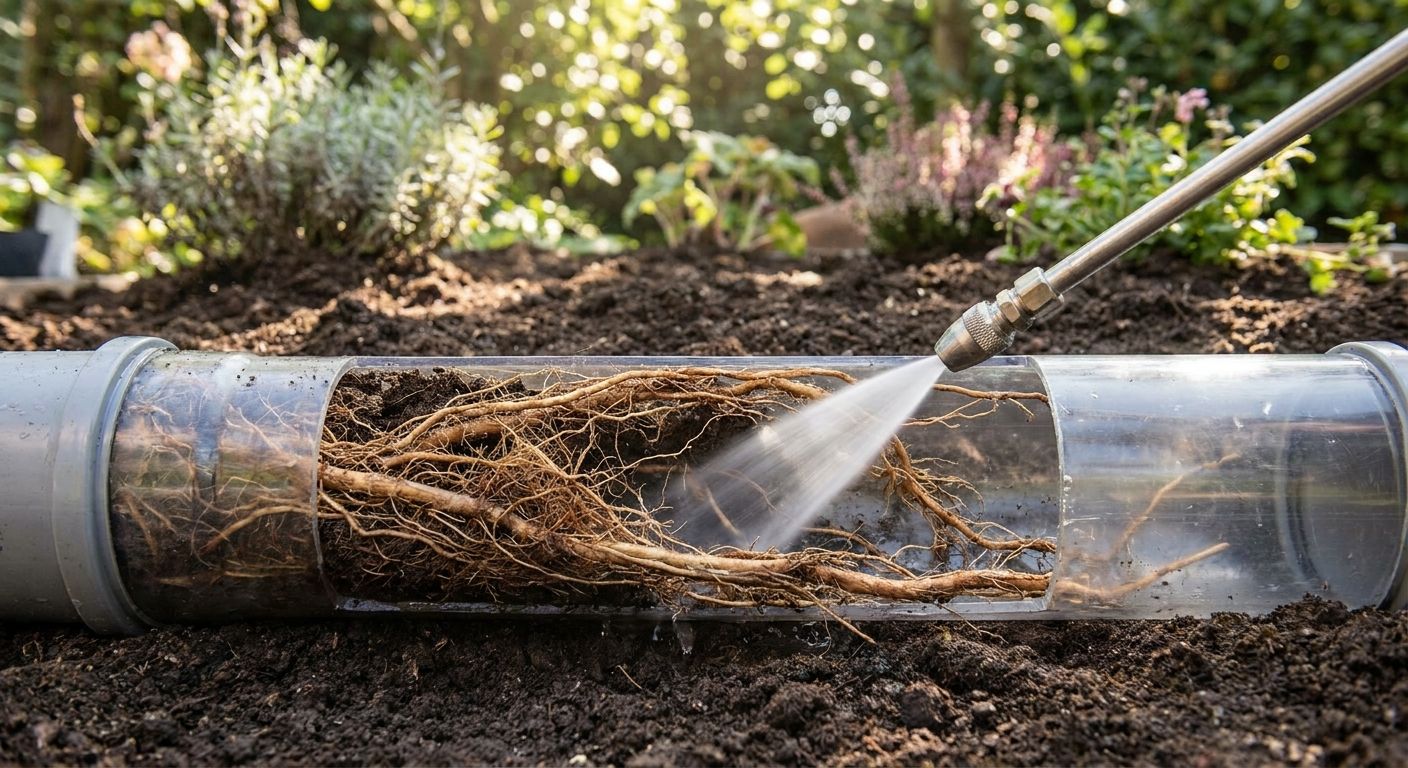
Hydro jetting pushes water at several thousand psi through a nozzle that reverses direction, scouring the full interior of the pipe rather than just boring a channel through the blockage. On root intrusion specifically, it's the only cleaning method that removes the root mass instead of just cutting it back.
Hydro jetting pros:
- Strips roots, grease, and scale off the full pipe circumference
- Camera-verifiable clean line, not a guess
- Works well as a first step before how to remove tree roots from a sewer line treatments are applied
- No chemical residue in the line
Hydro jetting cons:
- Not a fix if the crack the roots grew through is still open — they'll come back
- High pressure isn't recommended on already-fragile cast iron without a camera check first
- Requires access point clearance a straight cable job doesn't need
Best for: homeowners with an intact but root-clogged line who want the interior actually clean, not just clear. Verdict: Buy. This is the default first move for tree root blockages in 2026 when the pipe itself is still structurally sound.
2. Mechanical rooter/auger cutting: best for an active emergency backup
A rooter or auger drives a rotating cutting head through the blockage on a steel cable. It's the fastest way to stop water from backing into a basement right now, and it's what most emergency calls start with.
Mechanical rooter pros:
- Fastest method to restore flow during an active backup
- Lower cost per visit than jetting or trenchless work
- Cutting head sizes adapt to different pipe diameters
Mechanical rooter cons:
- Cuts a channel through roots rather than removing them
- Regrowth is common within months, sometimes faster than the original clog
- Doesn't clean grease or scale buildup the way jetting does
Best for: an active backup where the priority is getting water flowing again tonight. Verdict: Hold. Use it as the emergency stopgap, then follow up with jetting or a permanent repair — responding to a sewer backup emergency covers what to do while you wait for a crew.
3. Chemical root foaming treatment: best for maintenance between cleanings
Foaming root killers coat the upper half of the pipe and slow regrowth at the crack where roots entered. They're a maintenance tool, applied after a line has been cleared, not a way to open a blocked pipe on their own.
Chemical foam pros:
- Cheapest ongoing maintenance option on this list
- Slows regrowth between annual or semi-annual cleanings
- Low labor time to apply
Chemical foam cons:
- Does nothing for an active blockage — the line has to be clear first
- Effectiveness fades between applications; it's not a one-time fix
- Doesn't address the physical crack roots are using to get in
Best for: a property with a known history of root intrusion that wants to stretch the time between full cleanings. Verdict: Hold. Fine as an add-on to a jetting schedule, weak as a standalone plan.
4. CIPP trenchless pipe lining: best permanent fix for cracked joints
Cured-in-place pipe (CIPP) lining installs a resin-saturated liner inside the existing pipe that hardens into a new interior wall, sealing the cracks and joint separations roots use to get in. It's a repair, not a cleaning method, but it's the answer when jetting keeps buying you the same six months.
CIPP lining pros:
- Seals the actual entry point, not just the symptom
- No full-yard excavation required
- Works well on aging cast iron and clay pipe common in older Matawan and Middlesex County homes
CIPP lining cons:
- Doesn't work if the pipe has fully collapsed rather than just cracked
- Higher upfront cost than a cleaning visit
- Requires the line to be clear and camera-inspected first
Best for: a line with confirmed root damage at joints that keeps reclogging after cleaning. See the best trenchless sewer repair method for tree root damage for how the liner install works step by step. Verdict: Buy when a camera inspection confirms crack damage rather than just root mass.
5. Pipe bursting: best for a collapsed or severely damaged line
Pipe bursting drags a new pipe through the old one while a bursting head fractures the original pipe outward into the surrounding soil. It's the option when the pipe is too far gone to line — collapsed sections, severe bellies, or offset joints that CIPP can't bridge.
Pipe bursting pros:
- Full pipe replacement without a trench the length of the yard
- Handles collapsed sections CIPP lining can't fix
- Upsizes pipe diameter in the same process if needed
Pipe bursting cons:
- Most invasive and highest-cost method on this list
- Not necessary if the pipe is only cracked, not collapsed
- Requires two access pits, unlike a single-point cleaning job
Best for: a line confirmed collapsed or too structurally compromised for lining. Knowing if you need pipe bursting for sewer replacement walks through the signs that point here instead of CIPP. Verdict: Skip unless a camera inspection has already ruled out lining.
“A cable clears the water tonight. Jetting clears the pipe. Only a liner stops the roots from getting back in.”
How this ranking was built
Each method above is scored against the same six criteria: root removal versus displacement, pipe condition after treatment, how long the fix holds, pipe material compatibility, whether it seals the entry point, and how invasive the job is. Hydro jetting wins overall because it's the only cleaning method — not repair method — that removes roots rather than cutting through them. CIPP and pipe bursting rank separately because they're repairs, not cleanings, and belong in the conversation only once a camera inspection shows structural damage.
Which method should you choose in 2026?
If the pipe is intact and this is your first sign of roots, book hydro jetting — it clears the line and removes the root mass in one visit. If water is backing up into the house right now, a mechanical rooter call gets flow restored today, but treat it as a stopgap, not the fix. If the same spot keeps clogging every few months, that's a structural crack talking, and CIPP lining is the move once a camera confirms it. Reserve pipe bursting for lines a camera shows as collapsed or beyond repair by lining.
Get your line camera-inspected
Find out if roots have just clogged the pipe or cracked it.
FAQ
What's the best drain cleaning method for tree root blockages?
Hydro jetting is the best drain cleaning method for tree roots in 2026 because it strips root mass off the pipe wall instead of just cutting a channel through it. A mechanical rooter clears an active backup faster but leaves roots that regrow.
Is hydro jetting better than snaking for tree roots?
Yes, for root removal specifically. Snaking cuts through the blockage and restores flow quickly, but hydro jetting scours the full pipe wall clean, which slows regrowth far longer than a cable pass.
How much does hydro jetting cost compared to snaking?
Jetting typically costs more per visit than a standard rooter call because it requires specialized equipment and a longer service window, but it clears more of the pipe interior in that single visit.
Do chemical root killers actually work?
Foaming root killers slow regrowth at the crack site after a line has already been cleared, but they don't clear an active blockage on their own. They work best as maintenance between cleanings, not as a standalone fix.
How do you know if tree roots have already cracked the pipe?
A video camera inspection is the only reliable way to tell. Repeat clogging at the same spot within months of cleaning is the strongest sign the roots have entered through a cracked joint rather than just growing into a healthy pipe.
Is CIPP lining a permanent fix for tree root damage?
CIPP lining seals the cracked joint roots use to enter, which stops regrowth at that location. It doesn't work on a fully collapsed section of pipe, which needs pipe bursting instead.
Can tree roots come back after pipe bursting?
Pipe bursting installs an entirely new pipe, so the old cracks and root entry points are gone. Roots can still eventually reach new joints over the pipe's lifespan, but not the same damage that caused the original blockage.
How often should a line with a root history be cleaned?
A property with confirmed root intrusion typically needs jetting on an annual or semi-annual schedule, with foaming treatments in between, until a camera inspection confirms the crack has been sealed or lined.
One last thing
The detail most homeowners miss: roots don't cause the crack, they find it. A pipe joint that's already shifted from soil settling or age is what lets roots in — cleaning the roots out without addressing that shift is why the same spot in the yard backs up every year. A camera inspection after any root clearing tells you whether you're looking at a maintenance schedule or a repair.