Storm drain cleaning for commercial properties is the process of clearing catch basins, area drains, and underground storm lines of sediment, leaves, and trash so parking lots, loading docks, and building perimeters don't flood during heavy rain. Commercial sites carry more square footage of impervious surface than a house — more roof, more asphalt, more runoff funneling into fewer drains — so a clogged storm line here means standing water across a tenant's parking lot, not just a wet lawn.
- Storm drain cleaning for commercial properties clears catch basins and underground lines before flooding hits parking lots and loading docks.
- Hydro jetting for commercial office buildings cuts through compacted sediment that raking and vacuuming can't reach.
- Municipal stormwater ordinances in Middlesex, Monmouth, Ocean, and Union counties put maintenance responsibility on the property owner, not the town.
- Video camera inspection before jetting tells you whether the problem is debris or a cracked line needing repair.
- Skip seasonal maintenance and the failure usually shows up mid-storm, when 24-hour emergency service is the only option left.
Why storm drain cleaning matters for commercial properties
A flooded retail lot or office entrance is a liability claim waiting to happen — slip-and-fall, damaged tenant inventory, blocked fire lane access. New Jersey municipalities in Middlesex, Monmouth, Ocean, and Union counties enforce stormwater management ordinances that put upkeep of on-site catch basins and drainage structures on the property owner, not the town, unless the system ties directly into a public main.
Commercial storm drain systems also collect more than leaves. Parking lots shed motor oil, sediment, and trash that settles into catch basin sumps and hardens over a season. Hydro jetting for commercial office buildings exists specifically because a shop-vac or a rake can't move compacted grit sitting at the bottom of an 8-foot sump.
Property managers who wait for a visible backup before calling anyone spend more on emergency mobilization and cleanup than they would on a spring and fall maintenance pass. That's the trade-off this guide walks through.
Inspect the system before storm season starts
Walk the property in early spring and again before fall leaf drop. This step costs nothing but time and catches problems before they're expensive.
- Check every catch basin grate for standing water or slow drainage after a light rain
- Note any grates that are bent, missing bars, or packed with leaves
- Look for erosion or sinkholes near underground pipe runs — a sign of a cracked line below
- Flag areas where water pools more than a few hours after rain stops
- Check downspouts and roof drains that tie into the storm system
Clear surface debris by hand first
The manual pass handles roughly half of what causes commercial storm drain slowdowns, and it's free.
- Rake leaves and mulch away from grates weekly during fall
- Pull trash and landscaping debris out of catch basin throats by hand
- Sweep parking lot sediment away from drain inlets after landscaping or construction work nearby
- Clear grates monthly if the property has heavy tree cover
- Keep dumpster pads and loading docks graded so debris doesn't wash toward drains
Vacuum or jet the catch basin sumps
Once surface debris is under control, the sediment that's settled at the bottom of each catch basin sump needs mechanical removal — this is where a plumbing outfit takes over from the maintenance crew. Standing water that returns within days of a manual clean-out is the signal that it's time.
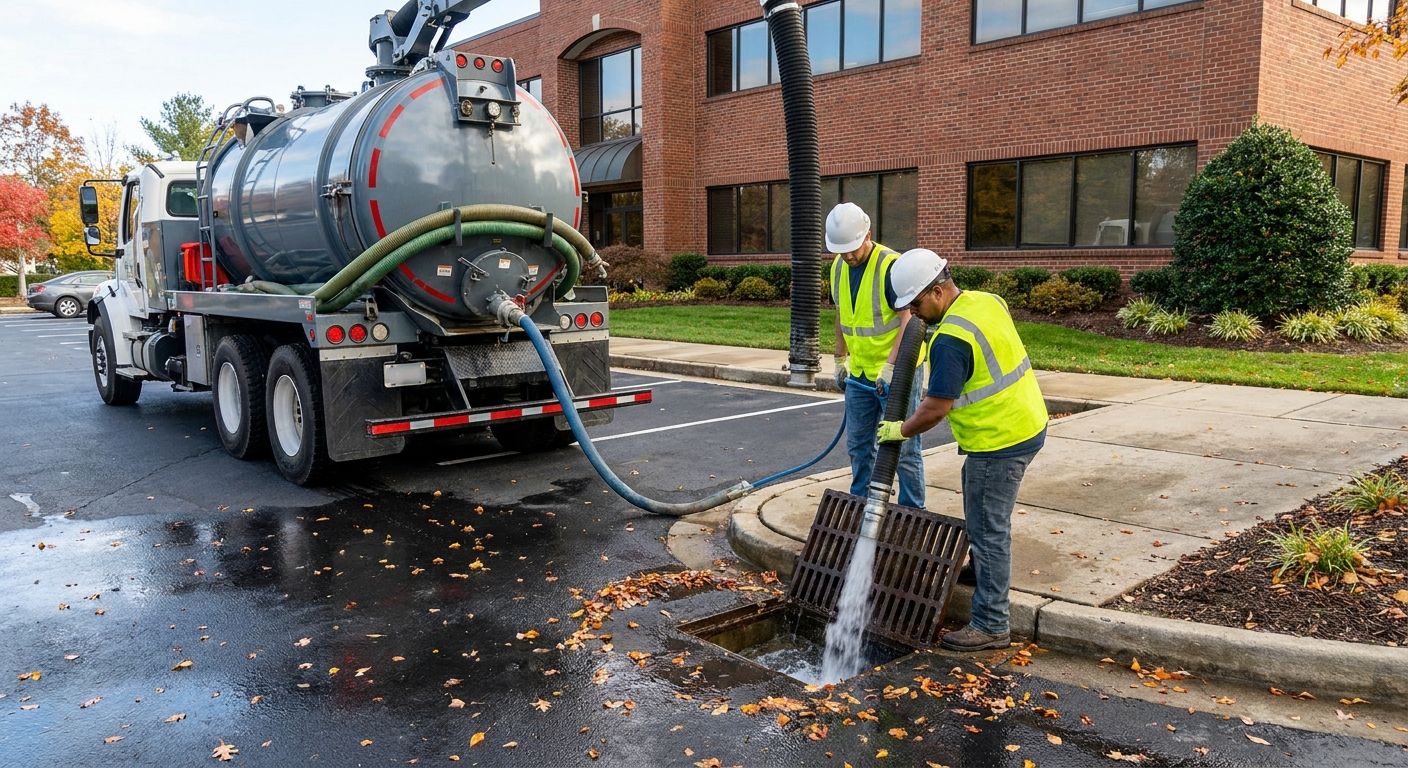
- Vacuum trucks pull loose sediment and standing water out of the sump
- Hydro jetting for commercial office buildings blasts compacted grit and grease off pipe walls, not just the sump floor
- Hydro jetting for clogged storm drains after heavy rain clears lines that backed up during the last storm and haven't drained since
- Grease and food waste from an on-site restaurant or food court tenant needs grease trap cleaning for restaurants and commercial kitchens separate from the storm system
- Schedule this pass in early spring and again in late fall for properties with heavy tree cover
Run a camera inspection on underground lines
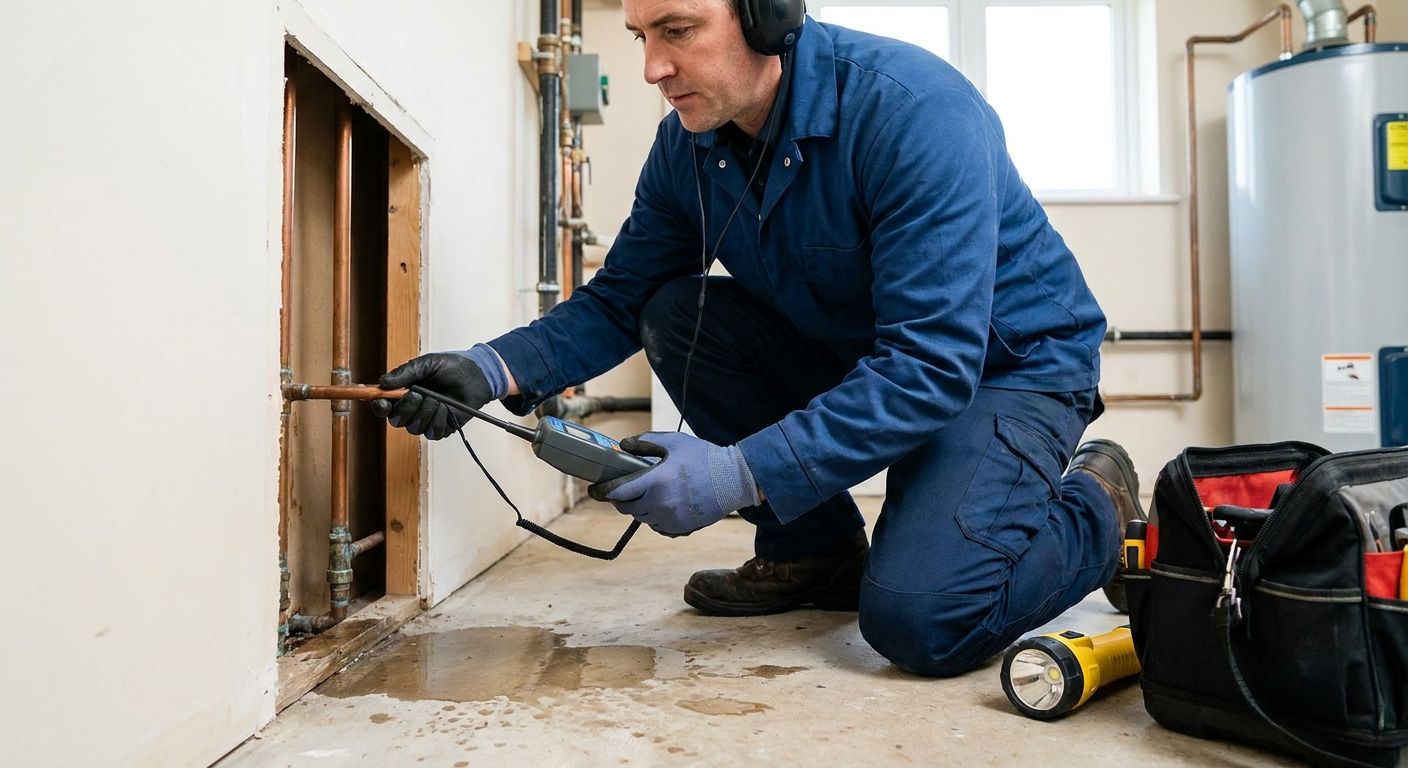
Jetting clears debris; it doesn't tell you if the pipe itself is cracked, offset, or crushed under a parking lot. A video camera inspection answers that question before you spend money jetting a line that needs replacement instead.
- Camera the full run from catch basin to outfall or municipal tie-in
- Look for root intrusion at joints, especially on older cast-iron or clay lines
- Flag any sagging (bellied) sections that hold water between rain events
- Document footage for insurance or municipal compliance records
- Re-inspect every 2-3 years on properties with mature trees near the drainage run
Fix what jetting can't clear
Some lines need more than cleaning — a crushed or root-damaged pipe stays clogged no matter how often it's jetted.
- Spot repair for a single damaged section
- Trenchless lining for a full run of aging pipe without tearing up the lot
- Full replacement for lines too degraded to line or patch
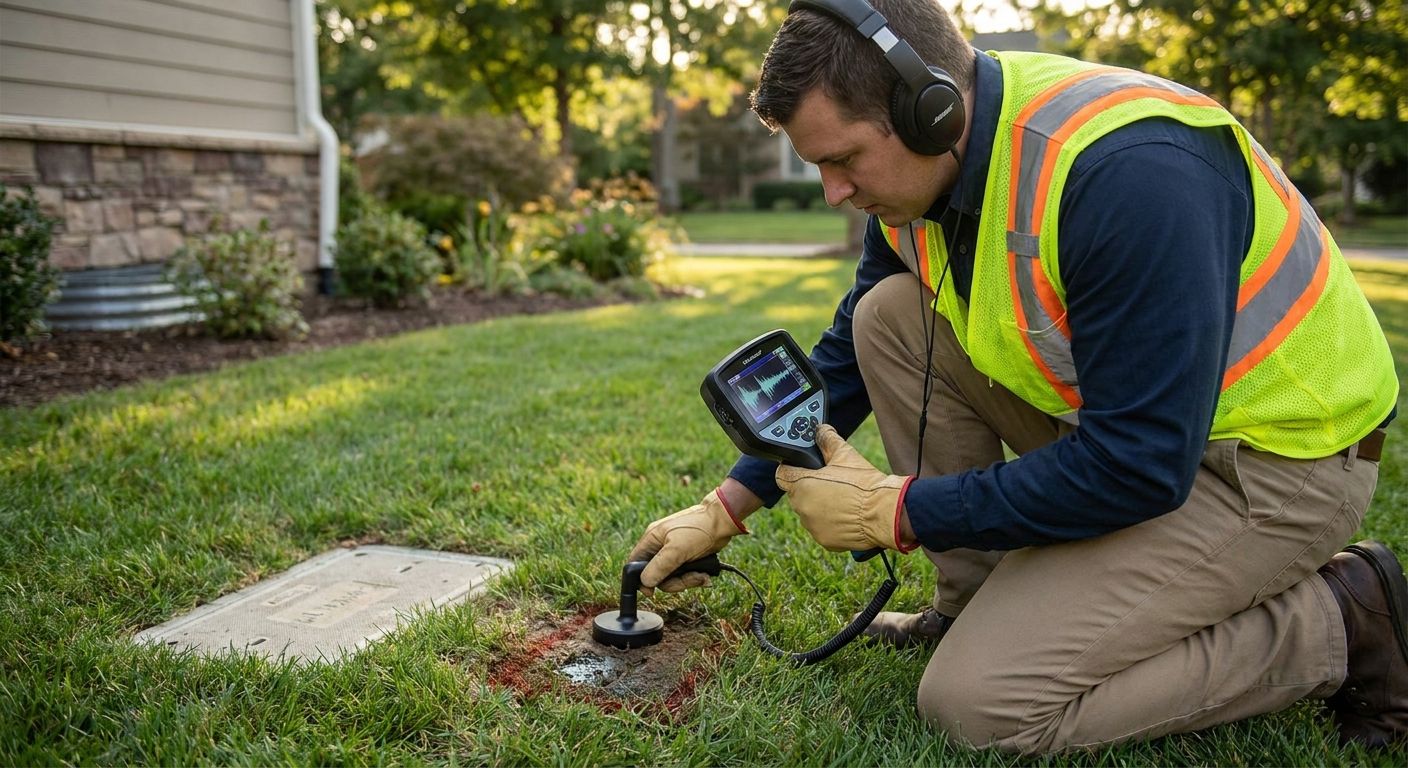
- Line locate before any excavation to avoid hitting utilities under the lot
Put a maintenance schedule in writing
Property managers who set a standing seasonal contract avoid the emergency call entirely. A written schedule also gives you a paper trail if a tenant or the municipality ever questions whether the drainage system was maintained.
- Two cleanings a year minimum for properties with tree cover or a restaurant tenant
- One inspection pass before the wet season each year
- A standing vendor relationship so you're not searching for a reliable drainage company mid-storm
- Records kept on-site for insurance and municipal stormwater compliance reviews
Know who to call when it backs up anyway
Even a well-maintained system can get overwhelmed by a storm that dumps more rain than the design capacity handles. When that happens during business hours with a flooded lot and blocked entrances, 24-hour emergency drain and sewer service is the fallback, not the plan.
Comparison: storm drain maintenance options for commercial properties
| Option | Best for | Key limitation |
|---|---|---|
| Manual debris removal | Routine upkeep between service visits | Doesn't touch compacted sediment inside pipes or sumps |
| Vacuum truck service | Removing standing sediment from catch basin sumps | Doesn't clear grease or root intrusion inside pipe walls |
| Hydro jetting | Compacted sediment, grease, and mineral scale inside lines | Won't fix a cracked or crushed pipe — camera inspection needed first |
| Video camera inspection | Diagnosing why a line keeps backing up after cleaning | Diagnostic only, not a repair |
| Trenchless lining / spot repair | Structural pipe damage under a parking lot or building | Not needed unless camera inspection confirms damage |
Verdict: hydro jetting paired with a camera inspection is the combination that actually fixes recurring commercial storm drain backups — manual debris removal alone just buys time between failures.
Get storm drains cleared before the next storm
Camera inspection and hydro jetting for commercial properties across four NJ counties.
Common mistakes commercial properties make
- Treating storm drains like sanitary sewer lines. They're different systems with different debris — sediment and oil, not paper and grease — and need different cleaning methods.
- Waiting for a visible flood before calling anyone. By the time water is pooling at the entrance, the sump has likely been full for months.
- Skipping the camera inspection. Jetting a cracked line over and over doesn't fix a structural problem, and it burns budget that should go toward a repair.
- No written maintenance schedule. Without a documented service history, proving stormwater compliance to a municipality or an insurer after a flood claim gets harder.
- Ignoring tenant-generated debris. A restaurant or food court tenant dumping grease near a storm inlet creates a blockage the rest of the property didn't cause.
FAQ
What is storm drain cleaning for commercial properties?
It's the process of clearing catch basins, area drains, and underground storm lines of sediment, leaves, and trash on commercial sites like office parks, retail plazas, and HOA communities. Regular cleaning prevents parking lot flooding and keeps the property compliant with local stormwater ordinances.
How often should commercial storm drains be cleaned?
Most commercial properties need two cleanings a year, spring and fall, with more frequent grate checks if the site has heavy tree cover. Properties with a restaurant or food service tenant should add extra sump checks since grease compounds the sediment buildup.
Is hydro jetting safe for storm drain lines?
Yes, hydro jetting is standard practice for clearing compacted sediment and debris from storm drain pipes without damaging the pipe interior. A camera inspection beforehand confirms the line is structurally sound enough to jet.
Who is responsible for storm drain maintenance on a commercial property?
The property owner is typically responsible for on-site catch basins and drainage structures unless the system connects directly to a municipal main. Middlesex, Monmouth, Ocean, and Union county municipalities enforce stormwater ordinances that put this on the owner.
What happens if a commercial storm drain floods?
A flooded storm drain backs water up into parking lots, loading docks, and sometimes building entrances, creating slip-and-fall risk and potential tenant property damage. Repeated flooding also draws municipal attention if it points to a maintenance lapse.
Can tree roots block a commercial storm drain line?
Yes, root intrusion at pipe joints is common on properties with mature trees near the drainage run, especially on older clay or cast-iron lines. A camera inspection identifies root intrusion before it causes a full blockage.
Does clearing a storm drain require a permit?
Routine cleaning and hydro jetting generally don't require a permit, but excavation for a repair or trenchless lining usually does, along with a line locate to mark utilities first.
What's the difference between a storm drain and a sanitary sewer line?
Storm drains carry rainwater runoff from roofs and parking lots to an outfall or municipal system, while sanitary sewer lines carry wastewater from plumbing fixtures. They require different cleaning approaches because they collect different debris.
One last thing
Most commercial storm drain failures trace back to an unvacuumed catch basin sump, not a cracked pipe underground — the sump fills gradually over a season, and by the time water stops draining at the surface, the sediment layer is often a foot deep or more. A camera inspection before jetting tells you which problem you're actually solving, and skipping it in 2026 usually means paying twice: once for a cleaning that doesn't hold, and again for the repair that was needed from the start.